

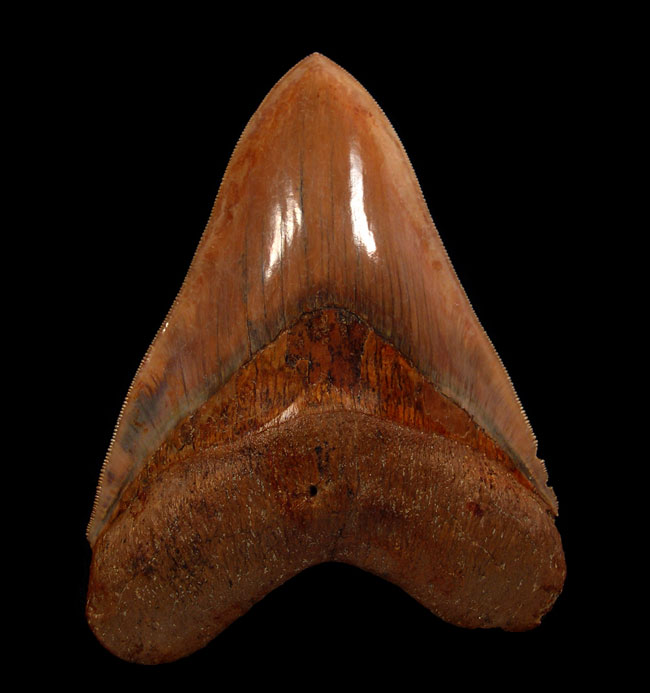
Fossil enthusiasts worldwide are drawn to these colossal remnants of the ancient shark, but what sets the specimens from Indonesia apart is their striking range of colors—rich reds, earthy browns, golden accents, and even rare bluish tones that resemble natural works of art. The allure of Indonesian Megalodon teeth lies in how mineral-rich soils have infused them with such vivid hues over millions of years. We take pride in sharing these extraordinary fossils, knowing each one carries both unmatched beauty and a powerful connection to prehistoric history.
Let’s explore why these fossils from Indonesia capture so much fascination and how the mineral-rich environments of the region give them their distinctive character.
The Ancient Giant Behind the Fossils
The Megalodon (Carcharocles megalodon) dominated oceans millions of years ago, with teeth that could reach over 7 inches in length. These teeth were designed for power—serrated, triangular, and ideal for crushing through bone and prey. While Megalodon fossils have been found across the globe, those uncovered in Indonesia have set themselves apart not only by size but also by their distinctive coloration.
Collectors value these teeth for both their scientific significance and their collectible qualities. A single Indonesian specimen often feels like holding a piece of geological and biological history fused into one.
Why Indonesia Produces Such Vibrant Fossils
The soils and sediments of Indonesia are rich in unique mineral compositions. When Megalodon teeth fossilized in this environment, the minerals seeped into the enamel and dentin, replacing organic structures with vivid inorganic compounds. This process created teeth with a palette that can range from earthy reds and chocolate browns to golden streaks and, in rare cases, soft blue or greenish undertones.
This mineralization doesn’t just tint the fossils—it engrains the color permanently, making each tooth a one-of-a-kind piece. Unlike other fossil locations where hues are limited to blacks and greys, Indonesian finds carry a spectrum that feels almost sculpted by nature’s brush.
Reds, Browns, Golds, and Blues: Nature’s Palette
One of the most striking aspects of Indonesian Megalodon teeth is the intensity of their coloration. Collectors often describe these fossils as being more visually compelling than their counterparts found in places like South Carolina or Peru.
● Red and Brown Shades: Iron oxides in the soil lend rich, warm tones that enhance the tooth’s natural serrations and shape.
● Golden Highlights: Some specimens show brilliant golden hues, a rare sight that makes them instantly recognizable.
● Bluish Hues: Perhaps the rarest and most collectible are those with bluish or teal undertones, a result of particular mineral blends unique to certain Indonesian sediments.
These shades give the fossils an aesthetic dimension that pairs beautifully with their scientific importance, making them highly prized by both enthusiasts and seasoned fossil hunters.
Why Collectors Prize Indonesian Megalodon Teeth
Collectors of prehistoric artifacts often gravitate toward fossils that combine rarity, condition, and visual impact. Indonesian Megalodon teeth deliver on all three. Their color variety ensures no two specimens are alike, which adds an exclusivity factor. Beyond visual appeal, many of these teeth are remarkably well-preserved, with sharp serrations and intact enamel that emphasize the shark’s ancient power.
When compared to fossils from other locations, Indonesian Megalodon teeth are distinguished by their exceptional artistry. Their bold hues transform them from simple paleontological finds into collectible treasures that spark conversation and admiration.
Geological Conditions That Shape the Fossils
Indonesia’s geological history plays a crucial role in producing these colorful fossils. The region’s dynamic volcanic activity and mineral-rich sediments provide the exact conditions needed for unusual fossilization. Over millions of years, volcanic ash, mineral deposits, and fluctuating environmental conditions combined to leave behind a unique fingerprint on these teeth.
This process explains why fossils from the same species can look so different depending on where they were preserved. For Indonesian specimens, the environment acted almost like a natural kiln, infusing the teeth with shades rarely seen elsewhere.
A Collector’s Journey with Indonesian Megalodon Teeth
Imagine discovering a massive tooth with golden streaks shimmering against a backdrop of deep red enamel. The tactile sensation of holding such a fossil connects you to a predator that once ruled the seas, while the colors tie you to the Earth’s mineral history. For collectors, each Indonesian tooth is not only a fossil but also a geological painting millions of years in the making.
This is why enthusiasts often seek them as centerpiece items in their collections. They carry both scientific and aesthetic weight, appealing to those who value history, rarity, and natural artistry.
How Indonesian Specimens Compare Globally
Megalodon teeth are found in many parts of the world, from North America to Europe. However, the coloration differences are striking. Fossils from Florida, for example, tend to show darker tones—black, grey, or brown. South Carolina is known for blackened teeth with fossilized root contrasts. Peru sometimes yields lighter-colored specimens with cream or tan hues.
But Indonesian Megalodon teeth bring an entirely different level of vibrancy. Their multi-toned reds, browns, and blues create visual contrasts rarely seen elsewhere, which is why they are often viewed as premier collectibles among shark tooth fossils.
The Market for Collectors
Because of their rarity and coloration, Indonesian Megalodon teeth have become highly sought after in fossil markets. Collectors often pay premiums for teeth that display scarce colors or combinations. Size, condition, and serration sharpness remain essential, but coloration usually elevates a specimen from collectible to extraordinary.
These fossils are also popular as centerpiece items for private collections, exhibitions, and even educational displays, where their colors can help tell the broader story of fossilization and geological processes.
Caring for Colorful Fossils
Preserving the colors of Indonesian Megalodon teeth requires careful handling and preservation. While fossilization makes the shades permanent, exposure to direct sunlight, harsh cleaning agents, or rough handling can diminish their appeal. Collectors often store them in display cases with controlled lighting to highlight their hues while ensuring longevity. Such care enables these fossils to be appreciated not only as relics of history but also as long-term, collectible investments.
Conclusion
Indonesian Megalodon teeth are admired not only for their immense size and link to an apex predator but also for the striking colors formed by mineral-rich Indonesian soils—ranging from fiery reds and earthy browns to golden tones and rare blues. Each tooth is a natural masterpiece millions of years in the making, valued by collectors for its rarity, preservation, and visual appeal. When holding one, you are having both evidence of the largest shark that ever lived and a piece of Earth’s geological artistry. That is why we at Buried Treasure Fossils regard Indonesian Megalodon teeth as treasures to be celebrated and preserved for generations.
Visit us to explore the extraordinary world of Indonesian Megalodon teeth and secure a rare fossil masterpiece for your collection.






