

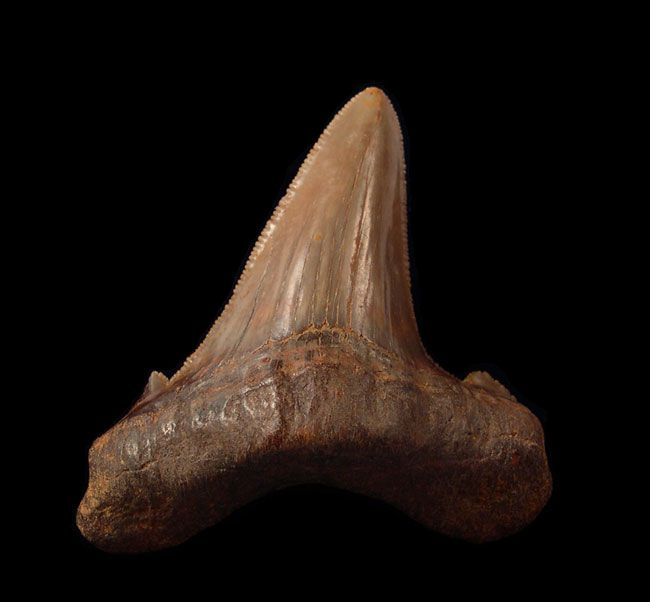
Sharks have roamed the oceans for more than 400 million years, long before the first dinosaurs set foot on land. Among them, one species stands out in both scale and legend—the Megalodon. Though this giant predator vanished around 3.6 million years ago, its teeth continue to surface in unexpected places, from coastal riverbeds to arid deserts. Each tooth is more than just a fossil; it is a window into the life of a creature that once dominated the seas. A single Peru Megalodon tooth, for example, holds clues about the shark’s size, diet, hunting power, and the environments it called home.
In this blog, we’ll dive into the story behind these remarkable fossils and explain how scientists use them to reconstruct the past lives of ocean giants.
The Lasting Legacy of Fossil Shark Teeth
Unlike bones, shark skeletons are made mostly of cartilage, which rarely fossilizes. Their teeth, however, are a different story. Composed of hard enamel, they resist erosion and can endure for millions of years. That’s why most of what we know about ancient sharks—including Megalodon—comes from teeth.
To put things into perspective, a single Megalodon tooth can measure more than 7 inches long, dwarfing the teeth of even the largest modern Great White shark. These fossilized teeth reveal not just size but also the shark’s position as an apex predator. Serrated edges, razor-sharp and formidable, point to a carnivore capable of slicing through whale bone with ease. The enamel color and preservation, meanwhile, give hints about the geological conditions where the tooth was buried.
From the Ocean to the Desert: Why Teeth Are Found in Peru
It might surprise some to learn that the deserts of southern Peru are one of the richest sources of fossil shark teeth. Millions of years ago, regions like the Pisco Formation and Caballos Formation were submerged under warm seas teeming with life. As sea levels shifted and tectonic forces lifted the land, layers of ocean sediments—along with the fossils within them—were exposed.
This explains why researchers and collectors alike have unearthed extraordinary specimens in what is now a dry desert. A tooth pulled from these sites is a direct reminder that the landscapes we walk today were once home to some of Earth’s most fearsome predators.
How a Tooth Reveals the Size of a Shark
One of the most fascinating insights a single tooth provides is an estimate of the shark’s size. Scientists use formulas that link tooth dimensions to jaw width, which in turn helps estimate body length. For Megalodon, this means a 6-inch tooth could correspond to a shark exceeding 50 feet in length.
That’s nearly three times the size of the largest Great White shark alive today. When you hold a fossil in your hand, you’re essentially holding evidence of one of the largest predators the Earth has ever known.
Serrations, Shape, and the Science of Feeding Habits
Every detail of a tooth tells a story about diet. Megalodon’s teeth, with their wide triangular crowns and serrated edges, were built for one purpose: tearing through flesh and bone. The serrations acted like saw blades, ideal for cutting through the thick hides of whales, seals, and large fish.
Different species, however, left different dental signatures. Teeth from ancient relatives like Carcharocles chubutensis or Carcharocles auriculatus show evolutionary stages leading up to the Megalodon, with slightly different shapes and serration patterns. This progression helps paleontologists trace how sharks adapted to prey availability and changing environments over millions of years.
Colors and What They Tell Us
The striking colors of Peruvian fossil teeth—ranging from deep charcoal gray to vibrant tans and oranges—aren’t just beautiful to look at. They tell scientists about the minerals present in the surrounding sediment. For example, iron-rich sands may leave a reddish hue, while phosphate-rich environments might darken the enamel.
These colors offer geologists valuable insights into the conditions under which the fossils were preserved, further enriching our understanding of Earth’s ancient ecosystems.
Rare Finds from Peru: More Than Just Megalodon
While Megalodon teeth are the star attraction, Peru has also yielded fossils from other remarkable sharks. Teeth from Hexanchus griseus (the bluntnose sixgill shark), for instance, show a completely different feeding strategy with their multiple cusps designed for tearing. Similarly, fossil Great White shark teeth from Peru’s deserts display the evolutionary refinement that eventually led to the modern apex hunter we know today.
Together, these fossils create a picture of a thriving marine ecosystem where giants like Megalodon were just one part of a diverse food chain.
Why Peruvian Teeth Are So Treasured
Collectors and scientists value Peruvian fossil shark teeth not only for their rarity but also for their exceptional preservation. Since fossil export from Peru is no longer permitted, existing specimens are primarily from older collections. This makes authentic Peruvian fossils increasingly difficult to obtain.
When examining such fossils, authenticity is key. Repaired or restored teeth may look impressive, but genuine specimens with natural preservation hold the most scientific value. Each authentic tooth is both a scientific record and a piece of natural history art.
A Tooth as a Time Capsule
Think of a fossil shark tooth as a miniature time capsule. It doesn’t just speak to the individual shark it once belonged to, but also to the ocean environment of its time. By studying isotope ratios, scientists can infer water temperatures, migration patterns, and even dietary preferences.
This kind of analysis paints a broader picture of how Megalodon and its relatives lived, thrived, and eventually disappeared. It’s a reminder that the past is not gone but preserved, waiting to be read in enamel and serrations.
Why the Megalodon Still Captures Our Imagination
Despite going extinct millions of years ago, Megalodon continues to loom large in popular culture. Movies, documentaries, and myths often exaggerate its size and modern-day presence. But the real story, revealed through fossils, is even more compelling. This was not a monster from the deep but a highly adapted predator that ruled the seas in its time.
Holding a fossil, such as a Peru Megalodon tooth, brings that reality into sharp focus. It reminds us of Earth’s changing oceans, the rise and fall of species, and the delicate balance of ecosystems over millions of years.
Conclusion
A single shark tooth might seem like a small fragment of history, but in truth, it carries enormous weight. It tells us how large the shark was, what it ate, where it lived, and how it fit into the ancient marine world. From the deserts of Peru to scientific labs today, these fossils continue to inspire awe and curiosity.
Whether it’s the sharp serrations of a Megalodon or the multi-cusped teeth of a sixgill shark, each fossil contributes a piece to the puzzle of ocean history. For scientists and enthusiasts alike, holding a Peru Megalodon tooth is like holding a chapter of Earth’s story—one written not in ink, but in enamel hardened by time.






