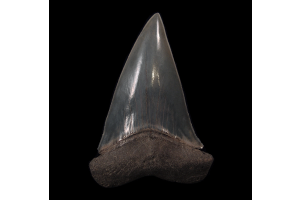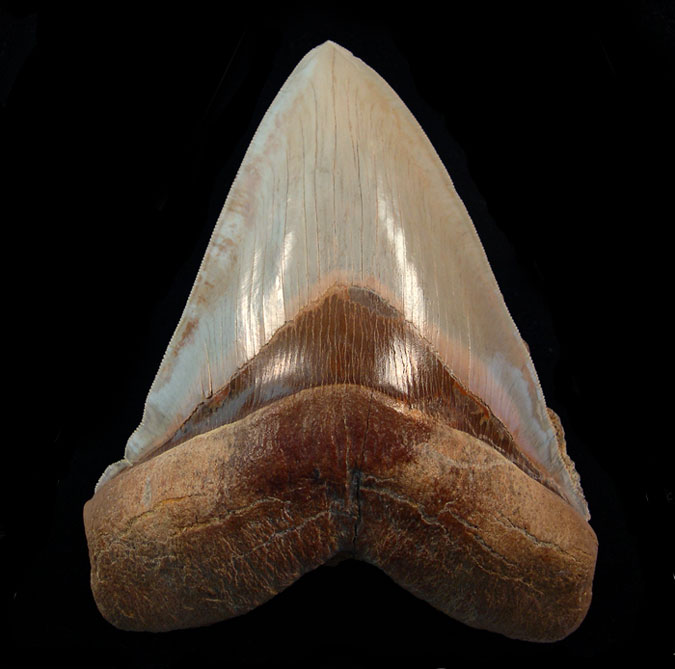
For millions of years, one of the ocean’s most legendary predators ruled the seas—the Megalodon, a prehistoric shark estimated to reach lengths of more than 50 feet. Fossils of this extinct giant continue to capture imaginations worldwide, particularly when people see a massive Megalodon tooth in Chile or other regions where these relics were once uncovered. But a question still lingers: did this giant really have the most powerful bite in history, or is its reputation partly myth?
To answer that, we need to dive into the fossil record, analyze scientific reconstructions, and compare Megalodon’s bite to other apex predators past and present.
The Legacy of a Giant Shark
The Megalodon, scientifically known as Otodus (Carcharocles) megalodon, lived during the Miocene and Pliocene epochs, roughly 4–6 million years ago. Evidence of its existence comes primarily from fossilized teeth, which remain remarkably durable compared to bone. Some of the largest Megalodon teeth measure more than 7 inches long, dwarfing those of modern great white sharks.
Chile, particularly the Caldera region and the Bahia Inglesa Formation, has produced some of the world’s most prized specimens. Collectors value these teeth for their size, coloration, and sharp serrations. Today, however, collecting is prohibited, making fossils like a Megalodon tooth in Chile an even rarer and more treasured piece of natural history.
These teeth tell us much about Megalodon’s diet, hunting strategies, and yes—even the potential strength of its bite.
Reconstructing a Bite from Teeth Alone
Unlike dinosaurs, where paleontologists often find partial skeletons, shark skeletons are mostly cartilage and rarely fossilize. That leaves researchers with teeth and, occasionally, vertebrae. Still, scientists can estimate bite force by looking at tooth size, jaw reconstruction, and comparisons with living sharks.
Studies suggest Megalodon’s bite could generate between 108,000 and 182,000 newtons of force. To put that in perspective, a great white shark’s bite force is estimated at about 18,000 newtons, while a lion’s reaches around 4,000 newtons. That means Megalodon may have had a bite ten times stronger than today’s apex predators.
The structure of its teeth supports this conclusion. Broad, triangular, and serrated, Megalodon’s teeth were designed not just to grab prey but to shear through bone and flesh with devastating efficiency.
Comparing Megalodon with Other Powerful Biters
Megalodon wasn’t the only animal with a terrifying bite. Prehistoric and modern species offer intriguing comparisons:
● Tyrannosaurus rex: Some estimates place the T. rex bite force at around 35,000 to 57,000 newtons. While impressive, it still falls short of Megalodon’s estimated numbers.
● Crocodiles: The saltwater crocodile, Earth’s strongest living biter, delivers around 16,000 newtons of force. Crocodiles use this power to crush turtle shells and large prey, but their bite pales next to Megalodon.
● Mosasaurus: Another marine predator from the age of reptiles, mosasaurs had powerful jaws suited for gripping slippery prey, though evidence suggests their bite was not as forceful as Megalodon’s.
When measured purely by numbers, Megalodon’s reconstructed bite is unparalleled in the fossil record.
Why Did Megalodon Need Such a Strong Bite?
Predators evolve bite force based on ecological need. Megalodon’s diet included whales, seals, and other large marine animals. To tackle prey of that size, it required immense jaw strength and razor-sharp teeth.
Scientists believe Megalodon often targeted the soft underbellies of whales or crushed rib cages to inflict fatal injuries quickly. A bite strong enough to penetrate thick blubber, crack bone, and immobilize prey was essential for survival.
Fossil evidence supports this: some ancient whale bones bear deep gouges that match the size and serration patterns of Megalodon teeth.
The Chilean Connection: A Fossil Collector’s Dream
The Caldera region of Chile is one of the most famous fossil localities for Megalodon remains. Teeth from this area are often noted for their stunning colors—light tans, deep browns, and even reddish hues from mineral deposits. Serrations are sometimes preserved in razor-sharp condition, and roots show excellent articulation.
Because of restrictions, no new fossils can be legally collected there today. That makes a Megalodon tooth in Chile an increasingly rare artifact, treasured by museums and private collectors alike. Each tooth tells a story of a predator that dominated ancient seas and leaves us with tangible evidence of its power.
Could the Bite Estimates Be Overstated?
While the numbers are impressive, some researchers caution against taking them as absolute. Bite force reconstructions are estimates, often based on computer modeling and scaling from modern sharks. Without a complete Megalodon skull, it’s impossible to know the exact mechanics of its jaw.
Additionally, bite force doesn’t always equal predatory success. Other factors—like speed, hunting strategy, and stamina—play critical roles. Megalodon may have been slower than modern sharks due to its size, which could have influenced how it hunted.
So while Megalodon almost certainly had one of the strongest bites in history, whether it truly holds the absolute record is still debated.
Lessons from an Apex Predator
The fascination with Megalodon lies not just in its size but in what it represents. It was an apex predator perfectly adapted to its environment, shaping marine ecosystems for millions of years. Its extinction, likely due to cooling oceans and a decline in prey, reminds us of the delicate balance in nature.
Today, fossils—particularly teeth—connect us to this ancient predator. Holding a massive Megalodon tooth, especially one found in regions like Chile, provides a direct link to a world that no longer exists yet continues to spark scientific curiosity and imagination.
Frequently Asked Questions
1. How big could Megalodon’s teeth get?
Some of the largest recorded Megalodon teeth exceed 7 inches in length. Most commonly, fossils range from 4 to 6 inches.
2. What animals did Megalodon hunt?
Evidence suggests Megalodon fed on large marine mammals, including early whales, dolphins, and seals. Fossilized whale bones with tooth marks support this.
3. Why are Chilean Megalodon teeth special?
Teeth from Chile’s Bahia Inglesa Formation are known for their beautiful coloration, excellent preservation, and sharp serrations. With modern restrictions, no new specimens can be collected, making existing ones highly sought after.
4. Was Megalodon bigger than a blue whale?
No. While Megalodon was one of the largest sharks, reaching up to 60 feet, the blue whale can exceed 100 feet, making it the largest known animal ever.
5. Did Megalodon really have the most powerful bite in history?
Current evidence suggests Megalodon likely had the strongest bite force ever estimated, though some debate remains due to limitations in fossil evidence.
Final Thoughts
So, did the Megalodon really have the most powerful bite in history? Based on fossil evidence and modern reconstructions, the answer leans strongly toward yes. Its bite force exceeded that of dinosaurs, crocodiles, and any living predator. More importantly, its teeth—especially rare fossils like a Megalodon tooth in Chile—remain lasting proof of this giant shark’s dominance.
The Megalodon’s story is a reminder that nature has produced predators of incredible strength and adaptability. Even millions of years after its extinction, the legend of its bite continues to inspire awe.