At our organization, we take pride in helping others understand the mysteries of prehistoric life. When we guide fossil hunters and collectors, we use our knowledge of geology and paleontology to make searches more rewarding. Megalodon teeth are among the most dramatic fossils to uncover, and their serrated edges and massive size can give us a glimpse into the history of Earth’s largest prehistoric shark.
These teeth are more than striking relics. They are valuable scientific tools that can reveal when the animal lived and what environments it may have inhabited. By understanding how scientists are able to determine the age of these fossils, we can help collectors identify where to search and which sites may hold the most significant promise, especially when it comes to finding a megalodon tooth.
Understanding How Megalodon Teeth Are Dated
Megalodon, scientifically known as Otodus megalodon, lived approximately 23 million to 3.6 million years ago during the Miocene and Pliocene epochs. To determine the age of these enormous shark teeth, scientists rely on geological and biological evidence that provides a clearer picture of when and where these animals thrived. Stratigraphic context plays a central role, as sedimentary layers act as a historical timeline. When teeth are uncovered in Miocene or Pliocene layers, their age can be inferred from those formations.
Relative dating methods also help refine this process. The presence of other fossils in the same sediment, such as mollusks or microfossils, can serve as important indicators, narrowing down the timeframe further. Additionally, certain well-studied formations like the Pungo River or Yorktown have been thoroughly dated. Fossils discovered within them are therefore tied to established geological timeframes.
The Role of Mineralization and Morphological Change
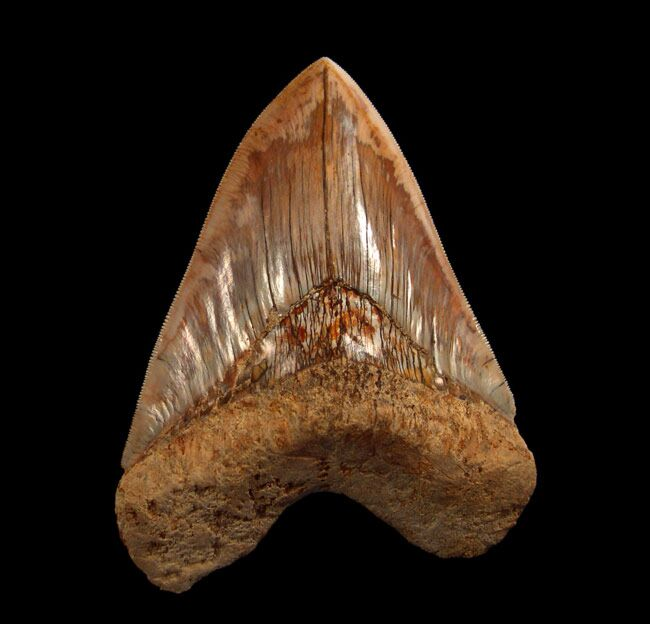
Another vital factor in dating Megalodon teeth is mineralization. Once a tooth falls from the shark’s mouth and settles into sediment, minerals slowly replace the organic material. Over millions of years, this process transforms the tooth into a fossil, and the level of mineralization, combined with variations in color and preservation, provides insight into the age and environmental conditions of fossilization. Morphological changes also offer clues. Over time, slight differences in serrations, curvature, and root structures appeared in Megalodon and its ancestors. By comparing these characteristics, scientists can approximate the period when a particular tooth formed.
Radiometric and geochemical tools may also support this work in some instances. Volcanic ash near sediment layers or isotopic data can strengthen age estimates. Although not always possible, these techniques add precision when available. Collectively, these approaches allow researchers to place Megalodon teeth within a timeframe that spans millions of years.
Why Accurate Dating Helps in Choosing Fossil Sites
Understanding how Megalodon teeth are dated has practical benefits for those who search for fossils today. Accurate dating ensures that effort is directed toward the right formations and environments, rather than wasted in areas of the wrong age. Since Megalodon lived during the Miocene and Pliocene, it is essential to seek out formations of that period. Deposits from earlier or later epochs are less likely to yield meaningful finds.
Dating also emphasizes the importance of erosion in revealing fossils. Natural processes such as storms, tides, and river currents strip away layers of sediment, uncovering fossils that were hidden for millions of years. By focusing on areas where erosion is active, collectors can increase their chances of success. This might mean visiting coastal cliffs or riverbanks where material is frequently washed away.
How Sediment Disturbance Supports Discoveries
In addition, dating highlights the role of sediment disturbance. Rivers and coastal currents constantly move and expose material, which makes them valuable areas for discovery. Collectors who understand the science behind dating can prioritize these dynamic environments. For those searching along shallow waters or shorelines, accessible depositional settings offer further opportunities. These environments often hold fossils close to the surface, making them practical and rewarding sites. With this understanding, the process of finding a megalodon tooth becomes more informed and efficient.
Examples of U.S. Locations Where Science Supports Discoveries
Several locations in the United States illustrate how scientific knowledge of dating aligns with the practice of fossil hunting. In South Carolina, the Blackwater Rivers cut through fossil-rich sediments, carrying and depositing Megalodon teeth in their beds. These rivers pass through formations of the correct age, and the moving water ensures that teeth are regularly uncovered and concentrated in certain areas.
Further north, the Calvert Cliffs of Maryland provide another example. These cliffs, composed of Miocene sediments, are constantly eroded by waves and storms. After a storm or during low tide, fresh material often becomes exposed, giving fossil hunters new opportunities. The cliffs show how natural erosion cycles are critical to fossil discovery.
In North Carolina, Aurora is known for its phosphate mines and fossil-rich formations such as the Pungo River and Yorktown. These formations have been studied and dated, making them reliable places to find Megalodon teeth. Even museum sediment dumps in the region offer access to material drawn from these significant layers, showing how mining activity can reveal fossils that would otherwise remain buried.
The Consistency of the Peace River
Florida’s Peace River is another important site. Its shallow waters and accessible banks are regularly reshaped by seasonal changes and currents. This process exposes fossils from Miocene and Pliocene deposits, making the river a consistent source of finds. Each of these locations illustrates how geological knowledge and natural forces combine to reveal fossils of extraordinary value.
Applying Science in Practical Searches
Applying the science of dating to fossil hunting requires a thoughtful approach. Studying geological maps is often the first step, as these maps show where Miocene and Pliocene formations are exposed. With that knowledge, collectors can narrow their focus to regions with the highest likelihood of yielding Megalodon remains.
Weather patterns and natural events also play an essential role. Heavy rainfall, tides, and storms can strip away overlying sediment and reveal new fossils. By planning visits around these events, collectors improve their chances of uncovering freshly exposed material. Understanding accessibility and permissions is equally essential, as some sites may require permits or be protected. Respecting these rules helps preserve fossil-rich areas for future generations.
Having the right tools for each environment can make searches more effective. Shallow riverbanks, eroding cliffs, or phosphate-rich sediments each demand different approaches, and proper preparation improves safety and efficiency. Finally, documenting the context of each find adds value to the discovery. Recording details about the surrounding sediment or associated fossils strengthens the scientific significance of each specimen and confirms its age.
The Importance of Dating for Fossil Hunters
Dating Megalodon teeth is essential for confirming authenticity and for connecting each specimen to the correct period in Earth’s history. Teeth discovered in formations of known age are more reliable, as their geological context supports their identification. Understanding mineralization and other fossilization processes further validates whether a specimen belongs within the known time range of Megalodon.
Dating also adds depth to the meaning of each discovery. A tooth found in the Yorktown Formation, for instance, does not simply confirm the existence of a prehistoric shark but also places that shark in a specific marine ecosystem. Each find becomes a fragment of a much larger story about Earth’s oceans and the life they supported millions of years ago.
Conclusion
Megalodon teeth are extraordinary fossils that allow us to peer into the past. By using geological layers, fossil comparisons, mineralization patterns, and other dating techniques, scientists are able to place these teeth within a timeframe that spans millions of years. This knowledge directly informs site selection, making fossil hunting more focused and rewarding.
From the rivers of South Carolina to the cliffs of Maryland, the phosphate-rich soils of North Carolina, and the banks of Florida’s Peace River, every location reflects how geological processes guide discoveries. By concentrating on formations of the right age and by recognizing how erosion and water movement expose fossils, collectors increase their chances of meaningful finds.
Understanding the science of dating Megalodon teeth is not only about learning when these sharks lived. It is also about choosing the right places to search today. Each discovery is both a scientific insight and a tangible connection to prehistory, and each experience of finding a megalodon tooth brings us closer to understanding the vast oceans that once covered the Earth.