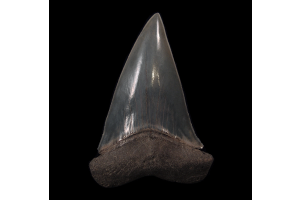
Page 67 - Megalodon
- - September 24, 2025
Picture this. You’re at a fossil fair, and someone places a massive, serrated tooth in your palm. It’s heavy, sharp-edged, and instantly humbling. This isn’t a delicate seashell or a pretty pebble. It’s a relic from a predator that once swallowed whales whole. That single moment explains why collectors worldwide seek out Megalodon shark teeth. They aren’t just fossils; they’re symbols of dominance, mystery, and deep time. That’s why so many enthusiasts are eager to buy megalodon shark tooth specimens that carry both power and provenance.
The Apex Predator That Left a Legacy
The Megalodon was no ordinary shark. Estimates place its length at up to sixty feet and its bite force at nearly 180,000 newtons—strong enough to crush bone like it was brittle driftwood. Its teeth, often over six inches long, weren’t simply tools; they were perfected weapons. Serrated, triangular, and built for gripping slippery prey, they remind us that this shark was designed to rule.
Every fossilized tooth is a
- - September 24, 2025
At our service, we have always been fascinated by how shark teeth can tell us powerful stories about survival, adaptation, and evolution. When we place Megalodon's great white shark tooth specimens side by side, the contrast allows us to see two very different paths shaped by time and environment.
Our work with these remarkable fossils gives us the opportunity to show how anatomy itself can reveal the strategies that helped these predators dominate their worlds.
Structural Contrasts
Megalodon teeth can be recognized immediately because they are broad, triangular, and heavily built. These teeth have fine, consistent serrations along the edges, but what makes them particularly impressive is their thickness of enamel and expansive root base. The added weight and durability gave Megalodon the ability to crush through the dense bodies of enormous prey, including ancient whales.
Another distinctive feature is the bourlette, a dark enamel band near the crown’s base. This detail does not appear
- - September 24, 2025
The fossil record has a way of surprising us with specimens that challenge expectations, and in the case of Megalodon teeth, few discoveries are as remarkable as those found in North Carolina. In our collection, we have handled rare examples that display unusual qualities, and we take pride in offering these fascinating pieces to fossil enthusiasts.
These specimens remind us that even in the prehistoric world, anomalies had their own story to tell. Among them, the megalodon tooth found in North Carolina rivers stands out for its rarity and unusual features.
Rare Oddities From the Depths of Time
Megalodon teeth are already among the most striking fossils a collector can encounter, but North Carolina has produced specimens that belong to a category of rarity all their own. The copper-red teeth recovered from sites along the Meherrin River have a coloration unlike that found in other localities. Their rich reddish hue, a result of the unique conditions in the soil, transforms what was once
- - September 24, 2025
When we look at prehistoric fossils, we often discover far more than their physical form. They can help us understand adaptation, lineage, and the changing dynamics of ancient oceans. For us, a Bone Valley Megalodon tooth holds a special place because our work allows these fossils to be carefully studied and appreciated.
These teeth, found in Florida’s phosphate-rich deposits, are admired for their preservation and vivid colors, yet their value lies equally in the evolutionary story they can help to reveal. In some specimens, transitional characteristics appear, and these details may provide evidence of shifts within the species over millions of years.
The Geological Context of Bone Valley
The Bone Valley region of Florida is part of the Peace River geological system and connects to the Bone Valley Formation. These layers date from the middle Miocene to early Pliocene epochs and act as natural records of history. Phosphate-rich sediments surrounded the fossils and allowed them to be preserved
- - September 24, 2025
As fossil specialists, we know that every specimen can carry a narrative. When collectors come to us, they often focus on pristine Megalodon teeth with their sharp serrations, heart-shaped form, and symmetry. Yet, we believe that deformed, twisted, or curved specimens also deserve attention.
They may look irregular, but they often reveal stories of survival, unusual growth, or the fossilization processes that shaped them. These teeth allow us to explore history in a way that is as authentic as it is intriguing, whether examining an original fossil or comparing it to a megalodon tooth replica.
Understanding the Benchmark of “Normal”
Megalodon teeth are typically massive, serrated, and free of side cusps. They are often recognized by a balanced, heart-shaped design and cutting edges that were built for handling large prey. Most specimens will measure between 5 and 6 inches, and the most prominent examples rarely exceed 6½ inches in length.
These qualities create the standard reference
- - September 22, 2025
Long before modern seas were filled with whales, dolphins, and great white sharks, a much larger predator ruled the oceans. This massive shark left behind one of the most fascinating relics of prehistory—its teeth. These fossils are more than remnants of a predator; they’re glimpses into a time when the ocean was home to creatures far beyond what we see today. For collectors, divers, and history enthusiasts, finding megalodon teeth in Florida has become both a passion and a bridge to connect with a lost era.
Transitioning from the general curiosity about prehistoric creatures, let’s step into the deeper world of fossil hunting and the stories these treasures hold.
Why These Teeth Hold Such Value
Megalodon teeth are among the most collected fossils on earth because they are striking in both size and form. Ranging from a few inches to nearly seven inches, they display serrated edges and robust enamel that still gleam despite spending millions of years beneath sediment. For collectors, their
- - September 22, 2025
Long before humans walked the earth, massive predators ruled the oceans. Among them, the megalodon reigned as one of the most awe-inspiring creatures. Its teeth, larger than a human hand, remain as the most tangible connection we have to its existence. For collectors and enthusiasts, the desire to buy megalodon tooth specimens is more than a purchase—it’s a way of holding a piece of natural history. These fossils carry a story millions of years old, connecting us to a time when the seas were dominated by a true apex predator.
To understand why these relics hold such significance, let’s examine their unique qualities, the scientific basis behind them, and the value they bring to collectors today.
The Fascination with Prehistoric Sharks
Megalodon teeth are captivating due to their immense size and sharp, triangular shape. Each tooth reveals evidence of a predator capable of taking down whales with ease. Unlike bones, which often decompose over time, shark teeth are preserved due to their
- - September 22, 2025
Imagine holding in your hand a relic from an ancient ocean, a piece of history shaped over millions of years. Fossilized shark teeth carry within them a story of the Earth long before human memory. To collectors and enthusiasts, they’re not simply fragments of the past—they’re treasured connections to the most formidable predator that ever lived. For those intrigued by owning an authentic piece of this history, the opportunity to buy megalodon shark tooth specimens has become a fascinating pursuit.
Transitioning from curiosity to ownership reveals why these fossils have captivated the imagination of so many.
The History Behind the Fossil
Megalodon ruled the oceans approximately 23 to 3.6 million years ago. With a bite force unmatched in the natural world, this giant shark inspired legends that endure even today. Fossilized teeth are often the only remains left behind, but they speak volumes. Their serrated edges, impressive size, and lasting durability provide paleontologists and enthusiasts
- - September 22, 2025
Imagine holding in your hand the fossilized tooth of a shark that once ruled the seas, a creature so immense that its bite could crush bone with ease. Collectors, researchers, and ocean enthusiasts alike are drawn to these remnants of a predator that swam the oceans millions of years ago. If you’ve ever wondered where to buy megalodon teeth, you’re not alone—interest in these fossils continues to grow as people seek a tangible link to prehistoric waters. These teeth are not only natural artifacts but also sparks of curiosity, storytelling, and connection to Earth’s untold past.
Before we journey into their history, rarity, and value, let’s explore how these teeth continue to inspire fascination in modern times.
The Fascination of Megalodon Fossils
Megalodons, estimated to have reached lengths of over 50 feet, dominated the oceans during the Miocene and Pliocene epochs. Their teeth, often several inches long, remain some of the most iconic fossils discovered to date.
Collectors are drawn
- - September 22, 2025
The ocean has always held secrets, and among its most mysterious relics are the massive fossilized remains of a long-lost predator. These relics remind us that the waters we see today were once dominated by creatures larger and more formidable than any shark alive. Scientists, collectors, and curious explorers alike find themselves fascinated not only by their size but also by what they reveal about a vanished era. That is where meg teeth become more than artifacts—they become storytellers of an age we can only imagine.
The journey into understanding these fossils is more than just discovery—it is about appreciating the layers of history that rest beneath the surface of the sea.
The story of a giant predator
Long before modern sharks roamed the oceans, there was one creature that dwarfed them all: the megalodon. This predator is believed to have measured up to sixty feet, hunting with unmatched efficiency. Each fossilized tooth is a trace of its dominance, and its size can be almost surreal.