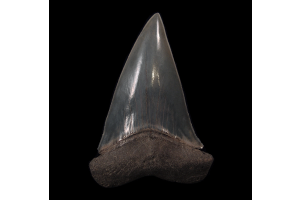
Page 38 - Megalodon
- - December 04, 2025
Design trends come and go. A real fossil never does. If you want a statement piece that mixes science with style, a Megalodon tooth is perfect. This guide shows you how to buy megalodon shark tooth specimens that look incredible at home or in a workspace, while staying true to what Buried Treasure Fossils actually offers.
Start With a Trusted Source
Only shop with a dealer that guarantees authenticity and clearly lists size, origin, and condition. Buried Treasure Fossils specializes in legally collected fossils and backs quality with an authenticity guarantee across categories.
Why does this matter for décor? You get the look you want and the provenance your guests will ask about. You also avoid “polished replicas” that disappoint when they arrive.
Pick the Right Size for the Room
Large rooms can carry a big tooth. Small rooms need subtlety. Think in inches and in sightlines.
● Entry or great room: 5–6+ inch showpieces command attention on a console, pedestal, or bookshelf. Buried
- - December 04, 2025
At our fossil collection, we take pride in offering specimens that capture the timeless beauty of Earth’s ancient past. Among them, the Otodus megalodon from Indonesia holds a special place. These remarkable fossils have fascinated us with their exceptional preservation, color, and structure.
Each specimen allows us to glimpse into a prehistoric world where colossal predators once ruled the oceans. Their natural artistry and geological perfection make them among the most captivating fossils we offer.
Geological Origin and Preservation
The story of Indonesian Otodus megalodon teeth begins deep within the limestone formations of West Java. These fossils are often recovered from the Bentang Formation, a geological layer that dates to the Middle Miocene epoch, around 10 to 15 million years ago. Within this limestone, the teeth have remained protected for millions of years, allowing them to retain their detailed structure and natural sheen.
Because these fossils were buried under stable
- - December 04, 2025
Have you ever come across a fossil online or at a store and thought, “Is this real?” If you’ve been thinking of buying a megalodon tooth fossil, that question is even more important. With their massive size and prehistoric charm, these shark teeth are some of the most fascinating fossils on the market today.
But here’s the truth: many are not real. So how do you know if the megalodon tooth fossil you’re eyeing is the real thing? In this blog, we’ll walk through easy, practical ways to tell the difference between an authentic fossil and a fake.
Let’s begin by understanding why these fossils are so special and valuable.
Why So Many People Want a Megalodon Tooth?
The megalodon tooth fossil is more than just a collector’s item. It’s a piece of prehistoric history. Megalodons were enormous sharks, believed to grow up to 60 feet long. Their teeth, often larger than a human hand, are the only parts of their bodies that fossilized well.
Owning one means holding a piece of Earth’s past. These
- - December 04, 2025
If you’re choosing a megalodon shark tooth necklace, you’ll often see two surface looks: natural (sometimes called “real” or “as-found”) and polished. Both can be beautiful. But they aren’t the same thing, and the finish affects authenticity signals, value perception, and long-term appeal. Here’s a clear guide grounded in how Buried Treasure Fossils curates teeth and fossil jewelry.
What “Real” (Natural) Finish Means
A real, natural finish preserves the tooth’s original surface texture and color as it fossilized. Expect subtle enamel sheen, micro-pitting, and honest wear that tells the tooth’s geologic story. Collectors look for complete roots, intact bourlettes, crisp serrations, and enamel variation—not a mirror glaze. Natural detail is a key reason serious buyers prefer authentic surfaces over high gloss.
At Buried Treasure Fossils, catalog teeth are hand-selected and vetted with authenticity guaranteed. The focus is on condition, structure, and original character, qualities that matter
- - December 04, 2025
At our fossil collection company, we take immense pride in presenting some of the most remarkable pieces of natural history, and among them, megalodon teeth continue to hold a special place. As collectors, researchers, and enthusiasts, we have seen how these extraordinary fossils captivate people worldwide. The fascination lies not only in their enormous size and rarity but also in the incredible history each tooth carries.
Over the years, megalodon teeth have become more than collectible fossils; they are tangible connections to one of the ocean’s most dominant predators and a symbol of prehistoric power and beauty. Understanding the value of megalodon tooth adds depth to this fascination, as it reflects both the rarity and historical significance of these ancient relics.
A Window into Prehistoric Power
Megalodon teeth provide a direct connection to an ancient world dominated by a giant shark that once ruled the seas. These fossils are physical reminders of a species that inspired awe
- - December 04, 2025
A megalodon tooth is more than a fossil. It’s a handheld story from the prehistoric sea. It is science you can feel. It anchors a display, starts conversations, and teaches real-world paleontology. If you collect fossils or you’re about to start, this is the piece that lifts your collection. Here’s why, and how to choose confidently based on the Buried Treasure Fossils catalog.
An Eye-Catching Centerpiece
Megalodon was the largest shark to ever live. Its teeth can exceed 7 inches, with many prized examples between 5 and 6½ inches. That size alone makes a megalodon tooth the natural centerpiece of a shelf or case. The category page confirms these sizes and explains the species’ Miocene–Pliocene age and global presence, so you know what you’re looking at and why it impresses.
Collectors also love details. Heart-shaped crown. Fully serrated edges. A bourlette that can be present in striking colors. These cues are distinct to megalodon and help you learn to evaluate quality over time.
- - December 04, 2025
If you’re asking how much is a megalodon tooth, the short answer is: it depends on size, condition, locality, and, yes, standout color and luster. On Buried Treasure Fossils, vividly colored or glossy, museum-grade pieces command premium prices. Below, you’ll see real examples from the site to anchor expectations, plus a simple checklist to judge value the same way a seasoned collector would.
Why Color and Luster Change The Price
Color isn’t just “nice to have.” It signals the mineral chemistry and preservation of the sediment where the tooth fossilized. Jet blacks, copper reds, creamy tans, blue-and-tan gradients, and high-gloss enamel can lift a specimen into a higher tier, especially when matched with size and crisp serrations. Buried Treasure Fossils highlights these traits in its listings and organizes teeth by celebrated localities and color categories, including BLACK Megalodon, Copper Red (Meherrin River, NC), Caribbean light-toned enamel, Sharktooth Hill blue-and-tan pieces, and
- - December 04, 2025
Somewhere along a quiet shoreline, the tide pulls back and reveals a fragment of time—dark, triangular, and gleaming faintly beneath the sand. Your heart skips a beat as you realize it could be something extraordinary: a relic from one of the most formidable predators that ever lived. Long before humans walked the earth, the megalodon dominated the seas. Today, finding a megalodon tooth connects us to that ancient past in a tangible way, letting us hold millions of years of history in our hands.
The thrill of such a discovery isn’t just about the fossil itself; it’s about the moment of recognition—the instant when you realize you’ve unearthed a piece of Earth’s forgotten story.
Why These Ancient Giants Still Fascinate Us
Megalodons, often measuring more than fifty feet long, once ruled the oceans with unmatched strength. Their massive teeth—some over seven inches—were designed for crushing bone and devouring large prey. Although they disappeared around three million years ago, their presence
- - December 04, 2025
If you have ever wanted to own a piece of ancient history, the Otodus megalodon, So. Carolina teeth are an incredible choice. These giant shark teeth are more than just fossils; they show us the power of one of the largest predators to ever swim the oceans. In this blog, we will explore what makes these teeth from South Carolina so special, why collectors love them, and how you can be part of this exciting prehistoric story.
What Is the Otodus Megalodon?
The Otodus megalodon was a giant shark that lived millions of years ago. It could grow over 60 feet long, which is longer than a school bus. Its teeth are huge and very sharp, with some teeth measuring over seven inches. These teeth are the most common remains we have of this massive shark because its cartilage skeleton did not fossilize well.
Many of these teeth come from the coastal areas of South Carolina. They are dark gray or black, showing how they fossilized in the region’s soil over thousands of years. These teeth are highly
- - November 10, 2025
Imagine holding a relic that once belonged to one of the ocean’s most formidable creatures—a fossilized memory of nature’s untamed era. Worn around the neck, this fragment of history becomes more than jewelry; it’s a silent story of survival, mystery, and awe. A megalodon tooth necklace captures this connection between humanity and the deep, reminding us that beauty often lies in the echoes of the past.
Each tooth once belonged to a predator that ruled the seas millions of years ago —a shark so large that its bite could crush bones with ease. Today, these fossils are admired not for their ferocity but for their form—fossilized enamel polished by time, revealing stunning shades of gray, tan, and black.
As you explore the idea of wearing one, you’re not just choosing an accessory; you're also making a statement. You’re embracing a conversation piece that whispers of lost oceans and colossal creatures.
The Allure of Fossil Jewelry
Fossil jewelry holds a charm unlike anything crafted by modern