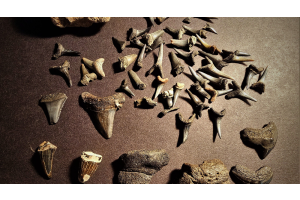
When we hold a large, triangular fossil in our hands, we can sense the same mystery that once captivated medieval Europe. To those before us, these objects were not recognized as the teeth of ancient sharks. Instead, they were framed as glossopetrae, or “tongue stones.” People believed these strange forms had been tongues of serpents or dragons, turned into stone by divine power. Over time, they became cherished amulets, passed down in households, kept in churches, and treasured by nobles.
Their story helps us understand how human imagination once shaped natural history, long before science revealed the truth, and it even links to discoveries such as megalodon shark teeth in the UK that continue to connect fossils with wonder.
Serpents’ Tongues or Sacred Stones?
In the Middle Ages, the natural world was often explained through faith and legend. Glossopetrae were thought to fall from the skies during eclipses or storms. Writers like Pliny the Elder described their supposed powers, cementing the idea that these were more than simple stones.
In Malta, a powerful legend connected them to the Apostle Paul. After surviving a shipwreck, he was said to have cursed the island’s serpents, leaving their tongues petrified in the earth. These fossils were embraced as “St. Paul’s tongues,” regarded as tokens of divine power.
The dramatic form of these fossils made them feel ready-made as relics. Their polished edges and triangular shape call out for interpretation, and so they became objects of awe and reverence.
Amulets Against Poison and Peril
Medieval society lived with constant fear of hidden threats—poison in food, snakebites, and illness without cure. Glossopetrae were believed to hold protective strength. When dipped into wine, they were expected to reveal poison. When ground into powder, they were thought to neutralize venom.
Worn on pendants or hidden in clothing, they were carried as silent guardians. Nobles and rulers prized them not only for their supposed medical value but also for their symbolic weight. Glossopetrae represented divine protection at a time when both survival and reputation depended heavily on unseen forces.
Treasures of Prestige
Glossopetrae also carried an air of status. Mounted in silver or displayed in private collections, they reflected both wealth and wisdom. To own one was to demonstrate access to rare and powerful relics.
During the Renaissance, collectors placed tongue stones in cabinets of curiosity. These collections brought together objects of nature and myth, and glossopetrae stood out as items that seemed to balance both worlds. Their reputation as both protective amulets and mysterious fossils made them especially prized.
A Turning Point in Understanding
Though stories about glossopetrae were deeply rooted, observation eventually began to challenge belief. Some scholars noticed that the fossils resembled the teeth of living sharks. In 1616, Fabio Colonna published illustrations pointing out this similarity, though his claims did not immediately take hold.
The real breakthrough came in 1667, when Nicolaus Steno studied a shark in Florence and compared its teeth with glossopetrae. His careful analysis led him to conclude that the stones were not serpent tongues but shark teeth preserved in rock. This insight laid the groundwork for paleontology and shifted the conversation from legend to science.
Steno’s recognition also introduced the idea of stratigraphy—that fossils were buried in layers of stone that marked the passage of time. Glossopetrae became not tokens of curses or blessings, but evidence of ancient oceans and creatures that had vanished long before human history began. Fossil finds such as megalodon shark teeth in the UK now serve as a reminder of how these discoveries continue to reshape our understanding of prehistoric seas.
From Myth to Fossil Record
The reinterpretation of glossopetrae captures humanity’s long journey from myth to science. For centuries, the stones were believed to hold magical powers. They were symbols of protection, of faith, and of fear conquered through belief.
When science redefined them as fossilized shark teeth, they did not lose their power to fascinate. Instead, they gained a new role. They became evidence of life in prehistoric seas, connecting people not only to stories of saints and serpents but also to the deep history of earth itself.
Why They Remained Beloved
Even after their true origin was revealed, glossopetrae continued to be valued. Their endurance can be traced to several reasons:
● Visual force: The unique triangular shape made them memorable and eye-catching.
● Symbol of safety: They embodied reassurance in uncertain times.
● Sacred ties: Religious legends kept their aura alive.
● Social prestige: Ownership signaled access to rare and meaningful objects.
Glossopetrae lived in two worlds at once—mythical and scientific—ensuring they never entirely faded from cultural memory.
The Enduring Lesson of Glossopetrae
Glossopetrae show how humans have always sought meaning in the unknown. Before scientific explanation, imagination filled the gaps. Fossils became tongues of serpents, divine relics, or guardians against poison. These beliefs reflect not error, but creativity—a way for people to make sense of mysteries that felt larger than themselves.
Today, these fossils are recognized as the remains of sharks that swam in prehistoric seas. Yet the myths that once surrounded them enrich their story, reminding us that discovery is not only about facts but also about the human need for wonder.
Conclusion
The history of glossopetrae illustrates the passage from superstition to knowledge. Once treasured as protective amulets and revered as relics, they were later revealed as fossilized shark teeth. In medieval Europe, they reflected fear, faith, and imagination. In modern science, they reveal the vast history of life on earth. Their dual identity makes them both cultural artifacts and scientific evidence, much like megalodon shark teeth in the UK, which continue to inspire awe while linking the present to ancient oceans.
“Every block of stone has a statue inside it, and it is the task of the sculptor to discover it.” – Michelangelo.
Like the sculptor who uncovers form within marble, people once saw serpents and saints within fossils.
Today, science reveals its proper shape, yet both visions remind us of the enduring human need to shape mystery into meaning.