At our service, we have the opportunity to work with remarkable fossils that tell the story of a giant that once ruled the seas. Megalodon teeth are among the most fascinating relics we encounter, drawing collectors who admire their massive size, distinctive form, and the rarity that makes certain specimens unforgettable.
Over the years, we have seen firsthand how size, shape, and rarity each play a role in determining value, and how the balance of these qualities brings a collection to life. For collectors who also wonder about the best place to find megalodon teeth in Florida, the qualities that determine value remain as important as the hunt itself.
Size: The Giant’s Legacy
Few things make an impression quite like the size of a megalodon tooth. These fossils are physical reminders of a shark that reached extraordinary proportions, and their dimensions reflect that legacy.
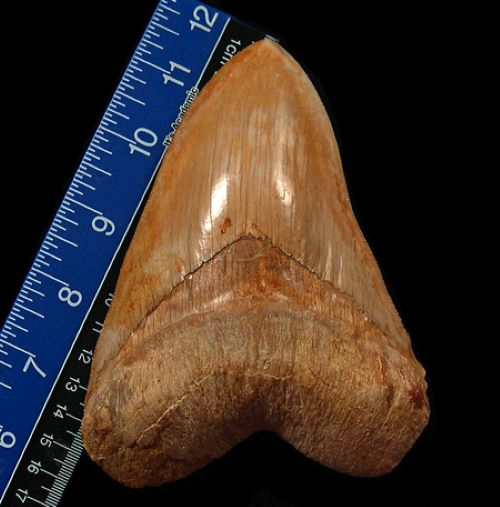
Some of the largest specimens measure over seven inches—an extraordinary size that instantly becomes the highlight of any collection. Fossils reaching six inches or more are already considered exceptional, while those near or beyond seven inches are viewed as treasures that few will ever encounter. These larger fossils tend to carry a certain presence that naturally draws attention and sparks conversation, whether displayed in a case or held in hand.
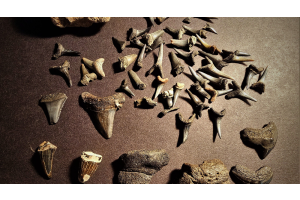
Smaller specimens, however, should not be overlooked. They often represent juvenile sharks, giving insight into the growth and life stages of this prehistoric predator. For collectors, the spectrum of sizes—from small teeth to massive giants—adds depth and perspective, making every specimen significant in its own way. By gathering fossils of varying sizes, a collection begins to tell a broader story of the species’ life cycle, making size not only about scale but also about narrative.
Shape: Nature’s Design Preserved in Fossil Form
While size can command attention, shape is what gives a fossil its true character. Megalodon teeth are typically triangular with serrated edges, designed for strength and precision. Collectors often look for symmetry, sharp serrations, and an intact crown, since these features showcase the natural design in its clearest form.
The crown and root together create a balanced structure, and when both are intact, the fossil feels complete. A tooth with a broken or eroded root may lose some appeal, while a specimen with a strong base and sharp crown becomes far more attractive to collectors. Even slight differences—whether in curve, thickness, or proportion—add individuality, ensuring that no two fossils are precisely alike.
The enamel condition further enhances shape perception. Smooth, glossy enamel often gives the tooth a preserved elegance, while weathered enamel emphasizes the age and history of the fossil. Each surface tells a different story, one of either pristine preservation or a long passage of time beneath sediment and water. This duality is what makes shape so fascinating: it reflects both the design of nature and the journey of time.
Rarity: The Collector’s Prize
Rarity often becomes the deciding factor when two fossils seem equal in other qualities. While Florida is known for yielding a variety of megalodon teeth, those that combine impressive size with excellent preservation and symmetry are exceptionally uncommon. When a fossil meets all three of these qualities, it often becomes the centerpiece of a collection.
Even subtle distinctions can make a tooth rare. Fossils that display unusual color tones or unique enamel patterns stand out, giving collectors something they know cannot easily be replicated. The thrill of discovering or owning such a specimen comes not only from its appearance but also from the knowledge that few others will have anything like it.
For those fascinated by rarity, the best place to find megalodon teeth in Florida is not only about location but also about patience, persistence, and the joy of uncovering something that embodies exclusivity. Rarity, in this sense, transforms collecting from a hobby into a pursuit marked by discovery and pride.
The Balance Between Size, Shape, and Rarity
So which quality matters most: size, shape, or rarity? The reality is that collectors rarely separate these attributes. Instead, they weigh them together, often finding that each one enhances the others.
● A massive seven-inch tooth may dominate with its sheer presence.
● A smaller tooth with flawless symmetry and serrations may rival larger fossils in value.
● A rare specimen with a unique enamel tone or extraordinary preservation may surpass both size and shape in desirability.
This balance is what makes collecting so engaging. Every fossil offers a different combination of these traits, and every collector may see something different in the same specimen. That individuality creates both challenge and reward in the pursuit of megalodon teeth.
A Spectrum Worth Celebrating
The actual fascination of megalodon teeth lies not in a single specimen but in the spectrum they create when viewed together. Collectors often seek to build a range, from the smallest juvenile teeth to the most significant adult fossils. This diversity offers a more complete picture of megalodon life, from its earliest stages of development to the height of its dominance.
Size illustrates growth. Shape demonstrates natural design and individuality. Rarity fuels the sense of excitement and discovery. Together, these qualities transform a collection into a narrative—one that tells the story of a prehistoric predator while celebrating the uniqueness of every fossil it left behind.
The act of collecting is not simply about acquisition; it is about preservation and appreciation. Each tooth connects collectors to ancient oceans, and the pursuit of these fossils ensures that the story of megalodon continues to inspire curiosity and admiration.
Conclusion: A Fossil with Many Stories
In the end, what collectors value most in Florida megalodon teeth is not limited to one quality. Size speaks to the grandeur of the shark, shape reflects the artistry of natural design, and rarity ensures exclusivity that makes certain fossils unforgettable.
Each fossil carries its own story, and together they remind us of a predator that once defined the seas. Whether admired for size, appreciated for design, or cherished for scarcity, these teeth remain symbols of both history and nature’s craft. And for those who ask about the best place to find megalodon teeth in Florida, the answer often lies not only in the search but also in the recognition of what makes each fossil valuable once it is found.
As the paleontologist Robert Bakker once said:
“Fossils are the keys to a time machine. They open doors to worlds we can never walk in, but we can still see and understand.”
This sentiment captures the essence of collecting megalodon teeth—they are more than relics. They are windows into a world long gone, carried forward through the qualities of size, shape, and rarity that collectors will always treasure.