

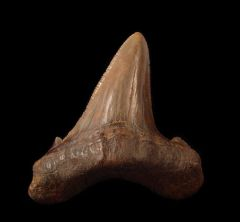
We specialize in sourcing rare and authentic fossil specimens that reflect the ancient marine life once thriving in Earth's prehistoric oceans. Our carefully curated collection includes some of the finest Megalodon teeth ever discovered. Among these, the Peru Megalodon tooth stands out for its remarkable preservation, natural beauty, and scientific value. These specimens are unearthed from the Pisco Formation, one of the most productive fossil beds for marine vertebrates.
This ancient region in southern Peru, once covered by Miocene and Pliocene seas, has provided a unique environment where Megalodon teeth could be preserved in extraordinary detail. Over millions of years, sedimentary layers helped encapsulate and protect these fossils, giving them the visual and structural traits that collectors and researchers value.
A Historic Fossil Bed
The Pisco Formation has produced a wide array of fossilized marine life, including rays, whales, dolphins, and large sharks. Among these discoveries, Megalodon teeth are some of the most notable. These fossils, often measuring more than six inches, are recovered from areas like the Ocucaje Desert. The conditions that once existed in these waters helped preserve these impressive remnants with minimal disturbance.
As sediment settled and covered the sea floor, it allowed for ideal fossilization. Over time, minerals replaced organic material, and the surrounding pressure helped retain the original form. This process has resulted in some of the most complete and aesthetically appealing Megalodon teeth available.
Characteristics of High-Quality Pisco Megalodon Teeth
Several features help distinguish teeth from the Pisco Formation, setting them apart in appearance and preservation. These traits often influence both scientific interest and collector demand.
1. Enamel Condition
The enamel on these teeth can be exceptionally well-preserved. Many specimens may retain a glossy, smooth finish that enhances natural coloration and surface patterns. Minimal weathering allows the enamel’s fine ridges and surface lines to remain visible.
Teeth with strong enamel integrity are more likely to maintain their original structure and appearance over time. This helps ensure their place in both academic study and personal collections.
2. Complete Bourlettes and Roots
The bourlette, a narrow band near the crown base, is a critical feature in Megalodon teeth. When fully intact, it adds significantly to the value and scientific clarity of a specimen. Pisco Formation fossils often include a bourlette that is 100% complete.
Additionally, roots found on these specimens may display complete symmetry and no signs of chipping or post-discovery restoration. A root that has remained structurally sound speaks to the fossil’s burial environment and overall durability.
3. Sharp, Intact Serrations
Serrations once helped Megalodon tear through thick prey. Today, they offer a glimpse into the tooth’s original use and preservation. Many Pisco Formation teeth still show large, sharp serrations that run cleanly from the base of the crown to its point.
These features can become dulled in harsher sedimentary environments, but the conditions in this region may have helped preserve them in more complete form.
4. Color Variation
Color is one of the most visible indicators of a fossil’s burial environment. The sediments surrounding each tooth influence its final appearance. In this region, specimens frequently exhibit warm tones, including browns, oranges, grays, and blacks.
One tooth may feature an orange-brown crown, a whole dark root, and a clearly defined bourlette. These natural hues are not artificially altered and often remain consistent across older collections.
These visual and structural characteristics make the Peru Megalodon tooth a preferred example for fossil collectors who seek well-preserved, naturally formed specimens.
Scarcity and Collection History
Peruvian Megalodon teeth have become harder to acquire due to increasing fossil export restrictions. Most available pieces come from earlier finds when access to fossil-rich zones was less limited.
This limited availability makes existing specimens more valued and more challenging to replace. Many listings specify that a tooth comes from an “old collection,” indicating that comparable examples may not surface again.
Such rarity elevates the status of these teeth even further. Their presence in established fossil inventories is often seen as a sign of historical value and early collection timing.
Why Fossil Origin Matters
The location where a fossil was discovered often influences its physical condition and visual appeal. Not all fossils age the same way, and the Pisco Formation’s specific geological setting has played an essential role in shaping the condition of these specimens.
Factors contributing to preservation include:
● Fine-grained sediment layers that helped cushion and protect the teeth
● Stable environmental conditions that limited erosion and mineral loss
● Lack of significant seismic activity that might otherwise disrupt the burial layers
These factors helped ensure that teeth from this site remained structurally sound and aesthetically complete during fossilization.
Collector Evaluations
Teeth from the Pisco Formation continue to attract positive evaluations among collectors. Descriptions of these fossils often include terms related to structure, color, and sharpness. Common phrases highlight the enamel quality, intact roots, and rare coloration.
Examples from available collections include descriptions such as:
● “Extra-large and razor-sharp serrations”
● “100% complete bourlette and root”
● “A top 2% example”
These phrases reflect both the quality and the limited nature of specimens from the area. When a tooth meets all of these conditions, it becomes a rare addition to any fossil collection.
A Legacy Preserved in Stone
Fossils recovered from the Pisco Formation offer more than scientific data. They provide a preserved fragment of marine history shaped by ancient ecosystems and favorable geological conditions. The sharp serrations, full roots, rich coloration, and intact enamel seen in these fossils represent the outcome of a natural preservation process that took place over millions of years. Few other localities continue to provide teeth with the same level of completeness and visual consistency.
Today, each Peru Megalodon tooth not only represents the largest predatory shark to have lived but also serves as a record of Earth’s ability to preserve organic material with remarkable detail. These fossils reflect a unique environment that protected them and allowed their features to remain visible and intact to this day.






