

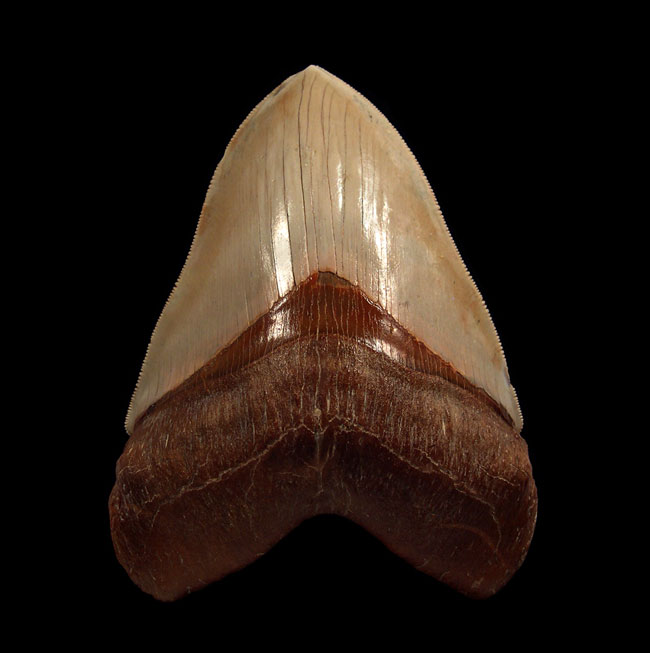
Along Chile's rugged, fossil-rich coastal terrain, we have witnessed an extraordinary paleontological achievement. Through the dedication of geologists, paleontologists, and local experts working with us, the discovery of what may be the biggest megalodon tooth ever found has become a reality. This remarkable fossil has captured the attention of marine history enthusiasts and fossil collectors across the globe.
Its size is astonishing, as it measures longer and broader than nearly any previously recorded Megalodon specimen. This single find could be considered a once-in-a-lifetime discovery and a new benchmark in Megalodon research.
More Than Size: A Window into Prehistoric Power
The discovery is not only remarkable for its dimensions but also for its preservation. The tooth still carries intricate serrations, sharp edges, and well-formed root lobes. These features can provide scientists with rare insight into Megalodon's anatomy and hunting abilities.
As a tangible link to one of the most formidable marine predators of all time, the tooth is showing us strength, survival, and prehistoric dominance preserved in fossil form.
Evolution, Feeding, and Extinction
This monumental fossil could help answer important questions about Megalodon’s evolutionary path, biological traits, and extinction. Because of its size and preservation, it may allow researchers to reconstruct the shark’s life history, feeding habits, and growth patterns.
The fossil may also encourage renewed interest in growth-rate models and extinction theories. Did the species' massive size create food shortages? Could it have made the predator more vulnerable during environmental shifts? These questions, prompted by the fossil's enormity, may help us understand how even the strongest predators can disappear under changing conditions.
Modeling and Education
The biggest megalodon tooth ever found is also helping advance digital fossil modeling. High-resolution scans are being created so researchers can recreate 3D models of Megalodon skulls. This work is improving the accuracy of museum displays and educational exhibits.
For museum curators and educators, this specimen provides an opportunity to spark imagination and help prehistoric life become more accessible and visually engaging.
Inspiration Across Generations
The Chilean Megalodon tooth has become more than a scientific relic. It has reignited curiosity about ancient oceans and their inhabitants. Students, young learners, and future paleontologists are finding inspiration in this discovery.
As a symbol of Chile’s fossil heritage, it is drawing international attention and reinforcing the country’s importance in uncovering Earth’s marine history.
Cultural Resonance
The discovery is resonating on a cultural level as well. This fossil reminds people of Earth’s vast prehistoric past, when colossal predators dominated the seas. It is also encouraging curiosity about vanished worlds. By doing so, it emphasizes how important it is to preserve fossils as records of life long gone.
A Turning Point in Prehistoric Discovery
The find represents more than a trophy. It is marking a turning point in the understanding of prehistoric life. The tooth is challenging theories, raising fresh questions, and adding another chapter to the Megalodon story.
The careful excavation and commitment to preservation ensure that this discovery will remain part of the fossil record. It is safeguarding a piece of Earth's history that might otherwise have been lost.
Expanding the Legacy of Discovery
What makes this fossil even more fascinating is the way it connects to broader paleontological work in Chile. The country has long been recognized for its wealth of prehistoric remains, from marine reptiles to ancient mammals, and the unearthing of a record-breaking Megalodon tooth adds another remarkable piece to that puzzle.
For local communities, the discovery has become a source of pride and inspiration. Fossil-rich regions often serve as gateways for education and tourism, and this find could encourage greater awareness of the value of preserving such sites. By protecting the places where fossils are uncovered, future generations may also have the chance to make discoveries that reshape history.
The scientific community is also benefiting from the exchange of knowledge that comes with such a high-profile fossil. Researchers from different parts of the world are analyzing the specimen, comparing it with existing collections, and using the data to refine ongoing studies about prehistoric sharks. Each new layer of understanding helps piece together a more complete picture of Megalodon's dominance in the ancient seas.
The Human Connection to Fossils
One of the most compelling aspects of the discovery lies in its ability to connect human imagination with prehistoric reality. A single fossilized tooth allows people to visualize the enormous predator it once belonged to. It helps bring to life stories of survival, adaptation, and extinction that might otherwise remain abstract concepts.
Museums, schools, and educational programs now have an extraordinary artifact to reference when teaching about Earth’s distant past. For young minds, holding or even seeing a cast of the tooth could spark a lifelong passion for science. For adults, it serves as a reminder of how much remains hidden beneath the surface, waiting to be discovered.
The fossil also encourages reflection on the fragility of even the most dominant species. Despite its size and power, Megalodon eventually disappeared, reminding humanity that survival depends on the ability to adapt to ever-changing environments.
Conclusion: A Fossil Legend for Our Time
The discovery of the biggest megalodon tooth ever found in Chile has become a rare mix of scientific value, educational contribution, and cultural meaning.
From the fossil-rich cliffs of Chile, this tooth reminds us to stay curious about the secrets that still lie beneath the surface. It shows that the story of our planet is continuing to unfold, with discoveries waiting to reveal the mystery and power of prehistoric life.
As paleontologist Loren Eiseley once said, “If there is magic on this planet, it is contained in water.” This fossil is proof that the oceans still hold echoes of their ancient magic, inviting us to imagine, learn, and connect with a world that came long before our own.






