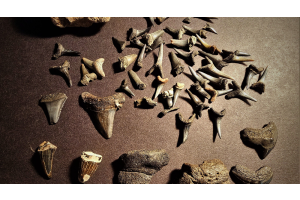
In our experience with fossil collecting, we have witnessed how certain discoveries capture curiosity more than others. Among them, the megalodon tooth remains one of the most extraordinary finds. These massive, serrated fossils have continued to fascinate collectors around the world.
Through our work, we have seen how some teeth possess a level of rarity and preservation that makes them suitable for auction. Understanding when a tooth deserves such distinction requires exploring the features that define its worth in the fossil market.
The Legacy of the Megalodon Tooth
The megalodon, classified under the genus Otodus megalodon, was once the largest known predator of the ancient oceans. It lived during the Miocene and Pliocene epochs and is believed to have reached lengths of nearly 50 to 60 feet. Because its skeleton was made of cartilage, only the teeth and a few vertebrae have survived as fossils. These teeth, often discovered in marine sediments, stand as powerful reminders of a time when the oceans were ruled by giants.
Collectors and researchers often treasure these fossils for their connection to prehistory. Every tooth that has been unearthed tells a small part of an ancient story, preserved in the minerals of time. Since such specimens are rare and naturally finite, the demand among collectors remains strong. When a specimen is exceptionally preserved, it gains recognition not only as a fossil but also as an artifact of geological history that can command attention in auctions.
Key Elements That Elevate a Tooth to Auction Level
Not all megalodon teeth qualify for auction consideration. Specific factors determine whether a fossil carries the quality and rarity expected by serious collectors.
Size
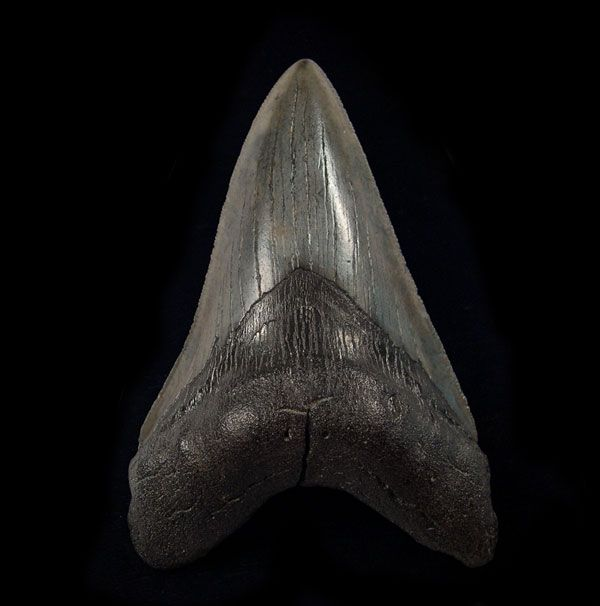
The first criterion that usually draws attention is size. Smaller teeth, typically under four inches, are more common and often serve as introductory pieces in personal collections. However, as the size increases beyond five inches, the rarity and desirability grow. Teeth measuring six to seven inches are exceedingly uncommon and can be viewed as centerpiece specimens. Large teeth reveal both the scale of the prehistoric shark and the geological preservation that has allowed them to endure.
Color and Aesthetic Appeal
Color also contributes to how a tooth is perceived. During fossilization, minerals replace the original material, creating natural color variations. Depending on the minerals present in the surrounding sediment, teeth may appear black, gray, tan, brown, or even show rare shades of blue or green.
Teeth with distinct, evenly distributed color often draw more interest from collectors. Some regions are known for producing particularly striking examples. For instance, the Meherrin River in North Carolina has yielded copper-toned specimens that are admired for their uniqueness. Such variations make each tooth visually distinct and contribute to its desirability when presented at auction.
Rarity and Provenance
The origin of a tooth often enhances its importance. Fossils from sites known for exceptional quality naturally carry added prestige. One of the most recognized localities, the Lee Creek mine in the United States, produced remarkable megalodon teeth with strong triangular crowns and sharp serrations. Since the site is now closed to collectors, existing specimens from that region have become especially rare and sought after.
Provenance, or the recorded history of the fossil, also adds to its value. Documentation of where the fossil was found, the layer of sediment it came from, and records of previous ownership help confirm authenticity. Teeth supported by verifiable provenance tend to be viewed as more trustworthy, particularly in formal auctions where transparency is crucial.
Authenticity and Verification
Authenticity is one of the most critical aspects of fossil evaluation. Each specimen must be proven to be genuine, naturally formed, and not a replica or composite. Reputable sellers and auction platforms usually require proper authentication documents, which confirm the specimen’s legitimacy and detail any minor restoration that may have been performed.
High-value fossils are often examined under magnification to verify their natural formation. Experts look for unique patterns, mineral deposits, and wear marks that confirm their age and geological consistency. These verification steps help maintain confidence in both buyers and sellers, ensuring that only genuine specimens reach the auction stage.
Auction-Worthy Examples
A tooth becomes worthy of auction when all the essential factors align. Large specimens exceeding six inches in length are typically classified among the most valuable. Their size, condition, and provenance create a level of distinction that makes them stand out in the fossil trade.
Specimens with striking coloration, such as those displaying copper or bluish tones, often attract significant interest. Fossils originating from now-closed collecting sites, including the Lee Creek mine, gain added value due to their increasing scarcity.
In auctions, unaltered fossils usually receive the highest regard. Natural imperfections may exist, but authenticity often takes precedence over cosmetic correction. Collectors tend to favor fossils that maintain the integrity of their geological story rather than those that have been heavily restored.
The Role of Auctions in Fossil Trading
Auctions play an essential part in the trading of significant fossils. They provide a professional environment where verified specimens are presented to collectors, institutions, and enthusiasts. Auctions help determine fair market value through open bidding, allowing demand and rarity to set the final price.
Trusted auction platforms ensure that all documentation is in order, confirming both the origin and authenticity of each specimen. The visibility of an auction also helps establish a record for the fossil, giving it a recognized history that increases its credibility and future value.
Auction events often feature items that have undergone extensive verification. This process not only protects collectors but also upholds the integrity of the fossil market. As a result, auctions serve as both a trading venue and a form of preservation for the world’s most remarkable natural relics.
Summary: When Does a Tooth Deserve Auction Status
Determining when a megalodon tooth is valuable enough for auction depends on several measurable conditions. A fossil typically meets the criteria when it:
1. Measures six inches or more in length.
2. Maintains excellent condition with complete serrations, enamel, bourlette, and root.
3. Displays appealing natural coloration and mineral balance.
4. Has a clear and verified origin, particularly from historically significant or closed fossil sites.
5. Possesses full authentication and minimal restoration.
6. Demonstrates consistent interest among serious collectors and institutions.
A tooth that fulfills these standards becomes more than an ancient remnant. It represents an artifact of natural history, preserved through geological time and admired for both its scientific and aesthetic qualities.
In the end, auction-worthy megalodon teeth symbolize a rare meeting between nature and history. Each one connects us to a prehistoric world that once thrived beneath the oceans. When such a specimen appears at auction, it serves as a reminder of Earth’s vast and powerful past, encapsulated forever within the fossilized enamel of a single remarkable tooth. As one collector once said, “Holding a megalodon tooth is like shaking hands with prehistory.”