

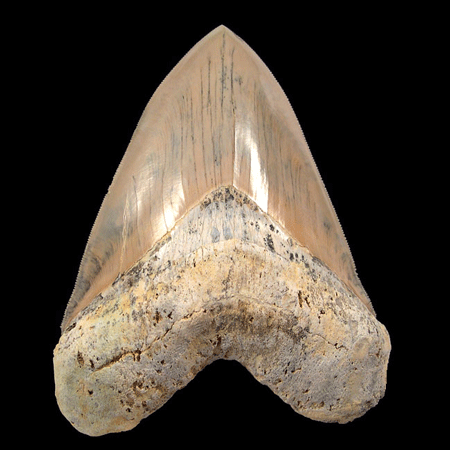
Imagine holding a fossil that captures the power of an apex predator from millions of years ago. A 7 megalodon tooth, preserved with remarkable detail, represents more than a piece of prehistoric history. It is a physical link to the ocean’s most formidable predator, offering collectors, scientists, and enthusiasts a chance to witness natural history in its rarest form.
The Rarity of a 7-Inch Specimen
Most Megalodon teeth measure between three and five inches in length. Anything that exceeds seven inches is extraordinary, placing such fossils among the top tier of all recorded discoveries. The reason lies in both biology and preservation. Larger teeth were more prone to breakage during the shark’s lifetime or during fossilization, so finding one intact is uncommon.
A 7-inch specimen represents the survival of a fossil against immense geological pressure and time. Its rarity elevates its importance in both scientific study and private collections. Very few of these teeth are unearthed in conditions suitable for display or research, which makes each discovery a remarkable event in itself.
Preservation as the True Measure of Value
While size carries significant weight, condition is equally important in defining value. The sharpness of serrations, the strength of the enamel, and the integrity of the root all determine how a fossil is classified. A tooth that maintains these qualities is often described as a museum-grade specimen, one that captures attention for its beauty as much as its historical significance.
A 7 megalodon tooth in excellent condition tells a clear story of its role in the prehistoric ocean and its survival through the fossilization process. When such details remain intact, the fossil becomes both a scientific resource and an aesthetic marvel.
A Bridge to Ancient Oceans
The fascination with a 7-inch Megalodon tooth extends well beyond measurements and surface details. Each fossil acts as a tangible connection to ancient oceans where enormous sharks once reigned supreme. Its presence sparks curiosity, teaching observers about the immense scale of prehistoric marine life.
Encountering a specimen of this size is like stepping into history, as it embodies the power, dominance, and ecological role of a predator that shaped ancient marine environments. The emotional weight of such a discovery enhances its value, creating a sense of awe that size alone cannot explain.
Scientific Importance and Collector Appeal
The scientific and cultural appeal of these fossils extends to multiple audiences. Researchers rely on them for insights into shark anatomy, feeding behavior, and evolutionary history. Collectors value them for their rarity and dramatic display, often considering them the centerpiece of fossil collections.
Investors recognize their consistent value growth, treating them as both historical artifacts and long-term assets. Each 7-inch specimen holds significance in ways that extend far beyond aesthetics, blending scientific discovery with cultural fascination.
From Ocean Depths to Fossilized Legacy
The journey of a Megalodon tooth from a living predator to a fossil millions of years later is remarkable in itself. Sharks, including the Megalodon, shed thousands of teeth during their lifetimes. Some of these teeth settled into seabeds filled with sediment, where conditions allowed for rapid burial. Over time, mineral replacement preserved the shape and detail of the tooth, transforming it into stone.
This fragile and rare process explains why complete specimens of seven inches or more are so scarce. Each fossil that emerges intact tells not only the story of the predator that once bore it but also of the geological forces that preserved it.
What Defines True Value
The value of a 7-inch Megalodon tooth can be understood through two defining pillars: size and condition. The dimensions place such specimens in the rarest category of all fossil discoveries, while preservation ensures that the fossil tells its story with clarity and integrity.
Together, these elements elevate the fossil beyond ordinary status, transforming it into an object of extraordinary historical and scientific importance. Without its size, the rarity diminishes, and without its preservation, its significance fades. The combination is what makes these fossils remarkable.
Preserving a Prehistoric Treasure
Once unearthed, proper care ensures that these fossils retain their integrity for generations. Controlled environments free from extremes of temperature and humidity help protect them from further erosion. Handling should be minimized to prevent damage to the enamel or serrations.
Display cases with UV protection safeguard their surfaces from light exposure while also showcasing their striking form. Attention to preservation ensures that the fossil remains a lasting record of Earth’s natural history and maintains its place as a valued piece of science and culture.
A Fossil That Transcends Time
A 7-inch Megalodon tooth represents the convergence of rarity, preservation, and historical weight. It is more than a large fossil, carrying both scientific value and cultural fascination. Collectors admire it as a crowning achievement, scientists study it for the secrets it reveals about prehistoric life, and enthusiasts view it as a bridge to the ancient past. Its survival across millions of years demonstrates both natural resilience and the delicate balance of fossilization, securing its place as one of the most significant relics of Earth’s prehistoric seas.
Conclusion
Size and condition define the value of a seven megalodon tooth. Its dimensions place it among the rarest of fossil discoveries, while preservation determines whether it is considered ordinary or exceptional. A specimen of this magnitude embodies the grandeur of prehistoric oceans and the geological forces that safeguarded it for millions of years.
As a research subject, a collector’s treasure, or a museum display, a 7-inch Megalodon tooth represents the meeting of power and preservation. Its rarity makes it remarkable, and its condition ensures that its story continues to inspire long into the future.






