When it comes to fossil shark teeth, few specimens capture attention like the massive teeth of the Megalodon. As collectors and enthusiasts, we often seek fossils that not only represent an incredible chapter of natural history but also hold qualities that make them rare and distinctive. UK Megalodon teeth, found in places such as Norfolk, offer an unusual and fascinating glimpse into prehistoric seas.
Their scarcity, impressive size, and striking preservation allow us to appreciate them as exceptional finds. The allure of a megalodon tooth in the UK lies not only in its geological age but also in its rarity and authenticity.
A Rare Discovery from the Norfolk Coast
UK Megalodon teeth are not frequently encountered, and that rarity plays a significant role in what makes them so appealing. One example described as “very rare” comes from Norfolk, a region where such finds are not typically abundant. Measuring nearly five inches at 4 7/8”, this tooth demonstrates the extraordinary size these creatures could reach, and it also highlights how exceptional it is to locate a specimen of this magnitude in the United Kingdom.
Collectors often wait for years for opportunities like this, which is why, when extra Megalodon teeth were added in November 2022, it was seen as an exciting event. These finds remind us that although Megalodon teeth appear in fossil markets worldwide, not every locality produces examples of such distinction.
Distinctive Aesthetic Qualities
Beyond sheer size, UK Megalodon teeth can display visual features that immediately draw interest. The Norfolk specimen, for instance, is described as having a great brown color, a warm and earthy tone that sets it apart visually from other finds. Good enamel quality further adds to its appeal, as enamel can often be eroded or damaged over millions of years.
When enamel remains intact and attractive, the tooth is able to tell a stronger story of its preservation. For collectors, these subtle qualities are highly valued because they bring a sense of life and vibrancy to the fossil, as if the seas of the Miocene still whisper through the preserved enamel.
Geological Context and Provenance
The age and origin of UK Megalodon teeth also give them a distinct place in fossil collecting. These specimens come from Miocene deposits, dating back millions of years between 23 and 5 million years ago. The Miocene was a time when the oceans supported an extraordinary variety of marine life, with the Megalodon reigning as one of the most powerful predators.
Finding a specimen from this age in Norfolk, United Kingdom, places the fossil into a geological and geographical context that is unusual compared to more typical Megalodon localities such as the eastern coast of the United States or specific areas of Africa. This provenance adds character to the fossil, reminding us that the ancient seas stretched far and wide, and evidence of the Megalodon’s presence could surface in places not commonly associated with such giants.
Preservation and Authenticity
The preservation of a fossil is crucial for both scientific and collector value, and UK Megalodon teeth provide strong examples of authentic and natural condition. The Norfolk tooth is guaranteed to be genuine, and it has not undergone any repair or restoration. This integrity ensures that the specimen remains true to its history, unmarred by modern attempts to enhance its appearance. The enamel is noted as good, though the root has a damaged corner, and the serrations show signs of wear. The bourlette, the dark band that lies between the blade and the root, is approximately 90 percent complete.
These details, while pointing to minor imperfections, actually enhance the authenticity of the fossil. They reveal the journey it has endured through time, carrying the marks of age rather than artificial alteration. Collectors often prefer fossils in natural condition because they bring with them the weight of authenticity and the story of survival through millions of years.
Why Collectors Value UK Megalodon Teeth
The combination of features found in UK Megalodon teeth contributes to their strong collectible appeal. Size is always a defining factor, and a specimen approaching five inches is undeniably impressive. Color and enamel quality bring additional beauty that enhances visual impact. Provenance adds another layer of interest, with Norfolk offering a less typical yet scientifically significant origin. Finally, authenticity and natural preservation cement the tooth’s value, as buyers know they are acquiring something genuine, unaltered, and historically significant.
Together, these qualities create fossils that appeal to those who are passionate about collecting pieces that tell a true and remarkable story of prehistoric oceans. In the case of the Norfolk specimen, the description of a megalodon tooth in the UK highlights how locality contributes to rarity as much as preservation or size.
Comparisons with Other UK Fossil Shark Teeth
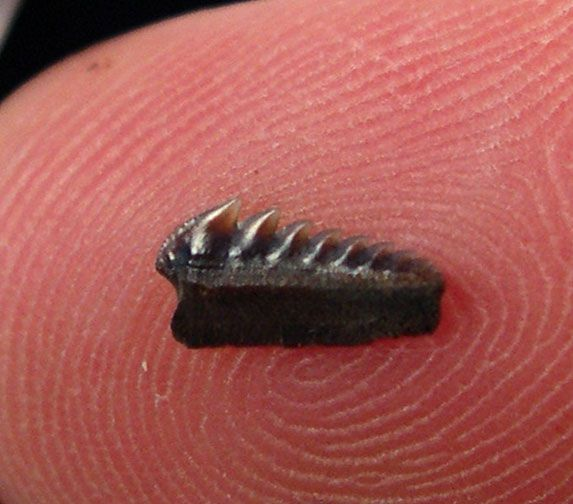
The distinctiveness of UK Megalodon teeth becomes even clearer when compared to other fossil shark teeth from the United Kingdom. For example, the catalog includes Hexanchus agassizi, rare Eocene-aged lower jaw teeth from the Isle of Sheppey in Kent. These teeth are beautifully preserved and regarded as GEM quality, but they are tiny, measuring only fractions of an inch. Another example is Lissodus minimus, a species from the Upper Triassic deposits at Aust Cliff in Gloucestershire.
These teeth, too, are considered GEM quality and well-preserved, yet they are only about one-eighth of an inch in size. While remarkable in their own right, these smaller teeth serve as sharp contrasts to the massive Norfolk Megalodon specimen. The differences in size and geological age make the Megalodon tooth a commanding presence, reflecting a different era of marine dominance compared to the more delicate remains of earlier shark species.
Why They Remain Distinct
In summary, UK Megalodon teeth stand out for several key reasons. Their rarity makes them particularly desirable, as they are not easily obtained. Their size, approaching five inches in some cases, adds dramatic presence that few fossils can match. Their appearance, with brown coloration and good enamel preservation, provides visual beauty.
Their provenance in Miocene deposits of Norfolk connects them to an age and a locality that is both unusual and scientifically important. Finally, their authenticity and unrestored condition ensure that collectors can hold a genuine piece of prehistory in their hands. Each of these traits combines to create a fossil that is unlike typical finds from other regions.
Final Thoughts
UK Megalodon teeth represent far more than simple relics of a prehistoric predator. They are symbols of rarity, preservation, and scientific intrigue. Their journey from the Miocene seas of Norfolk to modern collections tells a story of survival, endurance, and discovery. While other UK shark teeth, such as Hexanchus and Lissodus, provide fascinating glimpses into earlier chapters of shark evolution, they do not rival the scale and presence of Megalodon.
The Norfolk specimens hold a special place because they bridge the immense power of a prehistoric giant with the unique geological history of the United Kingdom. Collectors who obtain a megalodon tooth in the UK are not only acquiring a fossil, they are also holding a tangible piece of history that embodies both natural wonder and enduring fascination.