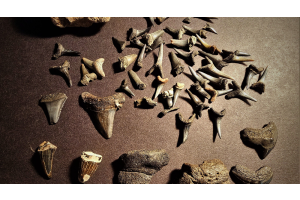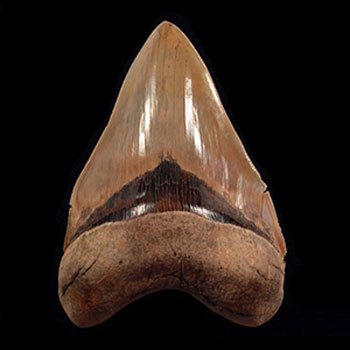
When we hold a Megalodon tooth, we are not only holding a fossil, but we are also holding a remarkable piece of history. For us, these ancient relics carry both scientific intrigue and emotional depth, and our responsibility is to ensure that every specimen reflects authenticity. Collectors often wonder how much a megalodon tooth is worth, and the answer depends on one vital factor: provenance.
The story behind the tooth—its documentation, its origin, and its preservation—determines whether its value rises or falls.
Size and Spectacle with Context
Size can be the first trait that captures attention. Megalodon teeth may reach enormous proportions, with some growing larger than six inches, which reflects the immense scale of the ancient shark. However, size alone cannot define value. A large tooth that has lost its serrations, carries chipped enamel, or has undergone heavy restoration will not have the same appeal as a smaller specimen that has remained in excellent condition and carries clear provenance.
There needs to be a balance between size and preservation. Collectors will often look for sharp serrations, a solid root, glossy enamel, and symmetry. When these qualities are paired with a verified history, the tooth will become far more desirable.
Provenance as the Story Behind the Tooth
Provenance is not only about geography. It is the biography of a fossil. Teeth that can be traced to phosphate mines, coastal riverbeds, or famous fossil beds often hold greater significance. These locations are known to produce specimens that may possess exceptional preservation or rare colors. Having documentation that confirms a fossil’s origin will provide legitimacy and enhance overall value.
Provenance also adds to both scientific value and collector trust. When it is supported by certificates of authenticity or honest disclosures about restoration, provenance can reassure buyers and strengthen long-term worth.
Restoration and Its Effect
Restoration can sometimes help a tooth by stabilizing or improving its appearance, but it can also harm its value if it is excessive. Heavy use of glue, fillers, or polishing will usually reduce trust. Collectors are willing to pay premiums for specimens that remain natural and minimally altered. Restoration, when necessary, should be transparent and always tied to the tooth’s history.
Some collectors may prefer a fossil that has no restoration at all, even if it shows natural wear. Others may accept minor repair work if it does not interfere with the overall integrity of the specimen. This is why provenance, combined with restoration disclosure, becomes critical. Without that honesty, restoration can cast doubt on authenticity and reduce long-term value.
Condition, Color, and Bourrelette Linked to Origin
The condition is critical when the value is determined. Enamel that retains its natural sheen and fine detail should be recognized as a sign of authenticity. The bourrelette, the band below the enamel, gives structure and appeal. Color tones such as gray, brown, or copper can tell the story of the burial environment. These qualities can only reach their full importance when they are supported by a confirmed origin.
Market Trends and Collector Demand
Interest in Megalodon teeth can shift over time. Documentaries, fossil shows, and academic findings may all contribute to rising demand. Collectors who have been searching for a rare color or a tooth from a specific location may be willing to pay significantly more when the right specimen appears. Provenance plays directly into this dynamic. Teeth with strong origin records from respected sites often attract higher value. This is why provenance is always considered when someone asks how much a megalodon tooth is worth in today’s market. Specimens without a documented history usually appeal to a narrower group of buyers.
Market trends also show that investment-minded collectors tend to gravitate toward teeth that are both visually impressive and scientifically verified. These specimens not only hold immediate appeal but also tend to appreciate in value over time, making provenance a key component of financial as well as personal satisfaction.
Emotional Connection and Trust
Provenance allows collectors to form a connection. Knowing exactly where a tooth was found helps root it in a real place and in Earth’s history. That knowledge enables a collector to experience not only the tooth’s physical traits but also the journey it has taken through millions of years. This connection turns the fossil into something more than a display piece. It becomes a record of the natural world.
Collectors often describe a more profound sense of pride when displaying fossils that come with strong provenance. The story behind the tooth can be shared with others, adding to its educational and emotional impact. Without provenance, the tooth risks being reduced to little more than an attractive object with uncertain origins.
Provenance and Market Value
Market value can range widely depending on size, condition, and history. Smaller or worn teeth may sell for only a few hundred dollars. A large, flawless specimen that displays sharp serrations, rare color, and provenance can be worth tens of thousands. The combination of rarity and documentation ensures that these specimens hold value and may even appreciate as time passes. With fresh discoveries decreasing, documented specimens are becoming increasingly valuable.
Buyers and collectors alike understand that fossils are finite resources. Provenance, therefore, is not only a measure of trust but also a safeguard of future value. Collectors who invest in documented Megalodon teeth often find that these fossils retain relevance for decades, with value driven both by scarcity and by the strength of their history.
Collecting with Confidence
Collecting is about confidence as much as it is about beauty. A tooth with clear provenance, minimal restoration, and desirable physical traits will inspire long-term pride. Collectors are able to display such fossils knowing that they represent authentic history, not questionable artifacts. This assurance can add as much satisfaction as the fossil itself.
The process of collecting becomes more meaningful when provenance is respected. It provides a narrative that transforms a tooth into a chapter of prehistory, connecting collectors with the ocean giants that once ruled the seas.
Final Thoughts
The true worth of a Megalodon tooth does not rest on size or color alone. Its story is equally important: where it was found, how it has been preserved, and how honestly its history has been presented. Provenance is essential. Without it, even the most visually impressive specimen risks losing credibility.
A Megalodon tooth with provenance is more than a fossil. It is authenticity made tangible, a piece of prehistory that carries the memory of ancient oceans into the present. And for those who continue to ask how much a megalodon tooth is, the most straightforward answer always begins with provenance.