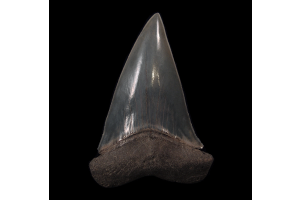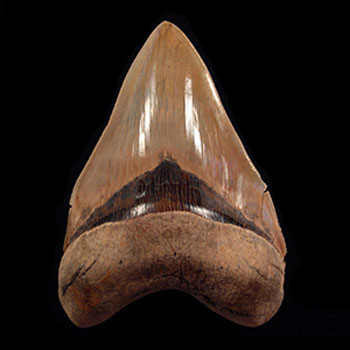
When fossil hunters imagine a megalodon tooth, they often see a massive triangular fang six or even seven inches long, gleaming with serrated edges and holding centuries of history. As fossil providers, we help collectors, researchers, and enthusiasts discover these ancient relics. For us, every tooth tells a story of the ocean’s past, and our work allows people to experience that history firsthand. Yet while large teeth may seem like the ultimate prize, there is an even rarer treasure waiting to be found, the baby megalodon tooth.
1. Scale of Discovery: Small but Mighty
Adult megalodon teeth can measure four to five inches on average, with exceptional specimens exceeding six and, in rare cases, reaching just over seven inches in length. Their size alone makes them easier to spot, easier to display, and far more recognizable in collections. These teeth are iconic symbols of one of the ocean’s greatest predators.
Baby teeth, by comparison, may only measure 1 to 2 inches. They are less striking at first glance and can often be missed during searches in riverbeds, gravel pits, or fossil sites. Collectors who focus only on significant finds may not even realize they have overlooked something of greater rarity. This makes the small teeth harder to locate in the field and more valuable once identified.
2. Preservation Challenges: Fragile Beginnings
The delicate size and thin structure of juvenile megalodon teeth can make fossilization much harder. With less enamel and reduced mass, they may break more easily or erode under the pressure of sediment and shifting ocean floors. Even when fossilized, they may not withstand the same geological stresses that larger teeth can endure for millions of years.
When a baby megalodon tooth does survive intact, it becomes a unique specimen. Its preservation represents an exception rather than the rule. Collectors and scientists who come across one may feel a stronger sense of discovery because they know such finds are few and far between.
3. Scientific Significance: Unlocking Juvenile Life
Baby megalodon teeth are not only miniature versions of adult forms. They can also reveal how the species grew and developed. By comparing the size, serrations, and shape of juvenile teeth with adult specimens, scientists can build a clearer picture of growth rates, maturity, and even metabolic changes.
These teeth may hold growth rings, much like tree trunks. Studying them can provide estimates of the shark’s age when the tooth was lost, revealing life history patterns from infancy to adulthood. They also suggest what kinds of prey juveniles may have hunted, offering hints of survival strategies during the earliest years. Adult teeth tell us about dominance, while baby teeth give us a glimpse of the learning stages of a young predator.
4. Understanding Ecosystems: Childhood Clues
The presence of baby megalodon teeth in particular regions can indicate nursery grounds or sheltered habitats where young sharks grew before venturing into deeper waters. If researchers find clusters of juvenile teeth within specific environments, it could suggest nursery grounds or habitats where juveniles were better protected from larger predators.
These finds can give substantial evidence of how megalodons used different ocean environments during their life cycles. Without such discoveries, scientists may be left with incomplete pictures of their development and survival patterns.
5. Collecting Appeal: Subtlety Over Spectacle
Collectors are often drawn to the grandeur of giant megalodon teeth. Their triangular shape and impressive size make them excellent display pieces that command attention in private collections and museums. Yet baby teeth appeal to a different kind of collector, one who values the rarity of subtle finds.
A small tooth may not inspire the same immediate awe, but it speaks to the beginning of the megalodon’s journey. For collectors, it offers a way to connect not only with the predator at its peak but also with its earliest stages of life. Owning a baby megalodon tooth can feel like holding a fragment of the shark’s origin story, one that complements the narrative told by adult specimens.
6. Rarity and Value: Tiny Treasures
The rarity of baby megalodon teeth is undeniable. Their small size lowers the chance of survival through fossilization and makes them harder to detect during hunts. Larger teeth, while impressive, appear more frequently within known fossil deposits. By contrast, baby teeth may remain hidden or may go unrecognized for what they truly are.
When discovered, a baby megalodon tooth is not only a collectible but also a scientific treasure. Its rarity makes it highly valued, both academically and by collectors who recognize its significance. These specimens remind us that Value is not always tied to size but to the story each fossil can tell.
7. Educational Power: Windows into Origins
Baby megalodon teeth hold substantial educational Value. They provide direct evidence of growth patterns and development stages, and they also allow comparisons between prehistoric sharks and modern species. By placing a small megalodon tooth next to a tooth from a great white shark today, teachers and researchers can highlight evolutionary connections.
For students and enthusiasts, these small specimens create a bridge between past and present. They show that even the largest predators of prehistory started out small, adapting and growing in ways that mirror many species alive today. This perspective enriches how people understand evolution and survival.
Final Thoughts
Finding a baby megalodon tooth is rarer than discovering a giant one for several reasons. Their small size makes them more fragile and less likely to fossilize. Their lack of visibility means they are often passed over during fossil hunts. Yet when preserved, they can provide insights that large teeth cannot offer. They show growth patterns, reveal clues about nursery habitats, and expand scientific knowledge of megalodon behavior.
Large teeth reveal what this predator became, symbols of power and dominance in prehistoric oceans. A baby megalodon tooth tells us where it began, a small fragment that holds stories of early life stages. These tiny relics remind us that even the most enormous creatures started with humble origins, and that the rarest discoveries are often the ones that seem least imposing at first glance.
As one collector might say, “The biggest teeth may impress the eyes, but the smallest ones often speak the loudest to history.”