

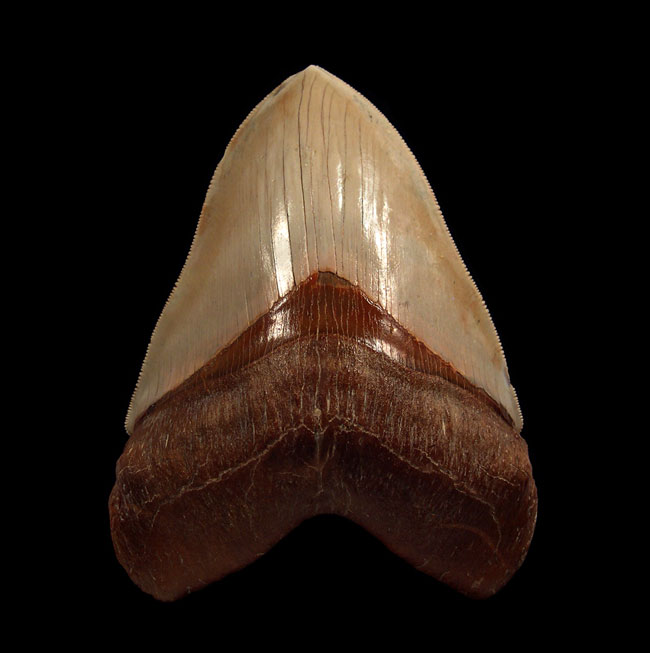
The ocean has always been a keeper of secrets, holding the remains of creatures that once ruled its depths. Fossils serve as time capsules, capturing moments from millions of years ago when marine predators dominated the seas. Among these remnants, discoveries connected to the legendary megalodon often stir global fascination. When a megalodon tooth found in Chile was revealed to be the largest on record, it instantly reignited interest in these prehistoric giants and the mysteries of their ancient world.
This discovery not only highlights the size and strength of one of history’s most impressive predators but also invites us to look at the ocean through a different lens—one where colossal hunters once thrived. Building on this awe, let’s explore what such findings reveal about the past, the ocean’s history, and why these discoveries continue to captivate our imagination today.
Tracing the footsteps of a marine giant
The megalodon was a shark unlike any other, believed to have grown up to 60 feet in length. Its name alone sparks curiosity, translating to “big tooth,” which is fitting considering its teeth are often the most enduring relics of its existence. Each fossilized tooth is more than a fragment of bone; it’s a direct connection to a predator that lived millions of years before humans set foot on Earth.
While skeletal remains of megalodons are rare—because cartilage decays over time—their teeth remain as hard, durable clues. When paleontologists uncover them, they’re not just finding fossils; they’re retrieving pages from a long-lost chapter of natural history.
Why Chile became the stage for a discovery
Chile has long been known as a hotspot for marine fossils. Its coastal geography and geological history create conditions that preserve ancient remains exceptionally well. Sediment layers along Chile’s coast often serve as natural archives, storing remnants of species that once thrived in the region.
The unearthing of a megalodon fossil in this region comes as no surprise to researchers, but the sheer scale of this particular find places it in a league of its own. For scientists, Chile offers both a laboratory and a gallery—a place where the story of the oceans is revealed piece by piece.
What a giant tooth reveals
When paleontologists examined the Chilean fossil, its size alone was staggering. This was not just another specimen but one that suggested the shark it belonged to was among the largest ever known. A tooth of such proportions gives us more than measurements; it provides insight into the feeding habits, prey, and ecological dominance of the species.
By studying the thickness of enamel and serrations, scientists reconstruct the mechanics of how megalodons hunted. The evidence suggests they targeted whales, dolphins, and large fish. Their teeth acted like natural blades, slicing through flesh with ease. This fossil reminds us of the delicate balance between predators and prey that shaped the prehistoric seas.
The cultural fascination with giants
Why does news of fossils spark such interest beyond the scientific community? Perhaps it’s because megalodons fuel our imagination. Stories of giant sharks have long been part of folklore, cinema, and speculative science. From Hollywood blockbusters to fictional accounts, megalodons symbolize the unknown lurking beneath the waves.
The fossil discovery in Chile bridges fact and fascination. It grounds the myth in reality, proving that colossal predators once existed and reminding us that the ocean’s history is far richer than we might assume. For many, holding or even seeing a megalodon tooth is like having a piece of legend.
A connection across time
Finding such a fossil is more than a scientific milestone; it’s a bridge across millions of years. Consider this: the shark that carried that massive tooth once swam in oceans that looked very different from the ones we know today. Continents were in motion, climates shifted, and species adapted or disappeared.
Yet here we are, with a fossil in hand, able to imagine the life of a predator that dominated its environment. It creates a moment where past and present collide, allowing us to understand the resilience of nature and the impermanence of even the mightiest creatures.
A turning point in paleontology
The fossil contributes to a growing body of evidence that continues to shape scientists' understanding of prehistoric marine ecosystems. Each discovery challenges assumptions and provides clues to unanswered questions: Why did the megalodon go extinct? How did climate shifts and prey scarcity affect its survival?
While answers remain complex, one thing is clear—the Chilean find is not merely about size. It deepens the dialogue about extinction, adaptation, and the fragility of life on Earth. Fossils become storytellers, offering glimpses into ecological changes that mirror challenges our oceans face today.
A closer look at size and scale
Size comparisons often help us grasp the enormity of prehistoric creatures. A megalodon tooth can be over seven inches long, dwarfing that of modern great white sharks, whose most prominent teeth reach around three inches. Multiply this difference across a mouth filled with hundreds of teeth, and it becomes easier to picture why the megalodon reigned supreme.
The fossilized tooth from Chile pushes these comparisons further, setting records and reinforcing just how massive these sharks were. It’s one thing to read about their size—it’s another to see the evidence fossilized and preserved for millions of years.
How discoveries shape modern curiosity
The find in Chile demonstrates how ancient history continues to influence contemporary science and culture. Museums display megalodon teeth as prized artifacts. Collectors value them as rare treasures. Students encounter them in textbooks, sparking curiosity about science and the natural world.
It shows how the past is never completely gone—it remains present through the fossils beneath our feet. In that way, each discovery becomes an opportunity not only to learn but to share knowledge across generations.
Conclusion: bringing history into the present
The awe sparked when a megalodon tooth found in Chile turned out to be the largest ever discovered is more than about the fossil itself. It’s about wonder, curiosity, and a reminder of the giants that once swam where we now sail. These discoveries are not only about the past, but also about perspective—helping us see our oceans and our planet as part of an ongoing story.
As we continue to uncover fossils, we are piecing together a narrative that enriches our understanding of Earth’s history. Each find, whether small or monumental, serves as a reminder of the mysteries still buried and waiting to be revealed.
The ocean’s history continues to unfold with every fossil discovery. Stay curious, keep learning, and let these glimpses into the past inspire your own journey of exploration. If the story of the megalodon excites you, dive deeper into the world of paleontology, visit local museums, or explore fossil collections. The past is waiting to be rediscovered—piece by piece.






