

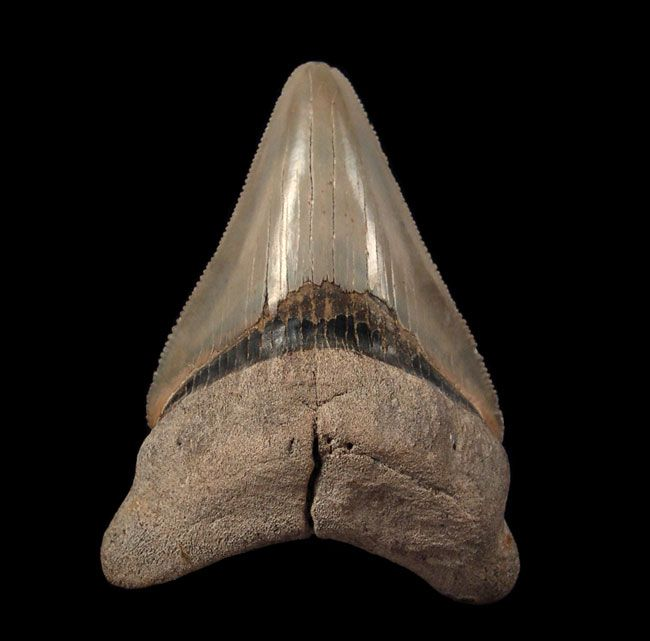
Shark teeth have fascinated scientists, fossil hunters, and collectors for decades, but among them, few specimens capture the same level of intrigue and admiration as the Aurora Megalodon tooth. This fossilized relic is not just a reminder of one of the largest predators in Earth’s history—it is a tangible piece of prehistoric oceans, preserved in a rare and beautiful form. From its geological significance to its visual appeal, the Aurora specimen stands apart as a true collector’s prize.
A Glimpse Into Prehistoric Oceans
Millions of years ago, a colossal predator roamed the seas: Otodus megalodon. Believed to have reached lengths of nearly 60 feet, this shark ruled marine ecosystems with unmatched dominance. Its most striking feature was its teeth—massive, triangular, and serrated—built to crush bones and pierce thick whale blubber. Fossils of this shark have been uncovered across the globe, but teeth recovered from North Carolina’s Lee Creek Mine, particularly in Aurora, hold a special status among collectors.
The Aurora Megalodon tooth carries with it the history of an apex predator that disappeared long before humans walked the Earth. Each specimen connects us to an oceanic past that continues to inspire scientific curiosity and imagination.
What Makes Aurora Specimens Unique?
Not all Megalodon teeth are equal in appearance or condition. Fossils from the Aurora phosphate mine stand out for several reasons:
● Color and Aesthetic Appeal – The mineral composition of the Pungo River Formation in Aurora often produces teeth in remarkable shades of tan, brown, and even blue-gray. These natural variations add a visual beauty that sets Aurora specimens apart from those found elsewhere.
● Preservation Quality – Teeth from this site often retain sharp serrations, complete bourlettes (the dark strip near the crown), and intact roots. For collectors, such details dramatically increase desirability.
● Limited Availability – Since collecting at the Lee Creek mine was closed to the public in 2008, these fossils are no longer accessible to new hunters. That scarcity only enhances the reputation of an Aurora Megalodon tooth as a rare and highly sought-after treasure.
The Collector’s Eye: Why Condition Matters
Fossil collectors value condition above almost everything else. In the case of Megalodon teeth, even small differences can greatly influence their appeal.
● Sharp Serrations – Well-defined serrations are proof of excellent preservation and highlight the tooth’s predatory function.
● Complete Root – A root free from cracks or breaks suggests minimal wear after fossilization.
● Authenticity – Collectors carefully examine specimens for repairs or restorations. An unaltered fossil carries far more scientific and monetary value than one that has been artificially reconstructed.
One striking feature of many Aurora teeth is their near-complete condition despite being millions of years old. This makes them not only collector’s items but also scientific resources that reveal details about Megalodon feeding habits and evolutionary history.
A Window Into Ancient Behavior
Megalodon teeth are more than just fossils—they are records of the shark’s life. Some teeth show damage at the tip, possibly from feeding frenzies when sharks clashed over prey. Others exhibit wear that suggests years of hunting large marine mammals. A tooth with intact serrations can show how efficiently this predator was adapted for slicing through flesh and bone.
For paleontologists and collectors alike, the Aurora Megalodon tooth provides a rare opportunity to study these behaviors. Unlike skeletons, which are rarely preserved in sharks due to their cartilaginous makeup, teeth survive in abundance and offer vital scientific clues.
The Role of Rarity and Scarcity
What truly sets Aurora teeth apart today is their scarcity. Before 2008, fossil hunters could gain access to the phosphate mine with permits, and collectors often walked away with extraordinary specimens. Once the site was closed, new finds from Aurora became virtually nonexistent.
This has created a situation where existing collections are now the only source for acquiring these prized fossils. For collectors, this rarity is part of the allure. Owning an Aurora Megalodon tooth means holding onto a piece of history that no one can simply go out and find anymore. It represents both a natural wonder and a disappearing resource.
Why Megalodon Teeth Inspire Awe
Part of the fascination with Megalodon teeth comes from sheer scale. A tooth from this predator could exceed 7 inches in length, dwarfing modern shark teeth. The size alone captures attention, but when paired with sharp serrations and unique coloration, it becomes an object of awe.
Collectors view these fossils as treasures not only for their beauty but also for what they symbolize: the dominance of one of the greatest predators ever to exist. Each tooth tells a story about survival, power, and extinction, sparking both scientific inquiry and imaginative wonder.
Ethical Collecting and Authenticity
As with any fossil, authenticity plays a central role in the collecting world. Damaged Megalodon teeth are sometimes repaired or restored, but responsible collectors and sellers disclose these details. An authentic, unrestored specimen holds far greater value and credibility.
With Aurora teeth, authenticity also includes provenance—the history of where and how the fossil was recovered. Since no new teeth are coming from the Lee Creek mine, provenance ensures that a tooth truly represents Aurora’s rare deposits. Ethical collecting protects both the integrity of the specimen and the trust of the fossil community.
Why Collectors Cherish Aurora Teeth Above Others
When considering why these fossils are so prized, three points stand out:
● Natural Beauty – The rich colors and striking condition of Aurora specimens make them visually exceptional.
● Historical Significance – They come from one of the most famous fossil sites in North America, linked to a predator that shaped ancient marine ecosystems.
● Rarity – With the mine closed to collectors, no new teeth will emerge from Aurora, giving existing specimens a special prestige in the fossil community.
For these reasons, collectors see the Aurora Megalodon tooth not just as a fossil, but as a treasure with layers of meaning.
The Lasting Appeal of a Prehistoric Relic
Fossil collecting is not only about science—it is also about passion. Each collector has a personal reason for valuing a particular specimen: its rarity, its condition, or the simple awe of holding something that once belonged to a giant shark. Aurora specimens satisfy all these desires, making them standout treasures in fossil collections.
Whether displayed in a cabinet, studied for research, or passed down as a family heirloom, an Aurora Megalodon tooth remains a timeless reminder of Earth’s prehistoric wonders.
Conclusion
Collectors prize the Aurora Megalodon tooth because it embodies a rare combination of beauty, history, and scarcity. These fossils represent the legacy of the largest shark to have ever lived, preserved with striking detail in one of the most remarkable fossil sites in North America. With no new specimens emerging from Aurora since the mine’s closure, owning one is more than adding to a collection—it is safeguarding a piece of prehistoric heritage. For those fortunate enough to possess one, the Aurora specimen is not just a tooth; it is a treasure that carries the story of the ocean’s most powerful predator into the present day.






