

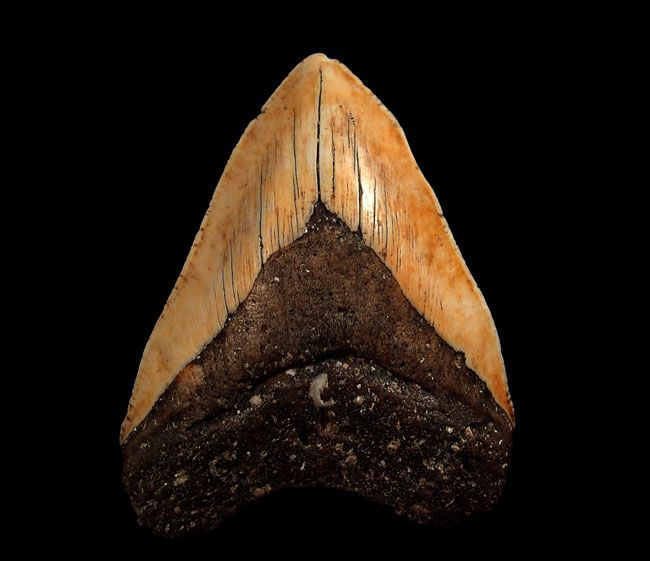
For millions of years, one shark dominated the oceans in a way no other predator has before or since. Carcharocles megalodon was an apex predator of almost mythical proportions, reaching an estimated 60 feet in length with teeth larger than a human hand. Fossil evidence such as Carcharocles megalodon – New Caledonia teeth and striking specimens from West Java remind us just how massive and specialized this shark truly was. But the question remains—if megalodon still swam our seas today, could the modern ocean support such a giant?
The Rise of a Marine Super-Predator
The megalodon appeared in the early Miocene and ruled until the end of the Pliocene. Fossilized teeth reveal the story of a shark designed for dominance: enormous triangular teeth with razor-sharp serrations capable of slicing through whale bone and cartilage. Its bite force is estimated at up to 180,000 newtons—stronger than any known animal, past or present.
Megalodon’s diet was equally staggering. Instead of targeting smaller fish like most sharks, adult megalodons hunted whales, large seals, and other sharks. Their size and strength made them the ocean’s top predator, filling an ecological role unmatched in scale since their extinction.
The discovery of fossils such as those dredged from Carcharocles megalodon – New Caledonia and the strikingly preserved West Java teeth gives us tangible reminders of its reign. These relics also spark curiosity about whether such a predator could thrive in today’s oceans.
Comparing Ancient Oceans to Modern Seas
One of the biggest factors in whether megalodon could survive today comes down to ocean productivity. During the Miocene and Pliocene, warm global temperatures and shifting currents supported vast populations of whales and other marine mammals. This abundance of prey was ideal for sustaining an animal of such immense size.
Today’s oceans, while rich in life, look very different. Whale populations have only recently begun to recover from centuries of overhunting. While large marine mammals like blue whales, humpbacks, and sperm whales exist in healthy numbers in some regions, they are nowhere near as abundant as they were millions of years ago.
A modern megalodon population would require massive quantities of prey. Even a single adult might have needed several tons of food each week. Supporting entire populations of these predators in today’s oceans could strain ecosystems already under pressure from climate change, overfishing, and pollution.
Could Megalodon Compete with Modern Predators?
Another challenge for the megalodon in today’s world would be competition. In its time, megalodon likely faced few threats besides other megalodons. Today, however, the oceans are ruled by different giants. Orcas, for instance, are highly intelligent pack hunters capable of targeting even the largest whales. Great white sharks, though dwarfed by megalodon, are apex predators within their size range.
If megalodon returned, would these modern hunters stand a chance? Likely not in direct confrontation. But competition for prey would be fierce. Orcas and great whites might be forced into smaller niches, while megalodon would have to adapt to an ocean with fewer massive whales than in the past.
Modern Evidence: The Teeth Tell the Story
Fossilized teeth remain the strongest evidence we have of megalodon’s power. Some of the most striking examples include specimens from Indonesia’s West Java deposits. These teeth are noted for their pristine enamel, vibrant color patterns, and remarkably preserved serrations. They illustrate just how well-suited megalodon’s weaponry was for tearing through flesh and bone.
Meanwhile, fossils like the Carcharocles megalodon – New Caledonia teeth show us the global spread of this predator. With finds ranging from the Pacific to the Caribbean, megalodon occupied nearly every warm ocean on Earth. Its adaptability to different regions suggests that, if prey were abundant, it could have dominated even modern waters.
Environmental Changes: Why Megalodon Disappeared
If megalodon was so perfectly built to rule the seas, why did it vanish? Scientists believe a combination of environmental changes sealed its fate. Cooling ocean temperatures during the Pliocene reduced the range of warm waters where megalodon thrived. At the same time, early orcas and modern great whites began competing for similar food sources.
Most importantly, the decline of large whale populations during this period likely deprived megalodon of its primary food supply. With less prey to sustain their massive bodies, populations dwindled until extinction became inevitable.
In this light, the question of whether today’s ocean could support megalodon becomes even more interesting. Have conditions improved or worsened since its extinction?
The Prey Question: Are There Enough Whales Today?
Modern oceans do have giants—blue whales, fin whales, humpbacks, and more. A single blue whale outweighs even the largest estimated megalodon. However, populations are fragile and unevenly distributed. Concentrations of whales exist in certain feeding grounds, but global numbers are still far below pre-whaling levels.
A handful of megalodons might survive today by targeting these whale populations, but sustaining global populations would likely be impossible. Unlike the Miocene seas teeming with whales, today’s oceans are carefully balanced ecosystems where a massive new predator could cause ecological collapse.
Human Influence: Would Megalodon Survive Us?
Even if prey were abundant, human activity poses another obstacle. Industrial fishing has drastically reduced populations of large fish and marine mammals. Ship strikes, noise pollution, and plastic waste further stress whale populations—the very food source megalodon would depend on.
There’s also the reality of human fear. A predator the size of megalodon near coastlines would certainly clash with human industries and activities. History shows that humans eliminate perceived threats quickly, and megalodon would be no exception. In many ways, the biggest obstacle to its survival today might be us.
What Fossil Sites Teach Us About Adaptation
The unique features of megalodon teeth from different regions highlight its adaptability. The bold colorations and pristine enamel of West Java teeth show how geological conditions can preserve fine details. The rare fossils from Carcharocles megalodon – New Caledonia remind us that this predator roamed diverse ocean habitats across the globe.
These fossils suggest that megalodon was highly adaptable in terms of range. However, adaptability in diet is another matter. Unlike modern sharks that can switch prey, megalodon was specialized for hunting large marine mammals. Without vast whale populations, its adaptability may have reached its limits.
Could a Modern Ocean Support Megalodon?
The evidence suggests that while megalodon could physically survive in today’s waters, sustaining large populations would be extremely difficult. The scarcity of prey, increased competition, and human pressures make modern oceans less hospitable than the Miocene seas.
However, imagining the presence of megalodon today underscores just how vital healthy whale populations are to marine ecosystems. If a predator of such size could not survive, it highlights the delicate balance of today’s oceans and the importance of conserving what remains.
Bottom Line
The story of megalodon is both awe-inspiring and sobering. This shark once ruled the seas with unmatched power, its legacy preserved in fossils like the vibrant West Java specimens and rare Carcharocles megalodon – New Caledonia teeth. Yet its extinction reminds us that even the mightiest predator is vulnerable to environmental change and dwindling resources.
If megalodon appeared today, it might survive in small numbers, but the modern ocean would struggle to support a predator so massive. Instead, its memory challenges us to reflect on the oceans we have now—and how we can ensure today’s giants, from whales to sharks, continue to thrive.






