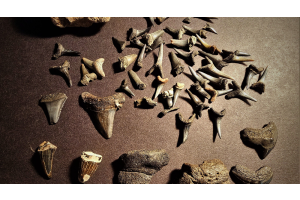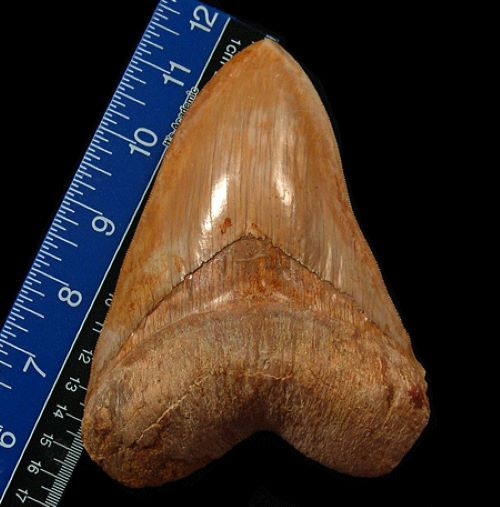
The story of the megalodon, an ancient shark that once ruled the oceans millions of years ago, continues to capture the imagination. Its remains offer clues into a world where marine predators grew to staggering lengths. Among these remains, the most intriguing relics are the massive fossilized teeth, which provide insight into the shark’s size, feeding habits, and survival strategies. When we talk about megalodon tooth size, we aren’t simply measuring a fossil—we are tracing the outline of a creature that once dwarfed nearly everything else in the sea.
To gain a deeper understanding of these fossils, it is helpful to examine how size variations reveal their role in the prehistoric ecosystem, their significance to modern collectors, and the enduring fascination they hold for science and history.
Why teeth tell the story of the shark
Unlike bones, which rarely survive intact over millions of years, shark teeth are made from enamel and dentin, allowing them to fossilize more easily. Because sharks continuously shed teeth during their lives, paleontologists are left with a rich archive of specimens. Each tooth reflects not only the size of the shark that carried it but also its age, diet, and evolutionary role.
The megalodon’s teeth are triangular, serrated, and unusually broad, allowing this predator to crush the bones of whales with efficiency. This tooth structure sets it apart from modern sharks and provides scientists with a framework for estimating its overall body length. By studying these details, researchers can calculate more accurate reconstructions of the giant’s presence in ancient seas.
Variations in size and what they mean
The fossil record shows a wide range of tooth dimensions. Smaller specimens may measure around two inches, while the most famous discoveries exceed seven inches in height. Such variation isn’t random. It reveals differences between juvenile sharks, adults, and possibly even regional populations.
Large teeth are generally found in deeper marine sediment layers where adult megalodons roamed, while smaller ones often appear in coastal deposits. This distribution may suggest that young sharks occupied nursery zones closer to shore, echoing the behaviors of modern species like the great white shark. Each find tells a slightly different version of the same grand story.
How paleontologists estimate body length
Fossil teeth are not only prized for their visual impact—they are mathematical tools. Scientists often use regression formulas that link tooth crown height to shark body length. Based on these models, a tooth over six inches might indicate a shark more than 50 feet long.
While these equations are helpful, they are not without debate. Some argue that body proportions may have varied, making size predictions approximate rather than definitive. Even so, the connection between tooth length and shark size provides one of the best methods we have for piecing together the mysteries of this ancient predator.
Collectors and their fascination with fossils
Beyond science, the appeal of these fossils extends to private collectors and museums. A complete, large specimen is a rare treasure, valued for both its history and its aesthetic qualities. Collectors often prize symmetry, sharp serrations, and preserved enamel, factors that raise both intrigue and value.
For many, holding such a tooth creates a tangible link to prehistory. The weight, texture, and sheer presence of the fossil offer a glimpse into an ancient world that feels both distant and strangely immediate. This personal connection explains why the demand for authentic specimens continues to grow.
The role of context in fossil finds
A tooth is more than its size. Its location, geological layer, and mineralization reveal to scientists the ocean conditions in which it fossilized. Fossils recovered from riverbeds may exhibit different hues due to the presence of sediment minerals, ranging from earthy browns to striking blues and blacks.
Context also provides clues about how these sharks lived. For example, concentrations of teeth in particular regions suggest migratory routes or feeding grounds. By comparing global finds, paleontologists build maps of prehistoric oceans, showing how megalodons may have dominated waters across several continents.
The enduring questions
Despite decades of research, many questions remain unanswered. Did the megalodon prefer certain types of prey at different stages of life? Were regional size differences influenced by water temperature, food supply, or evolutionary adaptation? Could the fossil record be hiding even larger specimens yet to be unearthed?
Each discovery has the potential to shift our understanding. A single tooth, uncovered in the right geological setting, might reveal new insights into the behavior of one of Earth’s greatest predators. This sense of mystery is what keeps both scientists and enthusiasts searching.
Lessons from the fossil record
The fascination with prehistoric teeth extends beyond curiosity. It offers lessons in adaptation, survival, and extinction. The megalodon dominated oceans for millions of years but eventually disappeared, likely due to changes in climate, food availability, and competition with emerging species.
By studying these patterns, scientists gain insight into how environmental shifts influence life on Earth. Fossils become more than relics—they are reminders of the delicate balance that determines survival across ages.
A closer connection to the past
There’s something almost poetic about how teeth, designed for feeding, are the primary remnants of a species that fed so dominantly on its environment. Holding or even seeing one of these fossils allows us to connect with a predator that shaped entire ecosystems. It makes ancient oceans feel less like myth and more like history.
This connection resonates with both seasoned collectors and newcomers who encounter their first fossil. Each tooth, regardless of size, bridges the present with an ancient world.
Bringing it all together
From scientific analysis to personal fascination, the study of these fossils highlights their multifaceted importance. They reveal patterns of life and extinction, serve as treasured collector’s items, and continue to inspire wonder about the natural world. When considering megalodon tooth size, we are not merely studying numbers—we are opening a dialogue with the distant past.
That past reminds us of the vastness of history and the resilience of life, preserved through fossils that survived the passage of millions of years.
Conclusion: carrying the fascination forward
Exploring the story behind these fossils offers more than just scientific data; it also provides a way to imagine the oceans as they once were. The size of these teeth allows us to appreciate both the scale of the predator and the fragility of its existence. As we learn from these relics, we deepen our understanding of natural history and of our connection to it.
If you’re inspired by these discoveries, consider exploring authentic specimens for yourself. Fossils bring a piece of prehistory into your hands, allowing you to experience the wonder that has fascinated scientists and collectors alike. By appreciating and preserving these relics, we continue to honor the incredible journey of one of Earth’s most legendary creatures.
Ready to experience the ancient ocean’s legacy for yourself? Explore fossil collections, connect with history, and discover how these extraordinary relics can become part of your own story.