

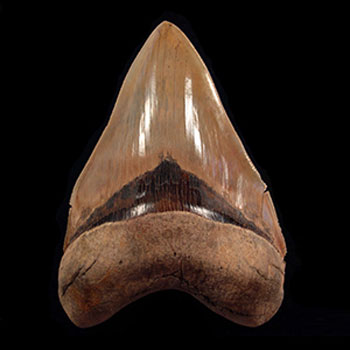
There’s something undeniably captivating about holding a piece of prehistory in your hands—especially when that piece once belonged to a creature the size of a city bus, armed with the most powerful bite in natural history. For collectors, scientists, and even interior design enthusiasts, fossilized shark teeth—particularly those from the Megalodon—have become treasured artifacts, often commanding prices in the thousands. But what’s driving this fascination?
As collectors ourselves, we understand that it’s more than just the price tag or bragging rights. From scientific rarity to visual intrigue, a megalodon tooth is more than a fossil—it’s a conversation starter, a museum-worthy display piece, and a literal slice of ancient life.
The Legend of the Megalodon: A Giant Among Sharks
Before we dive into the collecting world, it’s worth appreciating the beast behind the bite. The Megalodon shark was an oceanic juggernaut that lived between 23 and 3.6 million years ago during the Miocene and Pliocene epochs. Estimated to grow up to 60 feet long and weigh over 70 tons. This apex predator hunted massive marine mammals, including prehistoric whales. Its jaws could exert a force of 180,000 newtons—easily crushing bones with its serrated teeth, some of which exceeded 7 inches in length.
And while the creature itself has long since vanished, its teeth remain remarkably preserved thanks to the fossilization process. These are not just old shark teeth—they’re relics of evolution, geology, and time itself.
Why These Fossils Are a Collector's Dream
Authentic Scientific Value
Collectors with a scientific bent appreciate the informational wealth a megalodon tooth provides. Because the Megalodon’s body was mostly cartilage—which doesn’t fossilize well—its teeth and vertebral centra are among the few physical records we have. Each tooth tells a story of size, diet, and growth patterns. Some collectors choose specific localities like Sharktooth Hill in California or the warm coastal waters off Florida and the Carolinas because they’re renowned for high-quality finds.
Owning one means owning a piece of natural history that’s actively contributed to our understanding of ancient marine ecosystems.
Global Origins, Local Pride
Megalodon teeth have been unearthed from diverse locations—North America, South America, and even offshore dig sites. This global distribution adds a geographic twist to the collecting hobby. Some buyers are drawn to fossils from their own states or countries, while others collect from specific dig sites like Peru or Chile to curate a travel-style fossil map.
Each site also influences the tooth’s characteristics—color variations, enamel quality, and root integrity differ depending on the mineral content of the surrounding sediment. This makes every tooth slightly different, almost like fingerprints of the ocean floor.
What Makes One Tooth Worth More Than Another?
Size and Condition
Just like gemstones or antique art, condition and size heavily influence a fossil’s value. Megalodon teeth exceeding 6 inches are rare and prized. Add a complete root, intact serrations, minimal wear, and beautiful coloration, and you’re looking at a top-tier piece.
These showpieces are not just fossils—they’re trophies. Collectors will pay handsomely for the chance to own something that’s both historically significant and visually stunning.
Natural Aesthetics and Display Appeal
Let’s be honest—part of the allure is how incredible these teeth look. Their heart-shaped silhouette, razor-edged serrations, and hues ranging from jet black to earthy copper to icy gray make them ideal display items. Whether it’s mounted on a custom stand or framed in a shadowbox, a megalodon tooth is a conversation starter that doubles as wall art.
Even for collectors who aren’t scientists, the aesthetic appeal is enough to justify the investment. Fossilized teeth in excellent condition can feel like sculptures created by nature over millions of years.
A Growing Hobby Fueled by Limited Supply
Unlike manufactured collectibles, fossilized shark teeth are finite. Each year, fossil beds become harder to access or are exhausted. Strict environmental regulations and limited dig permits further shrink the available supply.
This scarcity adds urgency to the market. For serious collectors, purchasing a premium specimen now means beating future price spikes and increasing rarity. And for those just beginning their collection, even smaller teeth offer a way to own something genuine from the depths of time.
Sentimental and Symbolic Value
It’s not all about science or money. Some collectors associate these teeth with personal journeys. A gift from a parent to a child who dreams of becoming a marine biologist. A keepsake from a beachcombing trip. A meaningful milestone for someone who just earned their scuba license.
For many, these aren’t just fossils—they’re symbols of strength, mystery, and the enduring power of nature. Whether displayed in a glass case or carried in a pocket as a lucky charm, a fossilized shark tooth can carry emotional weight far beyond its age.
From Museum Halls to Your Bookshelf
Today, you no longer need to be an archaeologist or university curator to own a piece of prehistoric history. With reputable fossil dealers offering verified specimens from trusted dig sites, collectors of all levels can find something remarkable.
High-quality sellers often include stands for larger fossils, especially those over 5 inches. These aren’t just extras—they elevate the display and preserve the fossil’s condition. Whether you're displaying one in your home office or building an entire fossil wall, these details matter.
Many seasoned collectors also branch into related species such as Chubutensis, Angustidens, and other ancestors of the Megalodon. This adds depth to their collection and shows an appreciation for the broader shark lineage.
Is It Worth It?
To the untrained eye, a fossil tooth might seem like a simple curiosity. But for those who understand the science, art, and emotion behind it, it's worth every penny. A megalodon tooth isn't just a relic—it's a bridge between ancient oceans and modern imagination. It's tangible history, preserved forever by the forces of time and earth.
Whether you're just getting started or expanding a lifelong collection, there’s always room for one more prehistoric masterpiece on your shelf.
In summary, collectors aren’t paying thousands for a rock—they’re investing in a piece of deep time, of evolution, of mystery. A megalodon tooth holds more than fossilized enamel—it holds the awe of what once ruled our oceans and the enduring passion of those who keep its story alive.






