

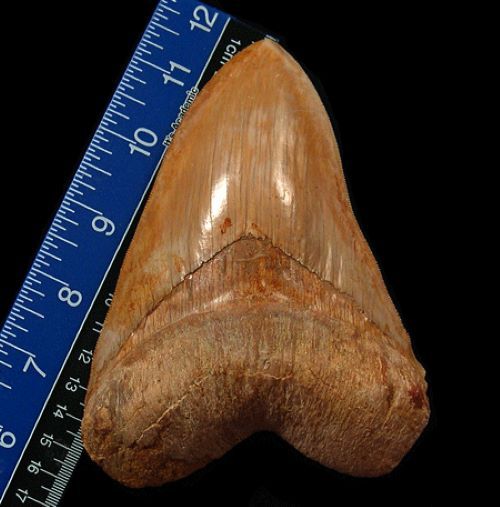
When it comes to prehistoric predators, few creatures captivate the imagination quite like the Megalodon. This ancient shark, whose very name means "big tooth," ruled the oceans millions of years ago with a jaw-dropping presence—literally. But was the Megalodon truly the owner of the largest teeth on Earth in history? To answer that, we’ll take a deep dive into its famous dentition, compare it with other fearsome giants like the Tyrannosaurus rex and saber-toothed cats, and look at why size isn’t the only thing that matters when evaluating prehistoric power.
A Closer Look at Megalodon’s Formidable Fangs
The Megalodon’s teeth are among the most sought-after fossils in the world. Not just because of their connection to a legendary predator, but because their sheer size is awe-inspiring. These fossilized relics can range from small, two-inch specimens to gigantic seven-inch monsters. Megalodon tooth size plays a key role in understanding both the scale of this animal and its dominance as an apex predator.
While smaller teeth typically came from juvenile sharks or those located toward the back of the jaw, the largest teeth often belonged to full-grown adults estimated to be over 50 feet long. Some fossilized teeth have even exceeded 7 inches in length—roughly the length of a standard kitchen knife. That’s more than double the size of the average great white shark tooth today.
Tooth Size Isn’t Everything… But It Helps
While size alone is impressive, Megalodon’s teeth also had unique features. Broad, triangular, and serrated like steak knives, these teeth were optimized for slicing through thick flesh and even bone. This adaptation allowed the Megalodon to hunt massive prey, including whales and large marine mammals.
But let’s not overlook the competition. When it comes to tooth size, Megalodon wasn’t the only heavyweight in prehistoric history.
T. rex: King of the Land Predators
If Megalodon was the terror of the seas, then Tyrannosaurus rex was the reigning monarch of the land. This dinosaur, which lived around 66 million years ago, also sported massive teeth—but with a different evolutionary purpose.
The largest known T. rex tooth measures approximately 12 inches in total, including the root. The exposed crown portion of these teeth was usually between 6 and 8 inches, rivaling some of the largest Megalodon specimens. However, there’s a key difference: T. rex teeth were thick and cone-shaped, designed more for crushing bone than slicing through it.
So while a T. rex tooth may have matched or even exceeded a Megalodon tooth in total length, the visible, functional part of the Megalodon’s teeth was often larger and more numerous—Megalodon had rows upon rows of these sharp weapons, possibly numbering in the hundreds over its lifetime due to continuous tooth replacement.
Saber-Toothed Cats: Precision Over Size
Saber-toothed cats, like Smilodon fatalis, are another frequent comparison in the "tooth wars" of ancient predators. While not in the same weight class as Megalodon or T. rex, their elongated canine teeth were an iconic evolutionary trait.
Measuring up to 11 inches long in some species, these saber-teeth were elegant, curved, and extremely sharp. But they were also fragile compared to the Megalodon’s dense chompers. Saber-toothed cats used their teeth more selectively, targeting soft areas in their prey rather than relying on brute force.
So while their teeth were long and menacing, they lacked the durability and multi-purpose design that made Megalodon's tooth size such a critical evolutionary advantage.
Where Are These Giant Teeth Found?
One of the reasons we know so much about Megalodon is thanks to the incredible preservation of its teeth. Since shark skeletons are made of cartilage, which doesn’t fossilize well, teeth are the primary evidence we have of their existence.
Places like South Carolina’s blackwater rivers, Florida’s Peace River, and the Calvert Cliffs of Maryland have produced an impressive variety of fossilized shark teeth. These locations are considered among the best places to find Megalodon teeth due to their rich marine fossil deposits. Whether you're diving in murky waters or sifting through riverbanks, each find adds a new piece to the Megalodon puzzle.
Fossil Enthusiasts and the Teeth They Seek
For collectors, the appeal lies not just in the size, but in the condition and rarity of the find. Perfectly preserved serrations, complete roots, and unique coloration make some teeth highly desirable.
Teeth in the 3–5 inch range are most common and often considered the “sweet spot” for beginner and intermediate collectors. However, it’s the 6- to 7-inch giants that spark the most excitement. A well-preserved seven-inch tooth is a centerpiece fossil—a symbol of prehistoric power and scale.
Thanks to reputable online sources, including well-known fossil sellers, even those who can’t make the trip to fossil sites in person can acquire authentic Megalodon teeth in a range of sizes.
What Makes a Tooth the “Largest”?
When determining whether the Megalodon had the largest teeth in Earth’s history, we need to define what we mean by "largest." If we’re looking at overall length, T. rex teeth (including roots) might rival Megalodon. But if we focus solely on functional, crown-only size, then Megalodon teeth likely win.
Additionally, Megalodon didn’t just have one or two massive teeth—it had hundreds throughout its life. Each row housed dozens of teeth, constantly being replaced. This conveyor belt of sharp edges meant the shark was always well-equipped for predation.
So in terms of cumulative biting surface area and functional size, Megalodon holds a compelling lead.
Why the Obsession with Megalodon Teeth?
Part of the Megalodon mystique comes from the way its teeth connect us directly to its reign in the oceans. They’re big, they’re sharp, and they’re relatively easy to find compared to full dinosaur skeletons or rare saber-tooth fossils. Holding one gives you a tangible piece of ancient history—proof of a time when the oceans were ruled by a predator so powerful, it had no natural enemies.
Collectors, paleontologists, and curious enthusiasts are united in their fascination. And while we may never find a complete Megalodon skeleton, its teeth are more than enough to keep the legend alive.
Final Verdict
So, did the Megalodon have the largest teeth in Earth’s history?
The answer is: Yes—depending on how you measure it.
When comparing functional crown length, overall tooth durability, and evolutionary purpose, Megalodon’s teeth consistently rank at the top. While T. rex and saber-toothed cats brought unique adaptations to the table, none wielded teeth that matched the scale, cutting power, and volume seen in Megalodon fossils.
And while we marvel at each new fossil unearthed, we continue to gain new appreciation for the variety and power of Megalodon tooth size across ages and ecosystems.
Whether you're a seasoned collector or a curious newcomer, these ancient teeth remain one of the most striking examples of nature’s engineering—and a sharp reminder of the giants that once ruled our planet.






