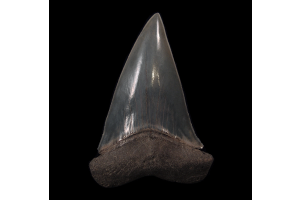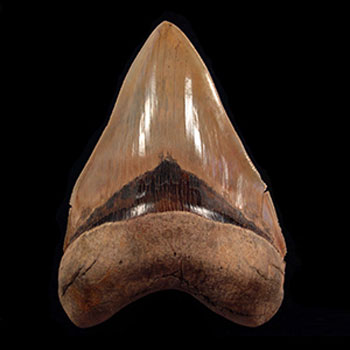
When we share knowledge about fossils, our goal is to help others understand both the science and the fascinating history connected to these discoveries. Megalodon teeth, which we provide through our services, often spark curiosity. They are impressive fossils that remind us of prehistoric oceans, yet for centuries, people mistook them for entirely different objects.
Legends, myths, and old stories surrounded these fossils long before science identified their true origin. Even though the megalodon shark skeleton rarely fossilized because of its cartilage structure, the teeth survived in abundance and became the most recognizable remains.
What Are Megalodon Teeth?
Megalodon was a giant prehistoric shark that could reach lengths of 60 feet. The name translates to “large tooth,” which is accurate since teeth are the most common fossils connected to this species. Because the shark’s skeleton was mostly cartilage, it usually did not fossilize, but its teeth did survive in large numbers.
These fossils can be recognized by their triangular or heart-shaped form, serrated cutting edges, and lack of side cusps. Some measure over six inches long, with rare specimens exceeding seven inches. They became preserved because of fossilization, which replaced organic materials with minerals, creating hardened structures that could endure for millions of years.
Finding one of these massive fossils is an extraordinary experience. For earlier generations, the size and unusual appearance were difficult to understand, leading to imaginative interpretations.
The Myth of “Tongue Stones”
One of the most famous misidentifications in history was the belief that megalodon teeth were “tongue stones.” People claimed these objects were petrified tongues of dragons, serpents, or mythical beasts. Because the teeth had a triangular, slightly curved form, they seemed similar to a tongue, which made the idea believable.
In several regions, tongue stones were said to hold protective powers or mystical meaning. Communities often linked them to ancient battles or folklore that explained their unusual shapes. Instead of recognizing them as shark teeth, people believed they were relics of creatures from stories passed down through generations.
Why Misidentifications Occurred
Several reasons explain why megalodon teeth were repeatedly mistaken for something else.
Lack of Knowledge About Extinction
In earlier centuries, the idea that species could vanish from the earth was not widely accepted. Without that concept, it was difficult for people to imagine that enormous sharks once existed and later disappeared. It seemed more reasonable to link the fossils to creatures of myth.
Stonelike Appearance
Fossilization caused the teeth to become mineralized. As a result, they looked and felt like stone. People who did not understand fossilization often assumed they were unusual rocks rather than remnants of an animal.
Shapes That Invited Interpretation
The wide triangular shape, combined with sharp serrations, did not resemble the teeth of known animals. Without any reference point, it was natural for people to create explanations based on familiar myths. To them, a tongue or claw of a dragon seemed far more likely than a prehistoric shark.
Cultural Storytelling Traditions
Legends of dragons and sea monsters were common across different regions. When strange fossils were found, communities could easily connect them to existing stories. These myths provided a ready-made explanation for something otherwise unknown.
Delay in Scientific Classification
It was only in the seventeenth century that researchers began recognizing the similarity between these fossils and shark teeth. Before then, the lack of systematic classification allowed myths to flourish. Once scientists carefully compared the fossils with modern shark teeth, they concluded that they belonged to an enormous species of shark. This recognition confirmed what had once been hidden by myth and brought clarity to fossils long mistaken for relics. At this point, the megalodon shark skeleton became part of discussions, even though teeth remained the most tangible evidence of its existence.
From Myth to Science
The shift from folklore to science happened gradually as researchers studied the fossils in more detail.
● Comparisons with modern shark teeth revealed clear similarities in form and serration.
● Fossils were discovered in layers of rock that demonstrated great age, supporting the idea that they belonged to creatures from the distant past.
● The acceptance of extinction made it possible to understand that these fossils represented a species that no longer existed.
● Over time, the repeated discovery of specimens worldwide confirmed that they were not isolated oddities but the remains of a prehistoric predator.
This change in perspective shows how understanding evolves. What was once a dragon’s tongue in folklore became evidence of a giant shark that ruled ancient seas.
Why the Stories Still Matter
Even though science has identified megalodon teeth as fossils, the earlier myths still hold interest today. They reflect how people have always tried to explain mysterious discoveries. These legends reveal the creativity of human imagination when faced with objects that seemed to defy explanation.
Today, holding a megalodon tooth feels like connecting with both natural history and cultural history. The fossil itself is a relic of a predator that swam the oceans millions of years ago, and the myths surrounding it are reminders of how people once sought meaning in the unknown.
The Enduring Appeal of Megalodon Fossils
Collectors continue to value megalodon teeth because of their size, shape, and preservation. They are striking fossils, with some of the largest examples exceeding seven inches. Their rarity makes them prized among fossil enthusiasts.
Beyond their physical qualities, the fascination comes from the story they carry. They serve as reminders of a shark far larger than any living species. The connection to the myths of tongue stones only adds to their aura, giving them a dual identity as both natural relics and cultural symbols.
A Bridge Between Past and Present
The history of megalodon teeth demonstrates how interpretations shift over time. In the past, they were seen as magical stones, while today they are understood as fossils of a long-extinct predator. Both views highlight the human response to mystery, whether through folklore or science.
Megalodon teeth are more than striking fossils. They are a bridge between myth and fact, showing how curiosity leads to discovery. From “tongue stones” to scientific evidence, these teeth continue to capture imagination while also teaching valuable lessons about the growth of knowledge. As one old saying reminds us, “Every stone has a story, but some stories belong to the sea.” The story of the megalodon shark skeleton and its massive teeth is one of those enduring tales that keep history alive in both science and imagination.