

At our fossil services, we have consistently recognized how teeth capture attention unlike any other type of fossil. We see collectors and researchers return to us because of the way these remarkable specimens can reveal so much about the past.
When we come across abnormal teeth, they remind us of the uniqueness of ancient creatures and inspire our continued effort to make these treasures available.
Normal Versus Abnormal Fossil Teeth
A typical fossil tooth will usually display predictable features such as intact enamel, clearly visible serrations, and a complete root if preserved. The proportions are often consistent with other examples of the same species. An abnormal tooth, however, may appear oversized, undersized, unusually shaped, or marked with atypical enamel wear or root malformations. Even slight irregularities can transform a tooth into a significant specimen that attracts extra attention.
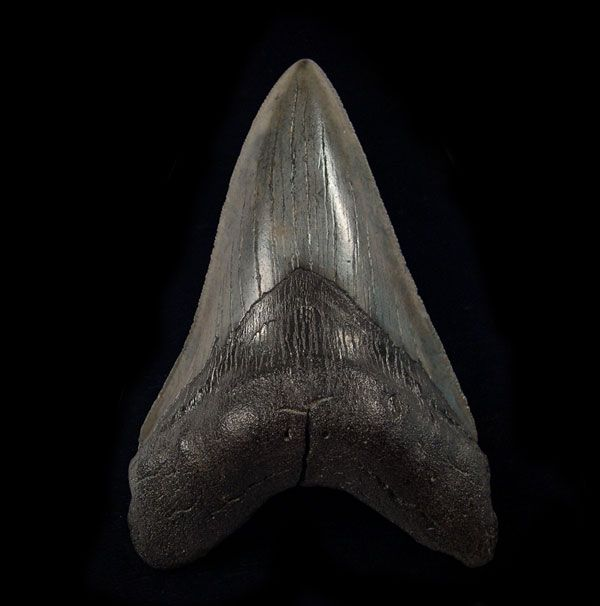
On the Megalodon fossil listing, one tooth stands out. It measures 4 7/16 inches and carries a bourlette that is both complete and larger than usual. The enamel is of good quality, though the serrations are worn, and hydration cracks can be seen on the root. These features blend normal and abnormal traits in a way that elevates the tooth’s importance.
Why Abnormal Teeth Gain Special Attention
Abnormal teeth gain value for several reasons, starting with their rarity. Fossilization itself is selective, and for an abnormal feature to be preserved makes the find even less common. A Megalodon tooth with an oversized bourlette, intact root, and unusual wear does not appear frequently, which is why collectors and researchers are so interested in them.
There is also scientific importance. Abnormalities can reveal details that regular specimens may not show. Worn serrations might provide evidence of feeding behavior, while hydration cracks may point to geological conditions after burial. In this way, irregular features open doors to new insights about ancient life and post-mortem processes.
Collectors also look for abnormalities because of their visual impact. A tooth with a large bourlette, intact root, or unexpected form captures attention within any display. Even imperfections such as cracks or worn enamel can make a specimen more appealing when those features are rare.
Finally, authenticity matters. Abnormal fossils can raise questions, but when they are confirmed as natural and unaltered, their value rises even further. A guarantee of authenticity assures both collectors and scientists that what they are examining reflects ancient conditions. The Megalodon tooth described on the fossil site is verified as complete, natural, and without repair, making it an especially valuable example.
The Megalodon Tooth as a Case Study
Taking a closer look at this Megalodon tooth highlights why abnormal fossils are so significant. The size of 4 7/16 inches is considered large, which alone enhances its importance. Its form is spike-like, which is different from the triangular shapes usually associated with the species. The bourlette is extra significant and complete, an uncommon trait that distinguishes it further.
Although the serrations are described as fair but worn, they reveal feeding activity and natural wear from the life of the shark. The root is intact with only a few hydration cracks, an uncommon state for fossils of this size. The enamel remains strong, enhancing both scientific and aesthetic appeal. Finally, the fossil is confirmed as free from restoration, ensuring that what is being observed is fully authentic and natural.
What Abnormal Teeth Reveal
Abnormalities in fossil teeth are not random. They carry essential information about the animal and its environment. Worn serrations may demonstrate repeated use in feeding and indicate what types of prey were being consumed. Variations in size, enamel thickness, and root shape can show how individual sharks grew differently within the same species. Cracks and coloration often reveal what happened after the tooth was buried, such as groundwater activity or sediment changes.
Each irregularity allows paleontologists to reconstruct life histories and environmental influences that might otherwise remain unknown. Abnormal teeth provide a more vivid picture of prehistoric oceans and the creatures that dominated them.
Value for Collectors and Museums
Abnormal fossils are not only important for science but also highly valued by collectors and museums. Institutions often use them as centerpiece exhibits because their unusual features spark curiosity among visitors. For private collectors, an abnormal tooth becomes a highlight in their collection, admired for its individuality and story.
The Megalodon tooth featured on the fossil site represents exactly this kind of value. Its large bourlette, complete root, worn serrations, and overall authenticity combine to make it attractive to researchers and collectors alike. It demonstrates how abnormalities enhance both scientific significance and visual appeal.
The Enduring Allure of Abnormal Fossils
Abnormal fossil teeth hold a special place in paleontology because they represent both natural irregularity and survival through millions of years. When a specimen shows differences from the norm while retaining authenticity, it becomes a treasure with exceptional importance. The Megalodon example demonstrates this appeal clearly. With its unusual bourlette, intact root, and visible signs of wear, it illustrates why abnormalities are so highly valued.
These irregularities not only enrich the scientific record but also bring character to collections. They remind us that no two fossils are the same, and that uniqueness often tells the most compelling story.
Conclusion
Abnormal fossil teeth are among the most coveted finds in paleontology because they combine rarity, research value, and collector appeal. They reveal stories of feeding behavior, growth differences, and post-burial conditions that everyday examples may not show. The Megalodon specimen described on the fossil site, with its oversized bourlette, worn serrations, and complete root, is a clear example of why such fossils are so admired.
Every irregular feature carries history within it, connecting the present to an ancient world. In paleontology, abnormal fossil teeth are not simply specimens. They are treasures that expand knowledge, inspire curiosity, and preserve the mystery of creatures that once ruled the oceans. As one fossil enthusiast once remarked, “The most unusual teeth often tell the most extraordinary stories.”






