

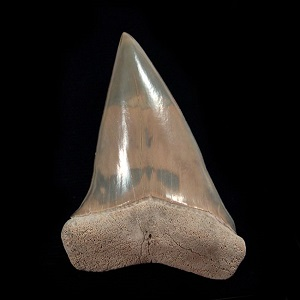
At our site, we are proud to present some of the rarest fossil treasures ever recovered. Few fossils can inspire as much fascination as a copper-red Megalodon tooth. The remarkable coloration, impressive size, and prehistoric story preserved in each specimen make these fossils highly sought after.
What makes copper-red Megalodon teeth so rare and valued among collectors comes down to three factors that work together: geological conditions, limited access, and strong demand. Among these treasures, the Otodus megalodon in the Copper Red Site stands as the most significant source of such rare specimens.
Geological Conditions Create the Copper Red Color
The copper-red coloration that defines these teeth is the result of particular geological conditions. Without these conditions, Megalodon teeth will not display the unique and vivid hue. The best specimens are found in a section of the Meherrin River in North Carolina, an area known as the Copper Red Site. Unlike other Megalodon localities such as Lee Creek or Bone Valley, this site contains sediment layers that produce the distinct copper-red enamel. These fossils date from the Miocene to Pliocene era, but only in this environment does the surrounding sediment provide the minerals needed for such coloration.
In addition to the coloring, the preservation of structural details is another challenge. A complete fossilized tooth must retain its enamel, serrations, bourlette, and root. Over millions of years, enamel may fade, serrations may erode, and roots can crumble. The conditions at the Copper Red Site help preserve these delicate features while also enriching them with their trademark coloration. This rare alignment of preservation and mineral chemistry explains why intact copper-red Megalodon teeth remain exceptional.
Limited Access and Scarcity of Specimens
Even when the right geology is present, access to quality specimens is limited. The Copper Red Site is the only known location that produces these fossils consistently. Other Megalodon teeth may be found across different regions, but none provide the same copper-red tone. Within this small area, only a fraction of the fossils display both the coloration and the structural quality that collectors seek.
High-quality specimens are scarce because they must combine sharp serrations, an intact bourlette, glossy enamel, and a complete root. Collectors also prefer fossils that remain in their natural condition without any repair or restoration. While many teeth discovered elsewhere may require stabilization, the most desirable copper red fossils are valued for having avoided such alterations. Larger specimens, particularly those over five inches, are even more challenging to find. When a tooth combines size with intact details and vivid color, it becomes one of the rarest fossils available.
Demand Among Collectors
The scarcity of copper-red Megalodon teeth naturally fuels strong demand among collectors. Their visual appeal is undeniable, as the copper red enamel creates a dramatic contrast with the darker bourlette and lighter root. When sharp serrations are preserved, these teeth become striking display pieces that immediately capture attention.
Compared with specimens from well-known fossil localities, copper-red Megalodon teeth are even rarer, making them especially desirable. Collectors evaluate enamel gloss, serration sharpness, root completeness, and bourlette preservation, and when a specimen meets all of these standards, its value increases significantly. Provenance also plays a role. Fossils that are confirmed to be unaltered are always more prized than those that show signs of repair or restoration. As the number of collectors continues to grow, competition for these fossils remains strong, which only enhances their desirability.
In particular, specimens from the Otodus megalodon Copper Red Site are widely recognized as being among the rarest and most prized Megalodon teeth available in the world today.
Characteristics That Define Exceptional Teeth
Several qualities often combine to define an exceptional copper-red Megalodon tooth. The enamel should display a rich and uniform copper red shade, while the surface needs to retain its natural gloss. Serrations must be sharp and complete, including the rare preservation of the tip serration. A wide and intact root provides balance, while the bourlette should remain dark and well-preserved.
The absence of repair or restoration ensures authenticity, which is a critical factor for collectors. Size also matters, as specimens over five inches are particularly scarce and command a higher value when they retain all other desirable qualities.
When all of these attributes appear together in a single specimen, the tooth becomes a centerpiece fossil, representing one of the finest examples a collector could hope to acquire.
Value and Prestige in the Collector Market
The rarity of copper-red Megalodon teeth directly influences both their market value and the prestige of owning one. Specimens that combine exceptional qualities often sell for thousands of dollars. Compared with more common Megalodon teeth, these fossils remain in a category of their own. For collectors, owning a copper-red Megalodon tooth is often viewed as acquiring one of the rarest fossil types available.
Such pieces frequently become the highlight of personal collections or find their place in museum exhibits. The combination of rarity and demand means these fossils are quickly purchased and seldom reappear on the market.
Why Scarcity Continues
The continuing scarcity of copper-red Megalodon teeth can be explained by several enduring factors. Only a single site produces them, and even there, only a few specimens survive in top condition. Collector expectations are high, and fossils that fall short of these standards are not valued in the same way.
Strong demand ensures that when high-quality teeth are found, they are quickly acquired. This cycle guarantees that copper-red Megalodon teeth will remain some of the rarest fossils available to collectors.
Conclusion
Copper-red Megalodon teeth owe their exceptional status to a unique combination of geological formation, limited availability, and high demand. The Meherrin River Copper Red Site provides the conditions required to produce them, but only a select few specimens display the complete set of qualities that make them highly valued
These fossils are both visually striking and remarkably rare, which explains why collectors place such importance on acquiring them. A specimen from the Otodus megalodon Copper Red Site represents not only the artistry of natural preservation but also the accomplishment of securing a fossil from one of the most exclusive localities known today.






