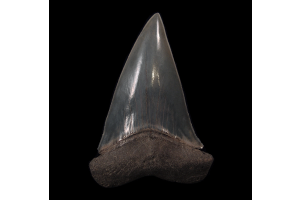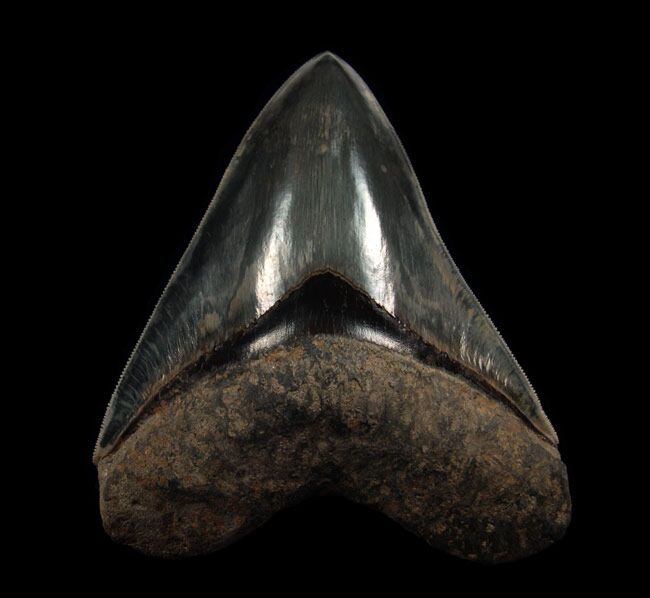
Some collectibles whisper. A megalodon tooth roars. Place one on a shelf or in a glass case and watch how the room changes. Guests lean in, questions flow, and suddenly everyone wants to touch deep time. In the fossil world, few treasures hold the same magnetic pull as a massive shark tooth. It is no wonder collectors search for a megalodon tooth found 10,000 years old, because that phrase signals prestige, permanence, and a story you can tell again and again without it ever getting old.
Why a Megalodon Tooth is More Than a Fossil
Prestige is not just about size or price. It is about presence. A megalodon tooth carries both scale and narrative. The triangular crown suggests a geometric nature perfected. Serrated edges whisper of power that once sliced through whales with terrifying ease. And unlike many fossils that require lengthy explanations, a megalodon tooth stands on its own. Even a newcomer to collecting knows instantly they are looking at the weapon of a giant.
The appeal goes beyond scientific curiosity. Owning such a piece connects you to oceans that no longer exist, to predators that dwarfed great white sharks, and to geological processes that preserved their legacy. In other words, it is a conversation starter, a status symbol, and a piece of history that doubles as a work of art.
Age Is the Story That Sells
Collectors crave a narrative they can retell with confidence. Fossilization is a slow, almost poetic process. A shark sheds its tooth. Sediments cover it. Oxygen vanishes, slowing decay. Water rich in minerals seeps through pores, replacing organic material with silica or calcite. Pressure works patiently over millennia. Ultimately, what was once bone-hard enamel becomes a stone-hard fossil.
That is why the phrase megalodon tooth found 10,000 years old matters so much. It signals that the specimen did not just survive—it endured, transforming from ordinary tissue into something extraordinary. You do not just own a relic. You own a timeline in your hand.
Beauty You Cannot Fake
Prestige demands aesthetics. Glossy enamel catches light in ways that remind people of polished gemstones. Phosphate-rich sediments produce deep blacks that feel mysterious and bold. Clay and limestone can give teeth a pale yellow, riverbed green, or smoky gray appearance. Some collectors lean toward bold contrast, while others favor the subtle weathering of river-worn enamel. A truly stunning tooth balances tip sharpness with root integrity, with a bourlette that looks elegant even under close inspection.
Photos are nice. But hold one in person, and you realize no camera can fully capture how a megalodon tooth feels in your palm—hefty, balanced, and unmistakably ancient.
Rarity That Cannot Be Mass-Produced
Scarcity drives prestige, and in this case, it is entirely natural. The largest teeth with crisp serrations are rare because sediment chemistry, river currents, and recovery conditions must align just right. Many former hunting grounds are now protected or less accessible. That means fewer exceptional specimens enter the market each year. Collectors understand this. They know a six-inch beauty is not just another fossil; it is a dwindling opportunity.
This scarcity makes owning one even sweeter. Every tooth that finds its way into a private collection reduces the pool, which in turn fuels long-term value.
Provenance: The Backstage Pass of Fossils
A prestige piece is not just about the tooth—it is about the paper trail. Where was it found? In what formation or riverbed? Who recovered it, and how was it preserved? Documentation is more than formality. It elevates the piece, proving authenticity and giving you a confident answer when someone inevitably asks, “Where did you get it?”
That documentation also matters for insurance and future sales. But most importantly, it enriches ownership. Telling a visitor, “This came from the depths of a South Carolina riverbed,” or “It lay buried in phosphate-rich clay for millennia,” makes the fossil more than an object. It makes it a story worth retelling.
Condition Shapes Desire
Collectors notice details. A tooth with natural enamel texture beats a heavily polished one. Crisp serrations hint at minimal handling. A clean bourlette signals care. Heavy restoration diminishes value, while light, disclosed restoration may be acceptable if it respects the tooth’s geometry. Prestige lives in the details, and buyers pay for honesty.
This is why teeth with intact edges and natural color often fetch higher attention than larger but overly altered specimens. Quality trumps inches every time.
Display: Where Prestige Meets Interior Design
A megalodon tooth is too powerful to hide in a drawer. Presentation matters. Acrylic stands let the triangular geometry shine. Shadow boxes add museum gravitas. Floating shelves create minimalist drama. Proper lighting turns enamel into a subtle spotlight magnet. The best part? A display never feels forced. Even among books, crystals, or modern art, a tooth steals the show.
Care is simple. Keep it away from direct sun. Avoid damp conditions. Dust it gently. A well-kept fossil looks timeless for generations.
Ethics Matter More Than You Think
Collectors want pride, not second thoughts. That is why sourcing is crucial. Ask whether the specimen was legally recovered. Confirm if restoration was done. These small steps protect your enjoyment and ensure your collection remains welcome in both private circles and public exhibitions. Prestige should come with peace of mind.
Choosing the Tooth That Matches Your Personality
Every collector wants something different. Maybe you prefer bold black enamel with an intimidating presence. A smoky gray tooth would fit better into your calm, minimalist space. Some chase size. Others chase symmetry. The truth? There is no universal rule. The best tooth is the one you cannot stop glancing at, the one that still excites you months after it arrives.
That is the essence of prestige—it feels personal.
Size Still Matters, But Only So Much
Big teeth grab attention, yes. A six-inch specimen commands a room. But seasoned collectors know that balance often beats sheer scale. A slightly smaller, yet perfectly symmetrical tooth with natural enamel can feel more impressive than a bulkier, over-polished one. Prestige thrives on harmony, not just dimensions.
How the Market Decides What Matters
Auction headlines make noise, but real collectors look at patterns. Teeth with symmetry, natural enamel, crisp serrations, and clear provenance consistently maintain value. Those are the criteria that stand the test of time. Trends may come and go, but authenticity, aesthetics, and honesty never lose their shine.
The Science That Confirms the Claim
Collectors want more than a number—they want proof. That is why science steps in. Geological context provides the framework. Teeth dated to the late Pleistocene, often described as those of a megalodon found to be 10,000 years old, carry credibility because the layers and associated fossils confirm the timeline. Mineral composition and wear patterns separate honest enamel from modern tampering. With these markers, an owner can speak confidently when curious friends ask how old it really is.
How We Make Collecting Effortless
Owning a prestige fossil should feel exciting, not stressful. That is why we provide macro photographs under neutral light, detailed condition notes, and exact locality information. We protect every specimen during shipping, answer questions promptly, and provide guidance on care and display tips. Collecting should feel like stepping into a private gallery curated for you—not a gamble.
We understand that you want both education and confidence. That is why every purchase is as much about trust as it is about the fossil itself.
Local Confidence, Global Reach
Fossil collecting might feel global, but buyers still want local-style reliability. Fast shipping, careful packaging, and responsive support make the experience personal, no matter the distance. Many collectors return again and again because once trust is established, the fossil journey becomes a partnership.
That spirit—part neighborly, part curatorial—is what keeps the market vibrant.
The Prestige Payoff
At the end of the day, owning a megalodon tooth is not just about having a fossil. It is about the quiet thrill of touching something that swam in ancient oceans. It is about the awe on a visitor’s face. It is about the story you can tell without exaggeration, the history you can hold without a degree in paleontology.
And when that specimen happens to be a megalodon tooth found 10,000 years old, the prestige rises even higher. It becomes not just a fossil, but the ultimate centerpiece—the one collectors dream about, and the one you get to enjoy every single day.