

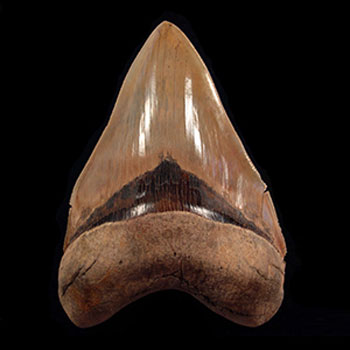
When we study megalodon teeth, we find that every fossil carries a story etched into its edges. In our work with these extraordinary specimens, we have seen how serrations—small, saw-like projections along the tooth’s cutting edge—can hold microscopic wear patterns that reveal fascinating details about the shark’s feeding behavior. Careful examination can show whether a tooth bit into bone, sliced through soft tissue, or encountered a more rigid structure like a shell.
These observations deepen our understanding of the ancient predator’s habits and also play a role in determining the authenticity and value of each piece, often influencing the megalodon tooth price in the fossil market.
Serration Design and Its Original Purpose
Megalodon teeth are known for their large, triangular crowns and finely serrated edges. These serrations were not decorative—they served a precise purpose in cutting efficiently through prey. Many of the specimens described on the Buried Treasure Fossils site still retain sharp, intact serrations, offering a rare glimpse into the tooth’s original condition. Some reach over six inches in length, giving a sense of the immense scale of the predator that carried them.
The absence of side cusps is a defining characteristic of these teeth, and in museum-quality examples, the edges can still appear razor-sharp. This degree of preservation allows close inspection under magnification, where researchers and collectors alike may find subtle abrasions, polishing, or tiny chips that developed during the shark’s lifetime.
How Microscopic Wear Develops
The nature of microscopic wear depends on what the serrations come into contact with during feeding. Repeated slicing through soft tissue can leave a faint polish or smoothing along the tips of the serrations without significantly dulling them. Conversely, when serrations meet a more rigid surface—such as the dense bone of a large whale—the tips may become flattened, and fine chipping can appear along the cutting edge.
The site’s mention of other fossil shark species, such as Edestus, helps illustrate how feeding can shape teeth. In those specimens, naturally rounded crown tips developed from a distinctive slicing motion used to cut prey. While this example comes from a different shark, it supports the idea that specific feeding actions can produce characteristic wear patterns, which in turn may be observed on megalodon teeth.
Pristine Edges and Used Edges
Not all megalodon teeth show the same level of wear, and this difference can provide insight into both feeding history and fossil preservation:
● Sharp, well-preserved serrations often suggest limited use before the tooth was shed or indicate that post-mortem conditions kept it in excellent shape. These are valued for showing the tooth’s original edge profile in full detail.
● Rounded or worn serrations tell a more active story, suggesting the tooth was used extensively to cut through flesh, cartilage, or bone. Slight rounding without chips may point to repeated slicing of softer prey, while heavier wear can indicate frequent contact with complex skeletal elements.
Both states are significant. Sharp serrations preserve the design, while worn serrations preserve the evidence of function.
Environmental Effects After Burial
It’s important to note that not all wear forms during the shark’s life. Conditions at the fossil site can play a significant role in shaping a tooth’s serrations after it has been shed. Buried Treasure Fossils highlights how teeth from different regions can vary in color and surface texture due to mineralization in the surrounding sediment.
Coarse-grained sediment and water movement may abrade serrations over time, creating wear patterns that mimic feeding damage. In contrast, fine sediment and stable burial conditions can shield serrations from further erosion. For this reason, interpretation requires separating post-mortem abrasion from actual feeding wear—a step that is essential for accurate analysis.
Diet Clues Locked in Wear Patterns
By connecting wear characteristics to known prey interactions, several interpretations emerge:
● Bone contact: Flattened serration tips, small chips, and localized polish may indicate biting into skeletal structures such as ribs or skulls of large marine animals.
● Soft tissue feeding: Serrations remain sharp but show gentle polish, suggesting repeated slicing through muscle without striking bone.
● Hard-shelled prey: While not documented for megalodon on the site, the presence of certain abrasion types could suggest contact with shell material, indicating dietary variety.
Each of these possibilities draws directly from visible evidence, turning microscopic marks into behavioral records.
The Role of Authenticity in Interpretation
Wear patterns can only be trusted as behavioral evidence if the tooth is authentic and unaltered. Buried Treasure Fossils emphasizes that specimens are sold with a guarantee of authenticity and without repair or restoration. This assurance matters greatly: when a tooth with visible wear is confirmed genuine, those marks can be interpreted with confidence as natural results of the shark’s life.
The site features examples like the Georgia Black Meg tooth, described as having little sign of wear and excellent preservation. Such teeth set a standard for identifying what untouched serrations look like, making it easier to compare with more heavily worn examples and decide whether the wear reflects actual feeding behavior or post-burial changes.
How Wear Patterns Connect to Megalodon’s Feeding Role
Serrations on megalodon teeth were functional adaptations, enabling the shark to maintain its position as a dominant predator. Microscopic wear patterns serve as fossilized evidence of that role. Every rounded edge, smooth patch, or intact tip marks a moment when the tooth engaged in the act of feeding.
Even though we cannot see the living animal, these patterns bridge the gap between the static fossil and the dynamic hunter it once belonged to. A tooth with heavy wear may have taken part in tackling massive prey, while a tooth with pristine edges may have been lost early in its use. In either case, the fossil becomes a direct physical connection to the feeding strategies of one of the most formidable sharks in history.
Influence on Collecting and Value
For collectors, serration wear patterns are not only clues to feeding behavior but also part of what shapes interest in a fossil. A tooth that clearly shows authentic feeding wear may hold scientific intrigue, while a sharp, pristine tooth can appeal for its display quality. Both conditions have their own appeal in the collecting world, and either can influence a megalodon tooth price depending on rarity, size, and preservation.
This intersection of science and collecting ensures that careful examination remains central to appreciating these fossils—whether the goal is to understand prehistoric life or to preserve a remarkable natural artifact.
Conclusion
Microscopic wear on megalodon serrations is more than a surface feature—it is a record of ancient feeding behavior. Sharpness, shape, and surface texture can point toward bone slicing, soft tissue cutting, or even contact with other materials during the shark’s lifetime. Environmental conditions after burial can modify these patterns, making authentication an essential part of accurate interpretation.
For both researchers and fossil collectors, these details offer a direct link to the life of a long-extinct predator. They also play a role in determining how a specimen is valued, as authenticity, preservation, and visible wear all factor into the megalodon tooth price. Through careful, informed analysis, every tooth—whether pristine or worn—can reveal a story from millions of years ago, connecting the present to the ancient oceans where the megalodon once reigned.






