

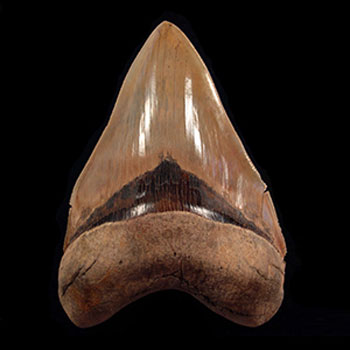
There is something extraordinary about holding a megalodon tooth—we know this firsthand because we handle these remarkable fossils as part of our work. They are relics that have endured the slow churn of geological time, pieces of a predator that once ruled the oceans. These teeth are not merely remnants of an ancient animal; they are physical records of the chemical and geological processes that have operated together for millions of years.
From the oldest specimens to the youngest megalodon tooth found, the secret to their preservation lies in the way ocean chemistry can transform and protect them, maintaining intricate details like enamel gloss and serrations. Understanding how this happens begins with the fascinating phenomenon of mineral replacement.
Mineral Replacement: Nature’s Preservation Process
When a megalodon shed a tooth into prehistoric seas, the journey to preservation would begin immediately. The tooth would settle into the sediment on the ocean floor, where it could become buried and shielded from disruptive forces. Over time, groundwater, enriched with minerals from the surrounding environment, would slowly seep through the sediment, infiltrating the tooth’s structure.
This process, known as mineral replacement, gradually substitutes the organic material with minerals such as phosphate and calcite, transforming the tooth into stone while retaining its original shape and features. In regions like Chile, phosphate-rich sediments could create exceptional conditions for this transformation, preserving fine details and enhancing coloration. In West Java, mineral-rich Miocene sediments produce specimens with dense, glossy enamel and sharp serrations, demonstrating how geological chemistry can influence preservation quality.
The Measured Pace of Fossilization
Fossilization does not happen in an instant. For shark teeth, the process can begin after roughly 10,000 years of burial. This early stage relies on environmental stability, where oxygen levels must remain low and decay-causing organisms cannot break down the structure. Sediments rich in phosphate, consistent burial conditions, and limited exposure to environmental shifts can contribute to long-term survival.
Over millions of years, these favorable settings can result in teeth that appear remarkably well-preserved, holding on to structural integrity and detail that might otherwise have been lost.
Conditions That Create Exceptional Preservation
Some megalodon teeth do survive in near-pristine form because of the environments where they fossilized. Chile’s Bahia Inglesa Formation, located in a phosphate mining region, has produced fossils with remarkable structural preservation and vibrant coloration. In West Java, favorable conditions have resulted in teeth with intact roots and minimal surface pitting.
Florida’s Bone Valley, known for its phosphate deposits, has yielded specimens with distinct colors and finely preserved features. Even in the United Kingdom, marine sediment deposits have produced teeth with unique color variations that reflect the mineral composition of the surrounding environment. These examples show how preservation quality is often more dependent on chemical and geological factors than on age alone.
The Story Told Through Color
Color is one of the most striking characteristics of fossilized megalodon teeth. The range—from deep black and rich gray to brown, yellow, orange, and red—is determined by minerals that the tooth absorbs during fossilization. Over time, processes such as bleaching or leaching can alter these shades, creating creamy white or pale surfaces.
This natural variation is more than visual appeal; it is evidence of the environmental conditions that shaped the fossil. Certain regions are known for distinctive colors, such as copper-red tones from North Carolina or warm tan-orange hues from Indonesian finds. These colors can provide insight into mineral content, moisture levels, and other factors present during the tooth’s burial and transformation.
Patina as a Geological Signature
The patina that develops on some teeth can serve as an additional marker of their journey through time. This outer layer, evolved over millions of years, reflects the chemical composition of the surrounding sediments.
A well-formed patina will often accompany sharp serrations and intact enamel, signaling stable conditions during fossilization. In locations like Lee Creek, patina does not merely add visual character—it also provides valuable information about the chemical history that has helped to preserve the fossil.
Indicators of Authenticity
Authenticity can be evaluated through the physical characteristics of a tooth. Genuine fossils will show mineral deposits and sedimentary layering that cannot be replicated artificially. Serrations on authentic teeth often remain sharp due to the way minerals preserve enamel over time.
Variations in coloration that align with known geological patterns can further support authenticity. Each of these features—from the preserved root structure to the texture of the enamel—serves as a record of the environmental conditions that safeguarded the tooth.
The Relationship Between Biology and Geology
The preservation of a megalodon tooth is the result of an intricate relationship between its biological origins and the geological environment it encounters after being shed. Initially part of a living predator’s hunting arsenal, the tooth’s survival would depend entirely on the chemistry of the sediment and water in which it was buried. Where conditions offered mineral-rich sediments, limited oxygen, and long-term stability, the tooth’s organic structure could be replaced by durable minerals, locking its form into stone for millions of years.
From Prehistoric Predator to Timeless Fossil
Not every tooth follows the same path to preservation. Some may emerge from their resting places with sharp serrations and rich color, while others bear marks of erosion, pitting, or surface wear. These variations speak to the different conditions encountered during fossilization. Regardless of appearance, each tooth holds a story of ancient oceans and the environmental chemistry that made its survival possible.
Locked in Time
A well-preserved megalodon tooth is far more than a fossil—it is a geological time capsule. Shed by an apex predator millions of years ago, buried in sediments that provided protection, and transformed by mineral-rich groundwater, it resists the passage of time. Every contour, every serration, and every hue reveals the influence of the ocean’s chemistry. This natural process does not simply preserve the tooth; it transforms it into a lasting record of a prehistoric world, ready to be discovered and studied.
For collectors and researchers alike, such a specimen is not only a link to Earth’s ancient past but can also hold significant value, which is why discussions around megalodon tooth prices remain as intriguing as the fossils themselves.
As one fossil enthusiast once remarked, “Holding a megalodon tooth is like shaking hands with history—it’s the closest we will ever come to meeting the ocean’s greatest predator face to face.”






