

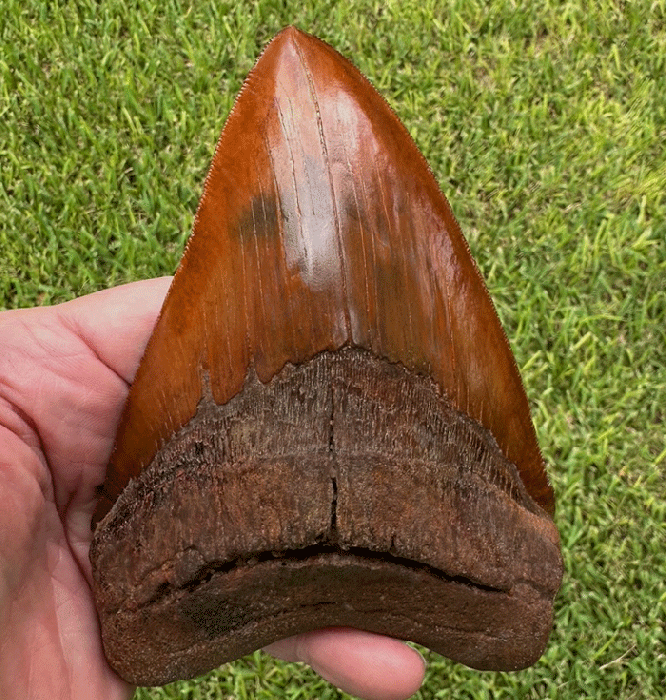
When it comes to fossil collecting, not all megalodon teeth are created equal. Some of the most prized fossil shark teeth in the world are found in the rivers of northeastern North Carolina. Known for their exceptional color, preservation, and rarity, these fossils have gained legendary status among serious collectors. But what exactly gives these teeth the edge over similar finds from Virginia?
Just a few minutes into any comparison, it becomes clear that the megalodon tooth from North Carolina stands out in both appearance and value. Rich copper-red hues, incredible detail, and geological advantages make these specimens highly sought after. When you come across a megalodon tooth found in North Carolina, you’re not just holding a fossil—you’re having a story millions of years in the making.
Rare Finds, Rich Color
One of the defining features of North Carolina’s megalodon teeth is their color—particularly the rare copper-red variety. This rich coloration is almost exclusively associated with a few rivers in northeastern North Carolina, a trait not seen in most Virginia specimens. Teeth from these areas are embedded in sediment layers rich in iron oxides and phosphates, resulting in deep, vibrant shades that immediately capture attention.
Due to the minimal production from these rivers, the market for these teeth is small but premium. Many divers spend weeks without uncovering even a single copper-colored tooth. That level of scarcity is what makes these fossils so valuable and collectible. Virginia teeth, while available in larger numbers, simply don’t display the same visual appeal or rarity.
A Geological Edge
The teeth discovered in North Carolina owe much of their quality to the state’s complex fossil layers. The Eocene Castle Hayne Formation, Miocene Pungo River Formation, and Pliocene Yorktown Formation all contribute to a diverse and ancient fossil record. These sedimentary environments not only help preserve enamel and root structure but also maintain the overall integrity of the tooth, even after millions of years.
Virginia sites, by comparison, don’t offer the same geologic variety or preservation conditions. While they may yield fossil teeth, those often appear weathered or incomplete—especially when set against the pristine condition of North Carolina’s finds.
Preservation that Stands Apart
One look at a top-quality megalodon tooth from North Carolina, and you’ll notice the difference in sharpness, enamel quality, and definition. The chemical composition of the water and sediment helps fossilize these teeth in a way that preserves their original form. That’s why many North Carolina specimens look as if they were shed only recently—even though they’re millions of years old.
In contrast, Virginia fossils are typically more eroded or darker in color due to differing sediment and river chemistry. For collectors, preservation matters as much as rarity, and North Carolina consistently delivers on both.
The Legacy of Lee Creek
The Lee Creek phosphate mine in Aurora, North Carolina, is perhaps one of the most famous fossil locations in the world. Though collecting at the site ceased in 2008, the fossils it produced—especially during the middle Miocene and Pliocene epochs—are considered top-tier. These historic finds have become signature pieces in fossil collections worldwide.
We invite you to explore our exclusive Lee Creek locality catalogs, showcasing the depth and diversity of this legendary fossil site. It’s a reminder of the unmatched fossil heritage found only in North Carolina.
Exclusivity Over Abundance
Quantity doesn’t always mean quality. Virginia may produce more fossil shark teeth, but collectors know that North Carolina teeth are in a different league. The low output and high standards of preservation mean that every tooth has intrinsic value—making it an actual investment-grade fossil.
A megalodon tooth offers collectors something that mass-available Virginia specimens cannot: rarity, color, and superior condition. That’s why serious fossil hunters and museums alike turn to these North Carolina rivers in search of something extraordinary.
A Touch of Natural Art
Beyond their scientific and value significance, these fossils are visually stunning. The distinct copper-red hues are a natural form of artistry, shaped by millions of years of exposure to mineral-rich sediment. Their shape, texture, and color create a display piece that’s as captivating as it is historic.
At Buried Treasure Fossils, we take pride in offering a premium selection of these rare fossils. Our North Carolina catalog includes not just megalodon teeth, but also Angustidens, Auriculatus, and Great White teeth—all hand-selected and authenticity guaranteed.
The Thrill of Discovery
What drives the thrilling pursuit of fossil hunting goes beyond mere scientific curiosity—it’s a deep-seated passion ignited by the thrill of discovery. The exhilaration of uncovering a megalodon tooth is heightened by the region’s vibrant fossil history and the exhilarating challenges presented by each expedition. Beneath the waves, divers understand that the valid reward often lies in the patience they exhibit; each search is a test of resolve, especially when the prize is a magnificent tooth that ranks among the finest specimens in the world. The allure of the hunt is a powerful motivator, transforming each dive into an unforgettable adventure filled with possibility.
Whether you’re just starting your collection or counting on a lifelong passion, there’s no substitute for a genuine North Carolina fossil. Its origin, color, and preservation combine to create a fossil that tells a richer story than any ordinary specimen.
Conclusion: Why North Carolina Wins
From its unmatched color and preservation to its geological legacy, North Carolina continues to offer some of the most exceptional fossil shark teeth ever found. These teeth aren’t just remnants—they’re masterpieces of nature, formed over millions of years and uncovered with patience and passion. A megalodon tooth found in North Carolina is more than a collector’s item—it’s a treasure.
Want to own a piece of prehistoric history? Reach out to us today or explore our collection to find your next remarkable fossil. Contact us now—we’re here to help you discover the perfect specimen for your collection.






