

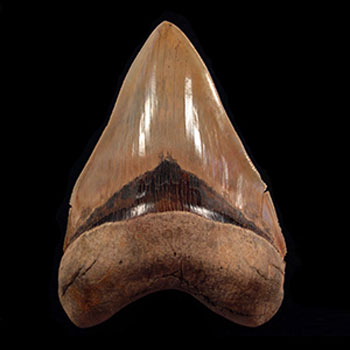
Some discoveries can stir the imagination because they seem to transcend ordinary experience. When we unearth something that once belonged to a creature of prehistory, such as a massive shark that ruled the ancient oceans, the moment becomes more than the finding of an object. It becomes a bridge linking us with lost worlds. The story of when a man finds a tooth of megalodon illustrates how a single fossil can carry both scientific weight and emotional power. But what exactly can elevate a fossil discovery into that rare, unforgettable category known as “once in a lifetime”?
Drawing on the astonishing narrative of a Megalodon tooth, several factors can come together to make a discovery exceptional: rarity, size, condition, location, integrity, and provenance. Each of these dimensions can contribute to how that moment resonates with the finder and the broader community of enthusiasts, scientists, and history lovers.
Rarity: When Even One Specimen Is Exceptional
One of the first reasons a fossil find can feel once in a lifetime is simple: there are so few like it. Megalodon teeth are iconic remnants of an apex predator that lived between roughly 23 and 3.6 million years ago.
Because shark remains, especially bones, do not often fossilize well, the teeth can be the only durable parts that survive.
Even though teeth are more likely to endure, they are not always found in pristine or display-worthy condition. The fact that someone might stumble across a large, intact specimen can be rare. When that happens, the rarity of the fossil itself can add weight to the moment.
Size: Monumental Dimensions That Astound
A discovery can gain extra gravitas when the item is unexpectedly large. Megalodon was no ordinary shark. Estimates suggest it could have reached lengths up to about 60 feet or more.
Its teeth, often described as massive triangular fossils with serrated edges, clearly reflect that grandeur.
When a person happens to find a tooth that is nearly palm-sized or more, it can naturally provoke awe. The mind struggles to accept that such a creature really existed. The size of the find helps reinforce the sense of scale, a fragment from a predator whose dimensions could dwarf modern analogues.
Condition: The Finer the Preservation, the Greater the Reverence
A fossil is more than a form. The finer the preservation is, the more it can tell. In the case of teeth, their enamel makes them among the better-preserved fossils in many contexts.
But preservation can vary widely. Some specimens may be weathered, broken, worn, or de-mineralized, while others can retain sharp serrations, clean surfaces, rich coloration, and subtle microstructures. The better a fossil can survive time, sediment, erosion, and chemical alteration, the more information it can carry and the more it can inspire reverence.
Thus, when someone finds a tooth with precise serrations, intact margins, and minimal damage, that find becomes more than a fragment. It can serve as a window into the anatomy and life of the animal. That level of preservation can intensify the emotional and scientific impact of the find.
Location: The Surprise Factor of Place
Where a fossil is unearthed can also add to its “once in a lifetime” mystique. In the Megalodon example, impressive specimens can often be found in riverbeds, coastal cliffs, and inland regions that once lay under ancient seas.
When a fossil is discovered in an unexpected spot, perhaps a dried riverbank miles from any shoreline, that surprise can truly enthrall. The dramatic context can amplify the story: a person wading through a river or walking on a beach and suddenly discovering a tangible piece of millions-of-years-old marine history. That meeting of human passage and geological happenstance is part of what can make such finds feel extraordinary.
Integrity: The Wholeness of the Story
Integrity refers to how complete, undisturbed, or scientifically coherent a specimen might be. A fossil find can be more compelling when it retains structural wholeness, minimal breakage, little interference by modern damage or human alteration, and clearly legible features.
In the narrative where a man finds a tooth of megalodon, the impact is elevated when the fossil remains recognizable as a triangular blade with serrated edges intact.
If a fossil is badly fragmented, reconstructed, or overly restored, some of the primary effects can be lost because the mind senses missing pieces. A find of high integrity can allow one to imagine the creature more completely. It can convey more of what was, and less of what has been lost.
Provenance: The Story Behind the Object
Even the best specimen can lose significance if there is no story behind it, no chain of discovery, no location data, no documented history. Provenance is the context: who found it, where and when, under what circumstances, and how it entered the scientific or collector world.
The narrative of stumbling upon a Megalodon tooth, whether in a river, in sediment, or after storms in tidal outcrops, can imbue the object with life. The story becomes inseparable from the specimen. That provenance can elevate the find beyond a geological curiosity and make it a story people continue to retell: “A piece of primeval sea life, preserved for millions of years, then uncovered in an unexpected moment.”
Without provenance, a fossil can remain simply an artifact. With provenance, it can become part of a human story layered on deep time.
The Confluence: Why That Tooth Feels Like a Once-in-a-Lifetime Discovery
None of these factors in isolation necessarily guarantees a truly exceptional discovery. But when rarity, size, condition, location, integrity, and provenance can come together in a single moment, the result can feel as though time itself has folded.
In the case of the Megalodon tooth find:
● The fossil is rare because few survive in such form.
● It is large and can magnify the sense of scale.
● Its condition may preserve serrations and delicate details.
● The unexpected location can enhance mystery.
● The integrity allows the structure to remain clear.
● Finally, the story of its discovery can be woven into every retelling.
When these combine, the fossil can become a relic, a story, a time capsule, and an emotional moment. That is what can make such a discovery “once in a lifetime.” It is not only about possessing something rare, but also about feeling connected to a world that has long passed.
Why These Discoveries Matter
These dramatic finds can do more than thrill the finder. They can help scientists piece together ancient ecosystems, shifts in marine life, climate changes, and evolutionary pathways. The enamel and shape of the tooth can speak to diet, species variation, and growth patterns. The sediment and location can provide insights into ancient seas, their depth, temperature, and geology.
In addition, they can fuel wonder, reminding humanity that Earth’s deep past remains rich and that modern life is only a chapter in a much larger timeline. A discovery such as a large, well-preserved Megalodon tooth can demonstrate that nature’s artistry is written in stone and sediment, with history lying just beneath the surface.
In Conclusion
When a man finds a tooth of megalodon on a riverbank and it checks all the boxes, rare, large, well-preserved, in an astonishing location, with integrity intact, and a compelling story of discovery, that moment can become more than a fossil find. It can become a once-in-a-lifetime encounter. It can bring history into the present, merging the thrill of exploration with the weight of deep time.
Those are the conditions that can separate routine finds from unforgettable ones: the convergence of rarity, size, condition, location, integrity, and provenance. And in that convergence, there is a glimpse not only of a remnant, but of a connection to creatures, worlds, and stories preserved long enough to be touched again.






