

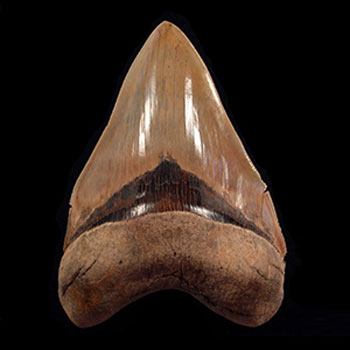
The fossilized teeth of the great megalodon shark are among the most coveted relics in paleontology and fossil collecting. Through our work, we are able to share the incredible stories behind these fossils. From storied mining beds to collector legends, each specimen carries a tale of time, geology, and human passion.
Among the most celebrated localities is Aurora (Lee Creek), North Carolina, where phosphate mines have yielded a trove of discoveries. In this article, we will explore the stories behind the aurora megalodon tooth, including historical finds, record specimens, and collector legends.
Lee Creek and Aurora as Fossil Landmarks
The Lee Creek phosphate mine at Aurora, North Carolina, has long held a central place in the lore of megalodon teeth. In the marine sediments of the Yorktown Formation from the Pliocene period, teeth of Carcharocles megalodon and its relatives have been unearthed in exceptional condition. Collectors often describe them as having striking enamel preservation, vibrant coloration, and sharp serrations that remain visible millions of years after the shark swam in prehistoric seas.
What makes Lee Creek remarkable is not only the volume of fossil discoveries but also the high aesthetic quality. Teeth from Aurora are frequently described as exhibiting incredible color and near-flawless condition. This combination has made them especially prized in fossil-collecting circles. By 2008, the mine was closed to all collecting activity, which meant that no new specimens could be legally excavated. Every Aurora tooth that can be found today must come from older collections, estates, or dealers who secured them before closure. Scarcity has turned these teeth into fossils with dual importance, as they are both natural relics and cultural artifacts of a vanished collecting era.
Famous Specimens That Gained Legendary Status
Among the remarkable teeth discovered at Aurora, some have risen to legendary status because of their size, color, and preservation. One of the most celebrated examples is known by the stock number LC100.
This ~5″ classic Aurora megalodon tooth came from a private collection and is often regarded as one of the finest of its type.
With a clean light tan crown, a rich hazel brown bourlette, smooth enamel with almost no hydration cracks, razor-sharp serrations, and a complete root showing excellent triangular symmetry, LC100 has become a touchstone for collectors. Its position in an old collection only strengthens its authenticity and heightens its value in the fossil world.
The Role of Provenance and Scarcity
The importance of each Aurora tooth does not rest solely on its geological features but also on its provenance. Since collecting ended at Aurora, every specimen now circulating must be traced back through older collections. A tooth with a clear and reliable history will often gain greater stature, as provenance adds credibility and connects the fossil to a specific period when the mine was still open.
Scarcity also plays a crucial role in shaping the stories of these fossils. Teeth that survive intact, with sharp serrations, complete roots, and rich enamel, immediately capture attention. The rarity of such preservation makes them symbols of what Aurora once offered. Collectors frequently see these fossils as treasures from a site that can no longer be explored. This enduring fascination helps explain why the aurora megalodon tooth continues to be regarded so highly in the fossil world.
The Power of Condition and Aesthetic Appeal
Condition and appearance often determine which fossils rise to legendary status. Collectors tend to value qualities such as enamel sheen, the richness of the bourlette, the sharpness of serrations, and the overall triangular symmetry of the crown. When a tooth combines all of these attributes, it becomes more than an ordinary specimen and instead transforms into an icon of collecting.
Language used to describe these fossils also reveals how much condition shapes their reputation. Phrases like “museum quality,” “best of the best,” and “monster-sized” are commonly applied to Aurora specimens. A large number of fossil shark teeth on the market have undergone repair or restoration, particularly those close to six inches. This makes original and untouched examples such as LC007 and LC100 especially compelling. Their condition demonstrates resilience through millions of years while retaining sharp detail and visual appeal.
Historical Background of the Aurora Finds
The phosphate pits of Lee Creek exposed marine sediments from the Yorktown Formation, which preserved a wide variety of fossil shark teeth. Among them were megalodon, Chubutensis, and Angustidens. For decades, both collectors and researchers accessed the site and recovered thousands of teeth, placing Aurora firmly on the fossil map.
During the active years, Aurora was one of the few localities where private individuals could gather such material. The steady flow of discoveries meant that remarkable specimens entered the fossil trade or museums year after year. Occasionally, a truly extraordinary example would emerge and spark conversations about the finest known Aurora tooth. These discoveries supported scientific study while also inspiring fossil enthusiasts who were drawn to their beauty and rarity.
The closure of the mine in 2008 changed the collecting landscape forever. With no new material entering the market, every existing specimen gained new importance. Earlier finds grew in value and prestige, while provenance and preservation became critical in distinguishing exceptional examples.
Why These Stories Captivate Collectors
The stories surrounding Aurora megalodon teeth extend beyond their geological significance. They highlight how natural history intersects with human fascination. Each specimen tells a story that combines its geological origin, its preservation through time, and its passage through collections.
Rarity strengthens reputation, particularly since no new specimens can be excavated. Condition and beauty elevate certain fossils into cultural icons, while provenance enhances their stature as historical pieces. Above all, the stories ignite passion, encouraging collectors to treasure not only the fossils themselves but also the histories attached to them.
Conclusion
Aurora megalodon teeth are more than remnants of a prehistoric predator. They represent the meeting of natural forces, geological time, and human appreciation. Legendary specimens like LC100 and LC007 stand as icons of what the Aurora deposits produced during their most active years. Other examples, such as LC003 or LC008, enrich the broader story of a site that shaped collector standards.
With the closure of the mine, each tooth now carries a unique combination of geological history and cultural legacy. The story of the aurora megalodon tooth reminds collectors and enthusiasts that fossils are not only scientific treasures but also chronicles of discovery and passion. As one collector once said, “Every tooth is a time capsule, holding millions of years in its enamel and a lifetime of stories in its journey.”






