Imagine standing on a shoreline millions of years ago. The waves crash in a steady rhythm, but somewhere beyond the horizon, a predator unlike any living today swims in silence. This was the domain of the megalodon, an apex predator that dwarfed modern sharks in both size and strength. Its legacy isn’t found in skeletons, but in something more lasting—its teeth.
Buried beneath layers of time and earth, megalodon teeth have become symbols of a world long lost. Among these relics, the black megalodon tooth stands out. Its shadowy appearance, forged through slow processes underground, makes it one of the most visually captivating fossils one can find.
These fossils are more than collectibles. They’re portals to a distant past.
Let’s explore why these teeth, especially those turned black by nature’s hand, fascinate collectors, divers, and history enthusiasts alike.
Why Some Teeth Turn Black
When a megalodon tooth is buried after falling from the creature’s mouth, it begins a long transformation. Over millions of years, the organic material is replaced with minerals from the surrounding sediment. The soil’s composition plays a key role in determining the final color of the tooth.
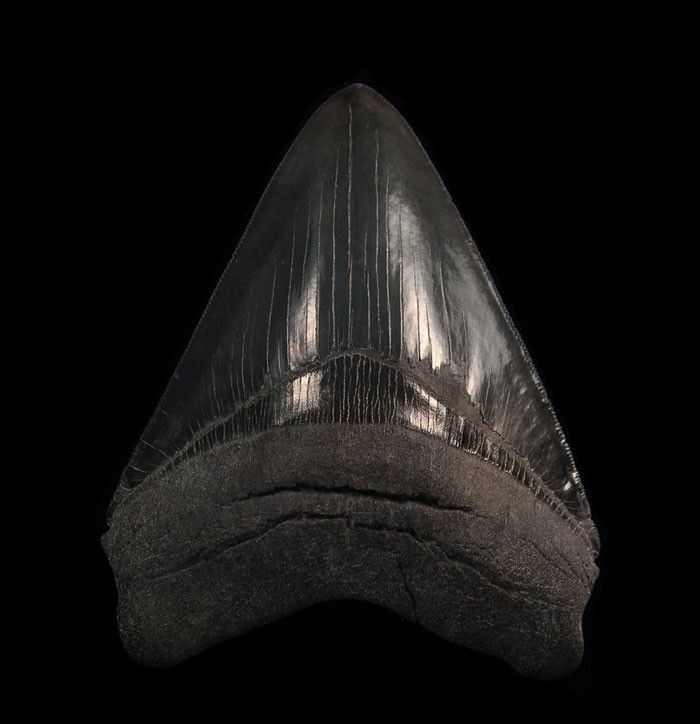
A black megalodon tooth isn’t naturally born that way—it becomes that way through mineral-rich environments. Elements such as manganese or iron oxide seep into the enamel, creating dark hues that range from charcoal to deep obsidian. These shades are signs of age, environment, and pressure.
No two black teeth are the same because no two environments are the same. That’s part of what makes them special.
A Natural Sculpture Shaped by Time
Unlike the bones of many prehistoric creatures, shark teeth have dense enamel that resists decay. This makes them one of the most common fossilized remains found today. Still, black ones are significantly less common, making them a prize for collectors.
The tooth’s condition tells a silent story. Smooth surfaces may hint at calm burial sites, while worn or chipped edges might suggest turbulent waters or movement across riverbeds. These tiny details make the fossil more than a display piece—they turn it into a geological journal.
Each tooth carries millions of years of natural artistry, shaped by unseen forces with patience unmatched.
A Collector’s Favorite for Good Reason
Size, color, and condition all play a role in how valuable a megalodon tooth becomes. But when those traits converge with a dark hue, it creates a highly sought-after specimen. Whether mounted in a case or displayed on a shelf, a black megalodon tooth naturally draws attention.
Some collectors seek them out specifically for their aesthetic—smooth enamel contrasted against darker tones, hints of brown or blue veining, or serrations still visible after centuries. Others appreciate them for their rarity. And many more are simply fascinated by the idea of holding a piece of Earth's deep past.
There’s no need for polish or embellishment. These fossils speak for themselves.
Where These Fossils Are Found
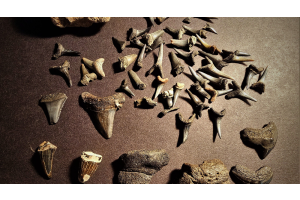
Many of these teeth are discovered in areas where ancient oceans once flowed. The Atlantic and Gulf coasts of the United States, especially regions in the Southeast, are known for yielding fossilized shark teeth, including the elusive black ones.
Some are found along beaches, but many are recovered from riverbeds, particularly by scuba divers who sift through layers of silt and gravel. These river environments often preserve teeth remarkably well thanks to cooler temperatures and low oxygen levels, which slow down decay and protect against erosion.
Each recovery is part science, part treasure hunt.
Why the Color Adds Meaning
The dark tones aren’t simply cosmetic—they hint at deeper stories. While lighter-colored teeth might appear cleaner, black fossils have a moody richness that captures the imagination.
They look ancient, mysterious, and bold. For many, this coloration enhances the emotional value of the piece. It creates a sense of depth, both visually and metaphorically. Holding a black megalodon tooth feels like having something ancient and enduring, not just a biological remnant.
This emotional resonance is why people don’t simply collect them—they connect with them.
The Beauty in Natural Imperfections
A black megalodon tooth doesn’t need to be flawless to be admired. In fact, slight imperfections often add to its story. A chipped edge, a weathered base, or fossilized marine encrustations can all offer clues about where the tooth traveled before being found.
Rather than viewing these traits as damage, collectors often see them as historical fingerprints. Each mark adds character. These aren’t manufactured items—they’re one-of-a-kind fossils, each formed by nature’s unpredictable hand.
In a world full of mass-produced objects, their individuality feels refreshing.
How They’re Displayed and Preserved
Collectors often choose to display their black megalodon teeth in shadow boxes, acrylic stands, or custom frames. Lighting plays an important role—natural or soft artificial lighting can highlight the contrast and textures of the tooth without causing damage.
When it comes to care, simplicity is key. A gentle cloth can help remove dust, and storage in a dry, cool place ensures long-term preservation. It’s not about transforming the tooth, but about preserving its raw beauty.
Whether displayed alone or among a fossil collection, its presence is undeniable.
Who Buys These Fossils?
People from all walks of life are drawn to black megalodon teeth. Fossil hunters see them as achievements. Interior designers use them as conversation pieces. Teachers bring them into classrooms as tools for storytelling. And curious minds simply enjoy the feeling of holding a relic from a forgotten era.
No degree in paleontology is needed. These fossils invite participation, not exclusivity. Whether you’re a beginner or a seasoned collector, there’s always a reason to appreciate one more.
A Symbol of Nature’s Timeless Power
The black megalodon tooth reflects more than prehistoric biology—it reflects Earth’s ability to preserve, to shape, and to surprise. These fossils have crossed epochs, survived geological shifts, and emerged from the shadows intact.
They remind us how small we are in the grand sweep of time, yet how connected we remain to the world that existed before us.
These teeth may once have served a hunting purpose, but today they hold meaning, mystery, and beauty.
Conclusion: A Shadow from the Deep Past
The black megalodon tooth isn’t just a collector’s piece—it’s a story carved by nature, buried in silence, and recovered with awe. From its color to its texture, every detail carries weight. Whether admired for its rarity, history, or artistic charm, it has the power to move people in ways few other natural items can.
Holding one in your hand is like shaking hands with the ancient sea.
Curious to find your own piece of ancient history?
Browse rare, hand-picked fossils that speak through stone and time. Let your collection begin with a story worth sharing.