

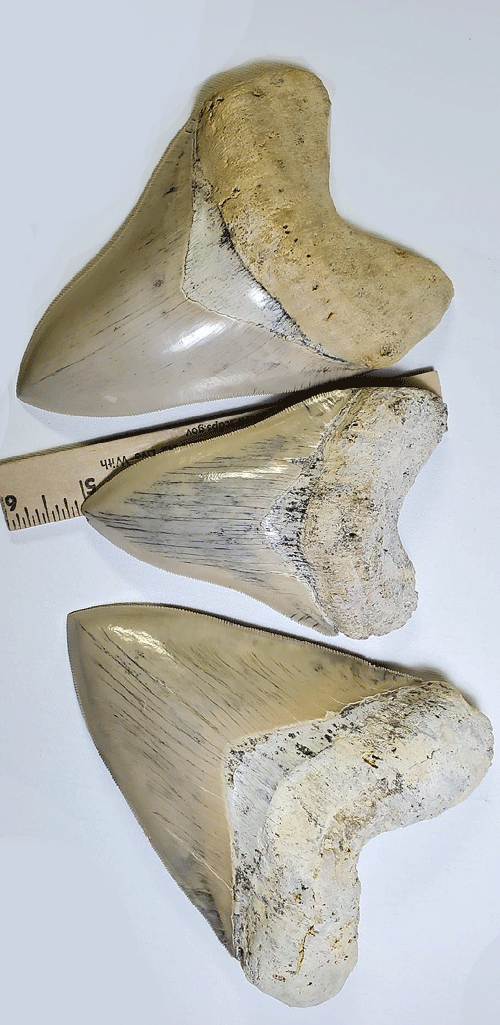
Millions of years ago, an enormous predator ruled the oceans. With jaws wide enough to swallow a small car and teeth the size of your hand, the megalodon continues to captivate fossil hunters and collectors alike. Today, those razor-edged relics still wash up on shores, auction blocks, and museum displays—stirring wonder and curiosity. But how do you know if what you're holding is truly the real thing?
If you're eyeing a large, triangular tooth and wondering whether it once belonged to a prehistoric giant, you're not alone. Among fossil enthusiasts, nothing compares to the thrill of discovering a genuine megalodon tooth fossil—but unfortunately, replicas and fakes are far too common in the market.
Let’s dive into the subtle signs and textures that separate authentic teeth from the imitations.
Feel the Weight and Texture in Your Hands
Before anything else, pick up the tooth and notice how it feels. Authentic fossilized teeth have a weightiness that’s hard to replicate. Over thousands of years, minerals seep into the organic material, replacing it and creating a denser structure. This process results in a tactile sensation that's cold, solid, and heavier than expected.
Fake replicas often feel lighter, chalkier, or overly smooth. Real fossils might have minor chips or abrasions, but they won’t have a plastic or rubbery feel. It’s a quiet reminder that time has left its fingerprint.
Observe the Color Variations
A genuine megalodon tooth will never be uniformly colored. Its hues often depend on the surrounding sediment and minerals present during fossilization. You might notice rich browns, muted grays, earthy blacks, or even hints of blue or green. This natural variation is a beautiful clue.
If a tooth is a bright white, glossy black, or unusually shiny, it might be artificial—or at least heavily altered. Polishing is standard, but too much of it can strip away the rugged charm and clues that confirm authenticity.
Inspect the Serrations and Tip
One of the most exciting details on a megalodon tooth is the fine serration along the edges. These saw-like ridges helped the ancient predator slice through prey with ease. On authentic teeth, these serrations can still be visible, though some may be worn down over time and by erosion.
Also, look at the tip of the tooth. A genuine specimen may have a slightly blunted point due to age, but it shouldn’t appear perfectly symmetrical or unnaturally sharp. Reproductions often go too far, presenting a “too good to be true” image.
Examine the Enamel and Bourlette
Two key components help validate a fossil’s authenticity: the enamel and the bourlette. The enamel covers most of the tooth’s surface, and in real fossils, it can show signs of wear, natural lines, and a dull, matte finish. The bourlette, a V-shaped area near the root, usually has a different texture and color compared to the enamel.
In genuine specimens, these zones are clearly distinct. Fakes may blend these regions poorly, with inconsistent transitions or a smooth finish all over. It’s often in these subtle shifts where the truth lies hidden.
Consider the Tooth’s Size and Shape
Megalodon teeth can reach over 7 inches, though anything above 6 inches is considered exceptionally rare. Most commonly, you'll find teeth between 4 and 5 inches. The size alone doesn't confirm authenticity, but it’s a clue. Equally important is the overall shape. Real teeth are often slightly asymmetrical—one side may curve more, or the base may tilt. That's nature for you.
When you come across a tooth that looks perfectly manufactured, it’s worth taking a second look.
Check the Tooth’s Root for Authenticity Clues
The root of the tooth is one of the best places to look when assessing whether it's the real deal. In authentic fossils, the root tends to show more wear and a rugged texture. It may have small cracks or even mineral deposits built into its crevices. A root that appears overly smooth, pristine, or completely symmetrical may signal a cast or a mold.
Don't overlook the root—it's often where authenticity hides in plain sight.
Think About Where It Was Found
Provenance matters. Many authentic megalodon teeth are recovered from well-known fossil-rich regions such as the coastal Carolinas and parts of Florida, as well as from offshore dredging areas. If the seller can’t provide any details about the location, or the origin sounds vague or generic, proceed with caution.
Knowing where the tooth came from isn’t a guarantee of authenticity, but it adds an extra layer of credibility and helps enthusiasts understand the geological story behind the fossil.
Be Mindful of Repair Work or Restoration
Not all restoration is bad. In fact, minor repairs are common in the fossil world—especially when parts of the tooth have broken off or eroded. However, excessive filling, painting, or resurfacing can mislead potential buyers and distort the specimen's value.
Ask questions. Are there areas that look unnaturally perfect or filled in? Is the color too uniform? Transparency from a seller or dealer goes a long way, and a willingness to point out repairs is a good sign of trustworthiness.
Use a Blacklight or Magnifier to Examine Clues
This sounds like a fun science experiment, and it is. Under UV light, real fossilized materials generally don’t glow. In contrast, many resins, glues, and synthetic materials used in fakes will fluoresce under blacklight. It’s not foolproof, but it’s a helpful extra test.
Similarly, using a magnifying glass or jeweler’s loupe can reveal surface inconsistencies that are hard to spot with the naked eye.
Trust Your Gut and Seek a Second Opinion
Sometimes, the best tool you have is your own intuition. If something feels off or you’re hesitating to believe the story behind the tooth, pause and research further. Consult fossil forums, ask collectors, or connect with paleontology enthusiasts who can weigh in with experience.
You’re not alone in the pursuit of discovery—and the more eyes on a specimen, the more clarity you'll have.
Why Collectors Love Megalodon Fossils
Beyond their size and visual appeal, megalodon teeth carry a prehistoric charm that connects us with a world long gone. They offer a quiet mystery, a moment frozen in time. Holding one can feel like having a piece of deep-sea history, shaped by sediment, salt, and time.
From children dreaming of ancient sharks to seasoned collectors, there’s something universally mesmerizing about these fossils. And that fascination continues to grow as new discoveries are unearthed every year.
In Conclusion: Be Curious, Stay Informed
If you're looking to add a megalodon tooth fossil to your collection—or confirm whether one you've already got is authentic—the process starts with observation, curiosity, and a bit of research. The more you learn, the more confident you’ll feel in your collecting journey.
Every fossil tells a story. The real treasure is understanding it.
Want to explore fossil collections or learn more from trusted sources? Take the first step today.






