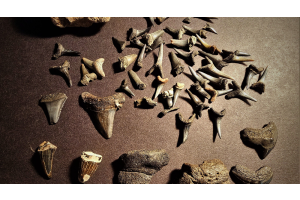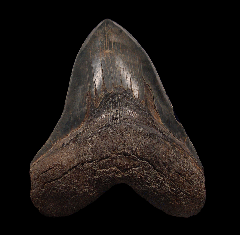
The study of prehistoric oceans often begins with the fossils that survive long after ancient giants disappear, and few specimens offer deeper ecological clues than the massive teeth of the Megalodon. Within the first moments of examining these fossils, researchers immediately see how specimens like a 7-inch megalodon tooth for sale help us reconstruct Miocene and Pliocene marine ecosystems. These extraordinary teeth, which we proudly offer through our collection at Buried Treasure Fossils, serve as scientific touchstones for understanding predator–prey interactions, ocean temperatures, migration routes, evolutionary pressures, and shifting biodiversity across millions of years.
A Window Into Ancient Apex Predation
When researchers examine a 7-inch megalodon tooth, they are not simply looking at a large fossil—they are holding evidence of one of Earth’s most powerful marine predators. Megalodon’s immense bite force and massive tooth structure indicate a feeding strategy shaped by large marine mammals that flourished during the Miocene and Pliocene.
By studying serration wear, enamel thinning, and root abrasion, paleoecologists confirm that Megalodon routinely targeted whales, including filter-feeders and early forms of baleen species. These wear patterns reveal repeated high-impact bites consistent with tackling fast-moving, thick-bodied prey. In some fossil deposits, such as those in South Carolina or the famous Sharktooth Hill in California—locations where we source many of our authenticated specimens—Megalodon teeth are discovered alongside whale vertebrae showing unmistakable bite marks.
This predator–prey evidence helps researchers reconstruct ancient food webs. Megalodon sat firmly at the top, shaping marine mammal behavior, distribution, and evolutionary responses. The size and quality of teeth surpassing six inches, especially those approaching or exceeding seven inches, demonstrate how dominant the species was.
Insights From Tooth Morphology
Tooth shape directly reflects ecological role, and this is where Megalodon’s dental morphology becomes remarkably informative. The heart-shaped crown of a 7-inch megalodon tooth features broad, finely serrated edges designed for slicing through layers of blubber and muscle. Unlike the teeth of earlier shark species, Megalodon’s evolved form suggests the expansion of large marine mammals in the Miocene, a period rich with evolutionary diversification.
Researchers also use subtle changes in serration spacing to infer environmental conditions. For instance:
● Coarse serrations often indicate rapid prey handling and feeding on larger-bodied animals.
● Fine serrations may reflect specialization on more abundant, slightly smaller prey species.
At Buried Treasure Fossils, we emphasize these scientific nuances in our educational outreach because each tooth we offer is an opportunity for collectors and educators to explore these anatomical and ecological stories firsthand.
Ocean Temperature and Migration Patterns
One of the most valuable ecological clues preserved in Megalodon teeth is oxygen isotope composition. These isotopes allow scientists to determine the temperature of the water in which a shark lived. Analyses of multiple teeth—including large specimens like a seven-inch fossil—show that Megalodon inhabited warm, temperate seas and frequently migrated long distances.
During the Miocene and into the Pliocene, global oceans experienced significant cooling events. As temperatures shifted, the distribution of warm-water prey species changed as well. This environmental pressure likely forced Megalodon to expand its hunting grounds or shift toward new regions rich in whales and marine mammals.
Tooth enamel retains isotopic signatures that allow researchers to track how far individuals traveled during seasonal migrations. Megalodons appear to have moved between coastal nurseries—like the Panama site rich in juvenile teeth—and deep offshore hunting zones.
These migrations mirrored the movements of whales, reinforcing Megalodon’s role as a top-tier marine predator that shaped the structure and function of ancient ecosystems.
Understanding Nursery Habitats
The discovery of hundreds of juvenile teeth at specific fossil localities reveals that Megalodon used shallow, protected waters as nurseries. These nurseries likely existed in subtropical regions with warmer temperatures, abundant prey fish, and minimal predation risks. Juvenile Megalodon teeth, usually far smaller than the colossal seven-inch specimens prized by collectors, still show similar morphology—just scaled down for smaller prey.
By comparing juvenile and adult teeth, scientists observe how Megalodon’s diet shifted dramatically over time. Young sharks fed on smaller fish and marine reptiles, while adults targeted whales. This ontogenetic dietary change broadened the species’ ecological impact, allowing Megalodon to occupy multiple trophic levels throughout its life cycle.
Reconstructing Miocene Food Chains
When educators and paleoecology enthusiasts study a 7 inch megalodon tooth for sale in our collection, they gain access to a powerful resource for reconstructing ancient food chains. Tooth placement, wear, and condition reveal:
● How Megalodon captured prey
● Which species dominated marine ecosystems at the time
● How marine mammals adapted to predation pressure
● How energy moved through Miocene and Pliocene oceans
The Miocene epoch in particular supported large populations of whales, sea cows, seals, and giant fish—all ideal prey for Megalodon. These animals thrived in nutrient-rich coastal upwelling zones, which attracted predators and helped maintain balanced food chains.
As the Pliocene ushered in cooler oceans, prey availability shifted. Baleen whales diversified further, some becoming larger and others developing improved migratory behaviors—strategies that may have developed partly in response to predation threats. Megalodon’s eventual extinction roughly 3.6 million years ago appears connected to declining prey, cooling oceans, and increased competition from emerging apex predators like early great white sharks and orcas.
Why Large Megalodon Teeth Matter to Research
Teeth reaching the seven-inch range are particularly rare, and because of their size, they serve as exceptional data points for understanding fully mature Megalodons—likely individuals exceeding 50 feet in length. These giants interacted with the largest marine mammals of their time, creating a cascade of ecological pressures that shaped communities across continents.
In our inventory at Buried Treasure Fossils, we ensure that each scientifically significant tooth is accompanied by detailed locality and geological context when available. This makes our fossils valuable to educators, researchers, and serious collectors who seek high-grade specimens with meaningful ecological stories.
Connecting Collectors and Educators With Prehistoric Oceans
One of our primary goals as a fossil supplier is to make these extraordinary scientific tools accessible. Whether someone is a STEM educator building a hands-on marine science lesson, a paleobiology enthusiast exploring ancient ecosystems, or a collector looking for a museum-grade fossil, our selection of authenticated Megalodon teeth—including rare specimens over six inches—provides a direct connection to Earth’s deep past.
Our passion for fossils began with exploration, curiosity, and a commitment to sharing credible natural history. Because Megalodon teeth are among the most scientifically valuable shark fossils in existence, we are proud to offer specimens that enhance learning and inspire future research.
Conclusion: A Fossil That Brings the Miocene and Pliocene to Life
A 7-inch megalodon tooth for sale is far more than a collectible—it's a gateway to understanding ancient ocean ecosystems, predator-prey dynamics, and global environmental shifts. These fossils help scientists reconstruct food chains, track whale evolution, and interpret changes in ocean temperature over millions of years. When you explore our selection, you’re not just viewing a fossil; you’re opening a window into the Miocene and Pliocene seas and the extraordinary creatures that shaped them. If you’re ready to deepen your appreciation of prehistoric marine life, we invite you to explore our curated collection and discover the scientific power held within each 7-inch megalodon tooth.