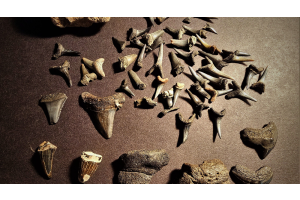
Copper-red Megalodon teeth from North Carolina are among the most sought-after fossil shark teeth in the world. They are rare, distinctive, and highly collectible, especially when they come from the Meherrin River, a location known for producing these unusual and beautiful specimens. These teeth are the fossilized remains of the extinct Giant White Shark, Otodus megalodon, which lived approximately 23 to 3.6 million years ago.
The copper-red color is not something seen in every fossil deposit, it’s a unique feature tied to the mineral composition and geological conditions of the area. The teeth are typically from the Miocene Pungo River Formation and the Pliocene Yorktown Formation.
The combination of provenance, color, condition, and size determines their overall value. Below are the top factors collectors look for when evaluating Megalodon tooth in North Carolina.
1. Rarity of the Copper-Red Color
The copper-red coloration is the most distinctive feature of these teeth and is a major reason for their desirability. While Megalodon teeth from other locations often have gray, black, or tan hues, the Meherrin River is one of the few places where the conditions allowed for the infusion of iron minerals into the enamel and dentin during fossilization. This process, over millions of years, created a natural reddish-bronze tone that is instantly recognizable to experienced collectors.
Not every tooth found in the Meherrin River has this color, which makes locating a copper-red specimen especially rewarding. The rarity of the coloration increases both the demand and the market price, especially when combined with other quality factors.
2. Geological Provenance
The origin of a fossil plays a significant role in its collectibility. Copper-red Megalodon teeth from the Meherrin River are tied to sediment from the Pungo River and Yorktown Formations, two well-known and scientifically significant fossil-bearing formations.
The Pungo River Formation dates back to the Miocene epoch, while the Yorktown Formation is from the Pliocene epoch. These layers preserve an abundance of marine fossils, but copper-red Megalodon teeth are among the rarest finds. Collectors and museums place a premium on specimens with clearly identified provenance because it adds both scientific and historical context.
3. Condition and Preservation
Condition is one of the most important aspects when determining the value of a Megalodon tooth. For serious collectors, a copper-red specimen in near-museum quality or better will always attract attention. This means:
Intact serrations with minimal wear
A complete and solid root
Well-preserved bourrelette (the transition band between crown and root)
Smooth, undamaged enamel with a consistent copper-red color
Teeth found in river environments are often subject to tumbling and abrasion, which can cause chips or edge wear. This makes finding a copper-red tooth with sharp details even more uncommon.
4. Size and Proportion
Size is another critical factor in value. Larger Megalodon teeth are rarer, and large copper-red specimens are particularly hard to find. While any tooth over 4 inches is considered collectible, teeth measuring over 5 inches are exceptional.
Collectors also value balanced proportions. A tooth that is well-shaped, symmetrical, and displays the full form of the crown and root will typically be worth more than an irregularly shaped or heavily worn larger tooth.
5. Scarcity in the Field
The number of copper-red Megalodon teeth available on the market is small compared to other color varieties. The Meherrin River, while productive in the past, is not a location where fossils are found in abundance today. Seasonal conditions, limited access, and the natural difficulty of river collecting mean that new specimens are not entering the market at a rapid pace.
This limited supply, combined with strong collector demand, helps maintain high market values for quality specimens.
6. Scientific and Historical Interest
Beyond their aesthetic appeal, copper-red Megalodon teeth are important from a paleontological perspective. They represent the remains of one of the most formidable predators in Earth’s history, providing direct evidence of its size, feeding habits, and distribution.
The unique coloration also offers insight into the fossilization process and the geological history of the Meherrin River region. For some collectors, the scientific significance is just as important as the display value.
7. Authenticity and Documentation
With the growing interest in Megalodon teeth, authenticity is important. Megalodon teeth from North Carolina have distinct characteristics that make them easier to verify compared to more common-colored specimens. Still, serious collectors seek teeth that come with accurate location data, formation identification, and a history of ownership whenever possible.
Documentation not only confirms authenticity but also helps preserve the tooth’s provenance for future collectors or institutions.
8. Display Appeal
Many collectors value these teeth not only as fossils but as display pieces. The copper-red hue, combined with the symmetrical triangular shape of a Megalodon tooth, makes for a striking presentation in a collection case or as a standalone piece.
In the right lighting, the enamel’s natural luster can bring out depth and variation in the color that photographs often cannot fully capture. For display purposes, collectors may prefer teeth that have a uniform coloration, minimal root damage, and well-defined serrations.
9. Preservation and Care
Maintaining the condition of a copper-red Megalodon tooth is essential for protecting its value. These teeth should be kept in a stable environment away from excessive humidity or direct sunlight, which can sometimes affect the surface minerals.
Cleaning should be done carefully to avoid scratching the enamel or altering the natural patina. Proper storage or display not only keeps the specimen looking its best but also safeguards it for future generations of collectors.
Final Thoughts
Megalodon teeth from North Carolina’s Meherrin River are among the most collectible fossil shark teeth in the world. Their combination of rarity, color, geological significance, and preservation potential sets them apart from other specimens.
For collectors, owning one is more than acquiring a fossil, it’s securing a piece of geological history that represents both the prehistoric marine world and a rare mineralogical process. As available specimens become increasingly scarce, our teeth collection will continue to be highly sought after by both private collectors and museums.
If you’re looking for a museum-quality copper-red Megalodon tooth with verified provenance, explore our current selection of North Carolina specimens. Each piece is carefully chosen for its color, condition, and authenticity, ensuring you get a fossil you can be proud to display.