

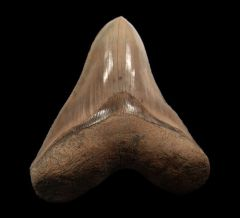
Beneath layers of sediment and time, fossils tell stories that stretch back millions of years. These remnants are not only preserved evidence of what once existed but also fragments of a history that shaped the world as we know it. Among the most remarkable of these treasures lies the Lee Creek Megalodon tooth, a fossil that connects us to one of the largest predators the oceans have ever known.
Finding or holding such a specimen is like touching a chapter of Earth’s prehistory written in stone.
Before diving deeper, it helps to pause and reflect—how did such fossils survive through time, and why do they capture so much curiosity? Let’s explore.
The prehistoric ocean giant
The Megalodon was an apex predator, dominating seas nearly 23 to 3.6 million years ago. With jaws large enough to crush bone and teeth serrated for slicing through prey, it ruled waters that were warmer and filled with abundant marine life. Scientists estimate its size to be nearly three times that of a great white shark. Each fossilized tooth serves as a lasting reminder of its dominance, hinting at a life that once surged with force beneath the waves.
A treasure hidden in North Carolina
Fossils are found all over the globe, but certain areas are renowned for preserving these ancient remains in remarkably well-preserved condition. North Carolina’s coastal deposits have become one of the most iconic fossil grounds, a place where waterways carried and buried remains of ancient marine creatures. Collectors often describe the thrill of searching through layers of phosphate-rich soil, uncovering teeth that gleam with a dark polish shaped by centuries underground. This region’s unique geology makes each discovery a fascinating link between earth science and natural history.
Why fossilized teeth endure
While most organic matter decays, teeth exhibit a unique resilience. Their enamel structure enables them to resist erosion, mineralize, and maintain their form for millions of years. A Megalodon’s tooth could span several inches, some exceeding the size of a human hand. When fossilized, they acquire a new range of earthy colors—black, brown, and blue-gray—depending on the minerals that seep into them during burial. Each hue tells a different tale about the surrounding soil and water in which it rested.
Collecting fossils with respect
Fossil hunting is often more than a hobby; it’s a form of connection with Earth’s history. Yet it comes with responsibility. Collectors are encouraged to respect natural sites, learn about the history of the regions they explore, and carefully preserve fossils for study or display. Every tooth found not only fuels curiosity but also carries educational value for paleontologists and enthusiasts alike. Responsible collecting ensures that these treasures are appreciated by generations to come.
The rarity of remarkable finds
Although Megalodon teeth are not uncommon compared to other fossils, those from certain localities hold exceptional value. Size, preservation quality, and provenance all contribute to their significance. A well-preserved specimen can reveal detailed serrations and enamel patterns, features that provide insight into the predator’s feeding habits. For collectors, these rare finds become prized centerpieces of their collections, admired for both their scientific value and their natural artistry.
Stories carried through time
Every fossil has a story to tell, and teeth from ancient seas are no exception. Imagine a young Megalodon losing a tooth during a fierce hunt, sinking into the seabed where sand and minerals slowly encased it. Over millions of years, tectonic shifts and water currents brought it closer to the surface, waiting until modern explorers uncovered it. Holding such a fossil is more than looking at stone; it’s touching a moment frozen in time.
The middle connection
Among fossil enthusiasts, there is a sense of awe when examining a Lee Creek Megalodon tooth in hand. The serrated edge, the weight of the enamel, and the smooth mineralized surface all point to the life of an animal that dwarfed nearly every creature in its environment. It’s a fossil that bridges imagination and science, sparking conversations about how life evolved and how the oceans once teemed with giants.
Displaying nature’s artistry
Beyond their scientific significance, these fossils are also admired for their aesthetic appeal. Many collectors mount them in glass cases or frame them to highlight their striking form. The triangular symmetry, natural polish, and muted colors make each tooth a natural work of art. Whether placed in a study, a museum, or a classroom, these fossils carry a presence—quiet yet deeply expressive. They remind us that beauty is not only in the living but also in what remains preserved from the past.
A glimpse into prehistoric ecosystems
While Megalodon teeth capture a great deal of attention, they also shed light on entire past ecosystems. Alongside these fossils, scientists often uncover remains of whales, seals, and other marine animals that were part of this predator’s diet. By studying these associated finds, researchers piece together the food chains and environmental conditions of ancient oceans. In this way, a single tooth can help reconstruct an entire scene of prehistoric life, giving us glimpses into the dynamic and interconnected world that once existed.
The thrill of discovery
For many collectors and explorers, the experience of finding a fossil is as meaningful as the fossil itself. Walking along coastal areas, rivers, or digging into layers of sediment with the possibility of uncovering a tooth that has not seen sunlight for millions of years is an adventure in itself. Each discovery carries a personal story—sometimes of patience, sometimes of sheer luck—that adds to the fossil’s value in ways beyond its scientific worth.
The role of museums and education
Museums play a vital role in preserving fossils and sharing their significance with the public. Visitors often stand in awe before the display of a massive shark tooth, trying to picture the sheer scale of the creature it came from. These exhibits inspire curiosity, encourage scientific learning, and create opportunities for people of all ages to connect with natural history. Education rooted in such tangible evidence of the past makes science approachable and engaging.
Conclusion
The fascination with prehistoric fossils continues because they connect us with life that once shaped our planet. A Lee Creek Megalodon tooth is not only an object of curiosity but also a key to understanding ancient oceans and the magnificent predator that swam within them. These relics preserve more than enamel and bone—they preserve imagination, awe, and a reminder that our Earth has witnessed creatures beyond our wildest vision.
If you’ve ever wanted to explore a tangible piece of prehistoric history, this may be the time to begin your journey. Fossil collecting invites you to hold stories from millions of years ago, right in the palm of your hand. Discover, learn, and preserve—the past is waiting for you.






