

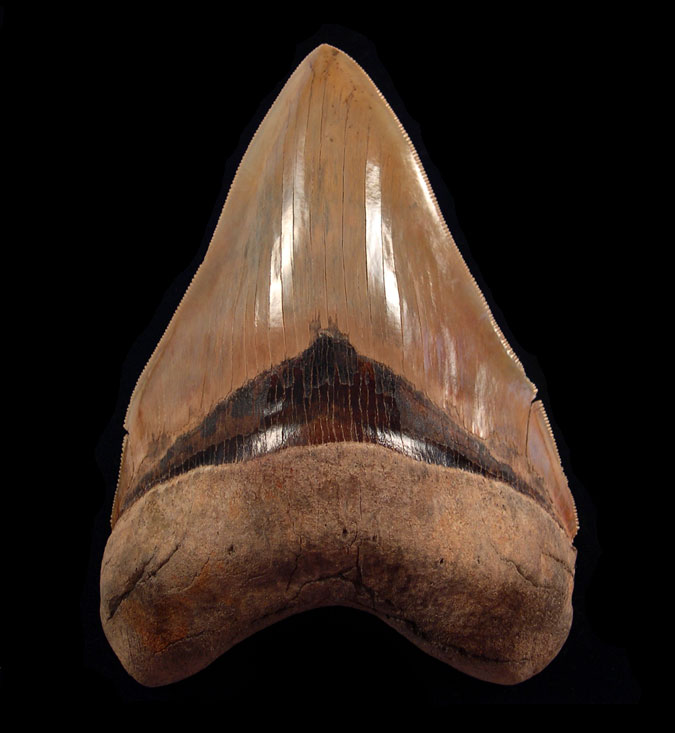
Across the globe, collectors and enthusiasts are captivated by fossils that carry echoes of a world long gone. Shark teeth, in particular, hold a unique fascination because they offer a direct link to a predator that once ruled the seas. The megalodon, often regarded as one of the largest and most formidable sharks in history, left behind teeth so massive that they dwarf those of any living species today. Among these relics, an 8-inch megalodon tooth becomes more than a fossil—it transforms into a tangible symbol of a creature that shaped ancient oceans.
This fascination with megalodon teeth is not purely scientific; it is emotional, imaginative, and personal. To hold one is to feel history resting in your hand, a blend of mystery and wonder that few artifacts can deliver.
Let’s transition from curiosity to a closer exploration of what these remarkable fossils truly represent.
The megalodon’s reign over prehistoric waters
The megalodon, often estimated to reach lengths over 50 feet, commanded oceans with its unmatched strength. Its name, meaning “big tooth,” is no exaggeration—rows of serrated teeth lined its jaws, each designed to shear through bone and prey alike. Unlike many fossils, these teeth are relatively abundant because sharks continuously shed them throughout their lives.
However, size matters in this world of fossil collecting. Smaller teeth are more common, while huge ones are much rarer. This is where collectors find themselves drawn toward fossils that push the boundaries of size, offering an extraordinary glimpse into the scale of these apex predators.
Why collectors treasure the largest specimens
A fossilized tooth of extraordinary size is more than a keepsake—it is a centerpiece. Collectors often describe an immediate sense of awe when seeing such an object displayed. Beyond its value as an artifact, the tooth embodies craftsmanship created by nature itself, with serrated edges that have been preserved over millions of years.
For paleontologists, large teeth can reveal clues about the feeding behavior and growth patterns of the species. For private collectors, they bring history closer, allowing a piece of the prehistoric sea to be part of a personal collection. It is this blend of science and art that makes these fossils so engaging.
The rarity of extraordinary finds
Finding a fossilized tooth of significant size involves more than luck. These fossils are often discovered in riverbeds, deep quarries, or coastal sites where sediment has preserved ancient remains. Over time, mineralization replaces organic matter, giving the tooth a stone-like durability while keeping its shape and details intact.
A huge specimen requires the right conditions: survival through natural wear, burial under protective sediment, and eventual discovery. This process spans millions of years, which is why larger, intact fossils command such respect and admiration when they are finally uncovered.
Holding history in your hands
Collectors often say the weight of a fossilized tooth surprises them. The heft, along with its sharp edges—even dulled by time—gives a glimpse of how nature equipped the megalodon for dominance. The subtle ridges, enamel textures, and rich mineral tones make each specimen unique. Some carry earthy browns, while others reveal deep grays or even hints of blue, depending on where they fossilized.
Each tooth tells its own story: the ocean currents it endured, the geological layers that preserved it, and the conditions that shaped its final appearance. In many ways, to hold one is to have a silent narrative of survival, destruction, and discovery.
The collector’s journey toward the remarkable
When collectors seek out extraordinary specimens, their journey is often as meaningful as the fossil itself. Some spend years combing through fossil beds, traveling to remote excavation sites, or connecting with reputable sources who specialize in authentic finds.
The search becomes a form of adventure—equal parts patience, persistence, and passion. When a collector finally adds a significant fossil to their display, it is not merely about ownership but about completing a story they have long pursued.
A centerpiece for any collection
Imagine entering a room where a fossilized tooth is displayed within a case. Visitors are immediately drawn to it, not just because of its size, but because of the weight of history it conveys. A fossil like this becomes the cornerstone of any collection, whether housed in a museum or displayed in a private study.
Collectors often highlight how conversations flow naturally when guests encounter such a relic. Questions emerge: How old is it? Where was it found? Could this tooth really belong to the largest shark to ever exist? These exchanges turn the fossil into more than an artifact—it becomes a catalyst for shared wonder.
Middle reflection
Among all fossilized shark teeth, there is something deeply stirring about the magnitude of an 8-inch megalodon tooth. Its size alone captures attention, but its significance lies in what it represents: survival across time, preservation against odds, and the chance to connect with life that once roamed vast oceans. For collectors, it serves not only as an anchor for their collection but also as a reminder of Earth’s ancient marvels.
Science meets imagination
For scientists, each tooth is a source of data—its wear patterns hint at the diet, its size estimates overall shark length, and its fossilization reveals ancient climates. For collectors, the same tooth ignites imagination: the vision of a massive shark gliding through waters, jaws filled with teeth capable of taking down whales.
It is this dual nature of the megalodon tooth that makes it endlessly fascinating. It bridges the worlds of hard science and storytelling, appealing to both the analytical and the creative.
A legacy in stone
Preserving these fossils is about more than keeping a relic on display—it is about safeguarding a piece of history. Each fossil is finite; once discovered and collected, it joins the small number of artifacts available to future generations. This sense of limited availability heightens both their scientific and personal value.
Collectors who choose to invest in such specimens often feel they are participating in the preservation of natural history. Their collections become informal museums, spaces where past and present meet.
Conclusion
To encounter a fossil of this magnitude is to experience wonder itself. An 8-inch megalodon tooth embodies the majesty of a species that once ruled the seas, preserved through eons for us to hold, admire, and protect. Whether studied under a paleontologist’s lens or displayed as the centerpiece of a collection, it carries the same message: history is not distant, it is tangible, and it lives on in our hands.
If you are drawn to the idea of owning a piece of the past, exploring authentic fossils may be the step that brings this connection closer to you. Start your search today and discover how history can find a home in your collection.






