

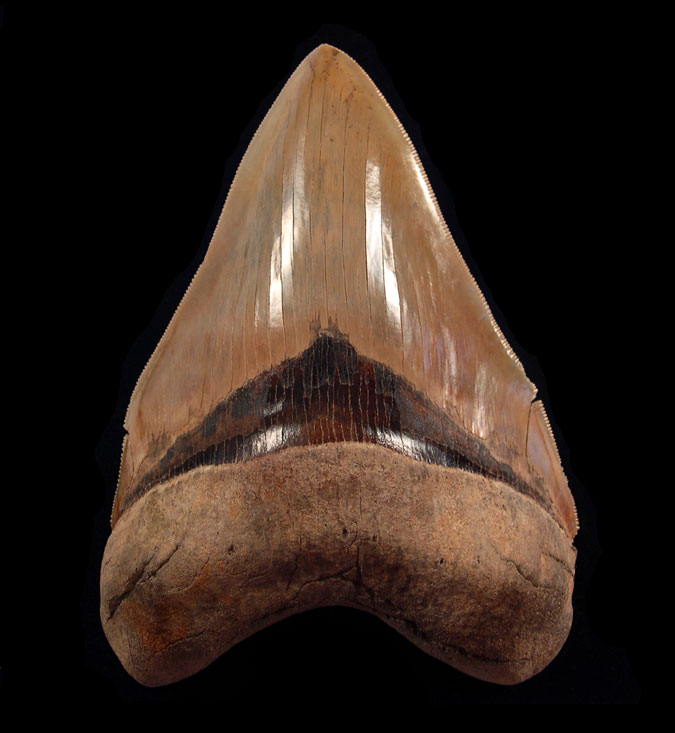
Among fossilized remains from prehistoric oceans, few relics carry the commanding presence and intrigue of a Megalodon tooth. These fossilized teeth, with their imposing structure and links to one of Earth’s largest predators, have long fascinated both amateur and seasoned collectors. While teeth of all sizes from the Megalodon species hold scientific and visual interest, specimens measuring 6 inches present a particular focus due to their scarcity, size, and appeal within the collecting community. For those wondering how big the megalodon tooth is, the 6-inch variety offers an impressive example of the scale and strength this prehistoric shark once possessed.
Though teeth measuring 7 inches are considered the most elusive, the 6-inch tooth offers a combination of rarity, size, and availability that continues to make it a prominent goal for collectors. Notably, only about 1% of all Megalodon teeth ever discovered reach the 6-inch mark, illustrating how special these pieces truly are.
A Rare Find in the Fossil World
A recent discovery in Florida brought renewed attention to the rarity of 6-inch Megalodon teeth. Despite being a hotspot for fossil finds, Florida produces these specimens at a rate that aligns with the global average of approximately 1%. This statistical rarity underscores the value attributed to each tooth that reaches or exceeds this size.
Most Megalodon teeth found in the fossil record measure between 3 and 5 inches. Finding anything beyond this range becomes exponentially less common. A 6-inch specimen signifies not only an extraordinary find but also a glimpse into the anatomy of a truly massive creature, likely exceeding 50 feet in length.
Teeth of this size are not commonly scattered across open terrain. They are often discovered deep in sedimentary deposits, underwater riverbanks, or coastal fossil beds that require significant effort and expertise to access. This difficulty in extraction adds another layer of exclusivity to such a fossil.
Collectibility and Recognition
Among those who collect Megalodon teeth, the 6-inch category often represents a significant milestone. While smaller teeth are easier to come by and frequently collected by beginners, the 6-inch size class requires more commitment, both in search effort and financial investment.
The visual presence of a 6-inch Megalodon tooth makes it a centerpiece in any collection. With the sheer mass of the tooth and the detailed preservation often found in high-quality examples, these specimens command attention on display. The serrations, root structure, and enamel details offer rich visual texture, reflecting the natural forces that shaped and preserved the tooth over millions of years.
Collectors who acquire these pieces are often looking for more than size alone. A high-grade specimen may exhibit minimal feeding damage, strong enamel integrity, and sharp serrations, all of which contribute to a tooth’s appeal and value. Teeth in this category are routinely assessed on several quality factors to determine their place within fossil collections.
Characteristics That Influence Appeal
Each 6-inch tooth is unique. Factors that affect both pricing and collectibility include preservation, coloration, shape, symmetry, and serration detail. A well-preserved root with solid structure and strong contrast between crown and base tends to draw higher interest.
Color also adds to the tooth’s visual character. Fossils with rich black, brown, gray, or tan tones often result from the mineral content in the soil or sediment where the tooth fossilized. In some cases, water conditions contribute to a more polished or tumbled appearance, lending additional uniqueness to the specimen.
Some collectors prefer high contrast in color between the crown and the root, while others gravitate toward subtler hues. These personal preferences add variety to the marketplace and ensure that even within the 6-inch class, no two teeth are considered interchangeable.
Grading and Authentication
Each 6-inch tooth offered through trusted fossil sources is typically graded and authenticated. Grading systems account for key factors such as overall length, enamel preservation, the presence or absence of feeding damage, the sharpness of serrations, and the condition of the root. A tooth that scores highly across these categories is likely to be more valued than one of similar length but with greater wear or damage.
Authentication offers collectors confidence in their acquisition. These are genuine prehistoric fossils, millions of years old, and the grading process ensures that their classification and valuation align with industry standards. Certificates of authenticity are often included with the sale of high-value teeth, documenting their specifications and origin.
For those still asking how big the megalodon tooth was, a 6-inch example provides tangible evidence of the immense size these sharks could reach—helping to connect fossil structure with ancient biological reality.
Pricing Reflections and Market Position
While 7-inch teeth are often categorized as investment-grade fossils with prices to match, 6-inch teeth occupy a more balanced space. They remain rare enough to be highly desirable but not so rare as to be unattainable. This makes them ideal for advanced collectors who wish to expand their fossil holdings without entering the ultra-exclusive market of the most prominent Megalodon teeth.
The pricing range for 6-inch teeth depends heavily on quality and rarity within that size bracket. Teeth with strong serrations, complete root structures, and dramatic coloring will naturally occupy the upper end of the market. Conversely, teeth with feeding damage or surface wear, though still rare due to their size, may be priced lower.
Regardless of price, all 6-inch teeth represent a step above more commonly found sizes. They signal a commitment to fossil collecting and a deeper interest in the paleontological history of prehistoric marine species.
Evidence of Ancient Power
The Megalodon shark dominated ancient oceans during the Miocene and Pliocene epochs. A 6-inch tooth reflects the anatomy of a predator that may have measured over 50 feet in length. These teeth were used to slice through bone, cartilage, and muscle with efficiency, thanks to their serrated edges and solid root anchoring.
Each fossilized tooth preserves structural details that speak to the biological design of the species. Serrations indicate how the shark fed. The curvature and thickness of the crown reflect function and strength. These traits make each 6-inch tooth not only a collectible but also a source of insight into prehistoric biology and evolution.
When viewed under natural light, the ridges and lines on the tooth’s surface provide evidence of fossilization processes, from sediment compression to mineral replacement. These features connect the viewer to a timeline spanning millions of years.
Symbol of Serious Collecting
A 6-inch Megalodon tooth often serves as a signature piece in a fossil collection. For those deeply
invested in marine paleontology or fossil acquisition, reaching this benchmark represents more than a display item. It reflects a serious pursuit of rare and essential relics.
The scarcity of these teeth ensures that demand remains high. With only 1% of all Megalodon teeth found reaching this size, collectors recognize the long odds associated with obtaining one. Each specimen signals not only rarity but also the success of acquiring a primary fossilized link to Earth’s prehistoric oceans.
Continuing the Search
Interest in Megalodon teeth shows no signs of decline. As fossil hunting grows in popularity, the 6-inch tooth continues to draw attention from those seeking something substantial, historic, and uncommon. Its balance of scale, condition, and rarity places it among the most sought-after finds in the fossil world.
For anyone still wondering how big the megalodon tooth is, a 6-inch specimen provides a clear and impressive answer. It captures the strength, size, and ferocity of a long-extinct giant, preserved through time and retrieved from ancient depths. Whether part of a private collection or displayed in a fossil exhibit, it remains a compelling reminder of the life that once ruled the sea.






