

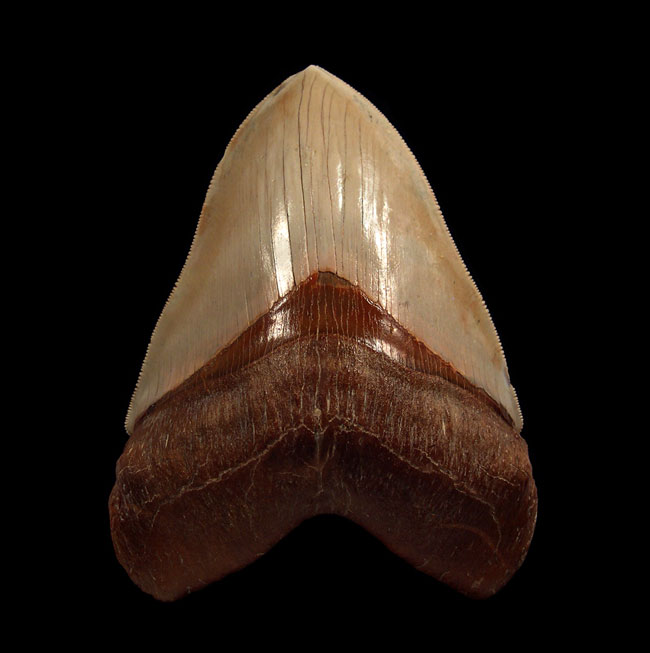
The megalodon continues to capture our imagination as one of the most powerful predators to have ever ruled the oceans. Fossils of this ancient shark, especially its teeth, remain the most tangible clues to its immense size and power. As researchers and fossil enthusiasts, we have spent decades studying these remains to understand just how massive this creature was. The discovery of what many call the world’s biggest megalodon tooth adds another layer to that mystery, sparking new discussions about how scientists estimate the true proportions of this long-extinct giant.
Tracing the Legacy of the Megalodon
The megalodon, whose scientific name is Otodus megalodon, lived roughly 23 to 3.6 million years ago during the Miocene and Pliocene epochs. It was a true apex predator, dominating prehistoric seas with a body length that many estimates place between 50 and 60 feet. Unlike skeletons made of bone, the megalodon’s skeleton was primarily cartilage, which decomposes over time. This makes its teeth—massive, serrated, and remarkably durable—the best evidence we have of its existence.
Each tooth tells a story of adaptation, power, and scale. The largest specimens ever found measure over 7 inches in height, giving scientists an extraordinary reference point for estimating the shark’s overall body size. The megalodon’s teeth weren’t just large; they were designed for crushing bone and tearing through the thick hides of whales, its likely prey.
The Chile Discovery and Its Significance
A recent discovery in Chile has drawn considerable attention from paleontologists and fossil collectors alike. Unearthed from ancient marine deposits, this specimen—often regarded as the world’s biggest megalodon tooth—provides an exceptional opportunity to refine our understanding of the species’ upper size limits. The Chilean fossil, preserved in near-pristine condition, measures an astonishing 7.48 inches, setting it apart from other famous finds in places like the United States and Peru.
This discovery reinforces the idea that the megalodon’s range was global, thriving in warm coastal waters where large prey like early whales were abundant. The massive tooth also helps recalibrate scientific models used to estimate the shark’s body size, as each new specimen slightly adjusts the scaling equations derived from modern shark analogs.
Estimating Size from a Single Tooth
Scientists often rely on tooth height and width to infer a megalodon’s total length. The most widely accepted method, developed by marine biologist Dr. Michael Gottfried and his team, compares megalodon teeth to those of the modern great white shark. Using this ratio-based approach, researchers estimate that for every inch of tooth height, the megalodon measured approximately 10 feet in body length.
Applying this formula, the world’s biggest megalodon tooth found in Chile could indicate a shark measuring close to 75 feet long. However, experts caution that such estimates involve assumptions about tooth position in the jaw and individual variation among specimens. The megalodon’s teeth varied in shape depending on their location in the mouth—front teeth were broader and triangular, while side teeth were more curved. Understanding these differences is key to making accurate size predictions.
Comparing Giants of the Past and Present
The megalodon’s sheer size dwarfs that of any living shark today. The largest great white shark rarely exceeds 20 feet, while the megalodon may have been three times that length. Even the whale shark, the largest living fish, cannot compare in terms of jaw strength and predatory design. Fossil evidence shows that the megalodon’s bite force could reach an estimated 40,000 pounds per square inch, enough to crush the bones of its prey instantly.
This comparison helps put the Chilean discovery into perspective. The size of the world’s biggest megalodon tooth reminds us that this was not just a scaled-up version of a modern shark—it was an entirely different level of predator, capable of reshaping marine ecosystems through its feeding habits.
What the Teeth Reveal About Behavior
Beyond size, teeth also reveal valuable insights into the megalodon’s behavior and environment. Their serrated edges suggest a diet composed mainly of large marine mammals. The wear patterns on many fossilized teeth indicate repeated use, hinting that megalodons may have hunted by ambush, delivering powerful bites to disable prey.
Fossil sites across South America, North America, and Asia show a preference for coastal regions—areas that would have been rich feeding grounds for these predators. The abundance of teeth also suggests frequent tooth loss and replacement, a common trait among sharks, as they continuously shed and regrow teeth throughout their lives.
The Role of Fossil Preservation
Preservation plays a major role in determining how much we can learn from a single fossil. Teeth found in marine sediments or phosphate-rich layers often retain their enamel and fine serrations, allowing for precise measurements and analysis. In contrast, teeth exposed to surface weathering can lose detail, leading to lower accuracy in size estimations.
The Chilean specimen’s excellent preservation gives scientists rare data points for refining their models. High-resolution scans and 3D imaging now allow researchers to create digital reconstructions of the jaw, helping visualize how such a massive tooth fits within the megalodon’s overall structure.
Continuing the Debate: Just How Big Was It?
Despite decades of research, the true size of the megalodon remains open to interpretation. Some scientists argue that 60 feet is a reasonable upper limit, while others suggest that the species could have reached or even exceeded 70 feet based on the largest teeth available.
These differing estimates often come down to methodology and assumptions. For example, comparing megalodons solely to modern great whites might oversimplify things, as the two species evolved under different ecological pressures. The megalodon likely had a more robust body structure, meaning linear scaling might underestimate its true mass.
Why These Discoveries Matter
Each new find, like the massive tooth from Chile, contributes to a more accurate picture of prehistoric ocean life. It also highlights how much we still have to learn about the megalodon’s biology, evolution, and eventual extinction. Beyond science, such discoveries inspire curiosity and wonder—reminding us that nature has produced creatures of almost unimaginable scale and power.
For collectors and enthusiasts, owning an authentic megalodon tooth is not just about possessing a relic; it’s about holding a piece of Earth’s deep history. These fossils continue to captivate people worldwide, whether displayed in museums or private collections.
Conclusion
The story of the megalodon continues to evolve with every new discovery, and the world’s biggest megalodon tooth from Chile stands as one of the most remarkable examples yet. It serves as both a scientific reference and a reminder of the ocean’s ancient giants that once ruled beneath the waves. At Buried Treasure Fossils, we take pride in sharing genuine, museum-quality megalodon teeth that connect people to this awe-inspiring past. Through careful curation and scientific appreciation, we keep the legacy of the megalodon alive—one tooth at a time.
Visit us today to explore authentic megalodon fossils, uncover their incredible history, and find the perfect piece for your collection.






