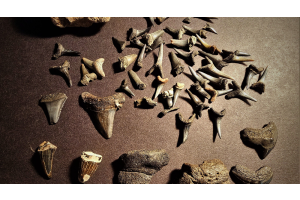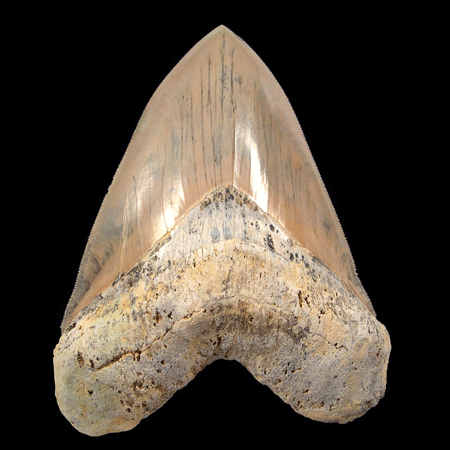
The oceans have always carried an air of mystery, holding stories from eras long before humans walked the earth. Among the greatest of these stories is the reign of the Megalodon, a shark so massive and powerful that it remains one of the most awe-inspiring predators in history. Evidence of its existence doesn’t come from complete skeletons but rather from the relics it left behind—its teeth.
When we talk about a 7-inch megalodon tooth, we’re not simply talking about a fossil; we’re talking about a rare fragment of prehistoric power. The question is, should such an extraordinary specimen belong in a museum, where millions can admire it, or is there a place for it in a private collection, where ownership becomes deeply personal?
The Legacy of the Megalodon
Megalodon swam Earth’s oceans millions of years ago, dominating the seas with a body that may have stretched over 60 feet. Its teeth are the most enduring symbols of its power, with serrated edges designed to slice through prey and an enamel structure resilient enough to survive through deep time.
Every tooth, especially one measuring seven inches, tells a story. The ridges and wear patterns provide insight into feeding habits, while their fossilization offers clues about prehistoric marine environments. For paleontologists, these teeth are invaluable records, not just relics of an apex predator.
What Makes a 7-Inch Tooth Special?
Most Megalodon teeth recovered today range between three and five inches. Finding one that measures seven inches is not just uncommon—it’s extraordinary. Such a tooth represents a rare glimpse into the upper size limits of the species.
● Scientific Rarity: Teeth of this size help researchers understand how large Megalodons truly grew.
● Condition and Preservation: The enamel and serrations on a well-preserved tooth are critical for research and serve as lasting visual reminders of ancient marine ecosystems.
● Symbolism: To hold a tooth this size is to connect with a creature that once reigned supreme in Earth’s oceans. It’s more than a fossil—it’s a bridge to prehistory.
This significance is at the heart of the debate: should such a specimen be preserved for public knowledge in a museum, or can it justifiably sit within the hands of a collector?
The Case for Museums
Museums exist to preserve, study, and share artifacts of global importance. A 7-inch megalodon tooth certainly qualifies as such.
Accessibility for All
A museum ensures that the specimen can be seen by thousands, if not millions, of people each year. Instead of belonging to one person, it becomes part of our collective heritage—available to schoolchildren, researchers, and the public alike.
Advancing Research
While collectors may appreciate fossils, museums provide a structured environment for scientific study. Paleontologists can analyze such teeth for data on Megalodon's diet, habitat range, and evolutionary history. Shared access fosters academic collaboration and new discoveries.
Preservation and Care
Museums are equipped with the tools and expertise to conserve fragile fossils for generations. Climate-controlled environments, professional handling, and archival-quality storage protect against damage that private environments might not prevent.
The Case for Private Collections
On the other side, private collectors have long played an important role in fossil preservation. Many fossils in museums today were first safeguarded by private individuals before being donated or sold to institutions.
Personal Stewardship
For collectors, owning a 7-inch megalodon tooth is a deeply personal connection to natural history. It provides a sense of awe and responsibility, serving as a private link to Earth’s distant past.
Investment and Value
Fossils of this caliber often hold strong value as collectibles. Beyond financial worth, owners may see themselves as custodians, preserving the tooth until it potentially finds a new home—whether with another collector or in a museum later.
Contribution to Awareness
Collectors often share their finds in exhibitions, community talks, or loan them to institutions. In this way, private ownership does not necessarily mean secrecy. Many collectors play active roles in educating others about prehistoric life.
Striking a Balance
The debate isn’t always black and white. There are ways for both museums and private collectors to benefit from a fossil of this magnitude.
● Loans and Partnerships: A private collector could own the tooth while loaning it to a museum for display. This allows the public to admire it while still recognizing private ownership.
● Collaborative Research: Collectors can work with universities and scientists, granting access for research without relinquishing possession.
● Event Displays: Traveling exhibitions often rely on privately owned fossils. A 7-inch megalodon tooth could headline such displays, reaching audiences in different regions.
This balance between public access and private stewardship ensures that rare fossils remain both celebrated and studied.
Ethical Considerations
While legality often permits private ownership of fossils, ethical questions remain. Is it right to keep a piece of scientific history out of public reach? Or does ownership simply reflect humanity’s enduring fascination with the past?
Arguments often rest on intent:
● If ownership restricts access entirely, it risks depriving the public of shared heritage.
● If ownership is paired with stewardship, preservation, and collaboration, it can benefit both science and society.
What cannot be ignored is that fossils like this carry cultural and educational weight. They are not just curiosities—they are clues to our planet’s evolutionary journey.
Why This Debate Matters
A 7-inch megalodon tooth is more than an object; it symbolizes a time when nature’s giants shaped the seas. Deciding where it belongs—museum or private collection—forces us to confront how we value our past.
● In Museums: It becomes part of the world’s story, preserved and interpreted for future generations.
● In Private Hands: It represents a personal chapter in the fossil’s journey, held by someone with deep appreciation for its history.
Both paths have merit. What matters most is that the tooth is respected, preserved, and, when possible, shared.
Bottom Line
So, should a 7-inch megalodon tooth be in a museum or a private collection? The answer lies in balance. Museums offer accessibility, preservation, and research opportunities. Private collectors offer passion, stewardship, and often play key roles in fossil discovery.
Perhaps the best path forward is collaboration—where fossils of extraordinary size and rarity can circulate between public institutions and private collections, ensuring they are both celebrated and studied. In this way, the legacy of the Megalodon continues to inspire curiosity and respect, connecting us all to the ancient waters that once roared with life.