

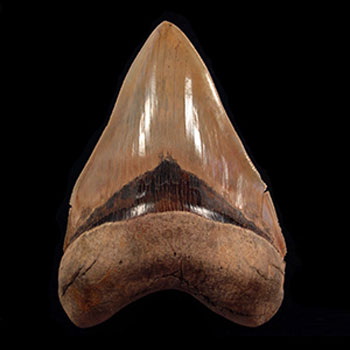
The idea of holding a fossilized Megalodon tooth is fascinating. Imagine gripping a piece of nature’s timeline that once belonged to the largest shark ever known to roam Earth’s oceans. These teeth aren’t just relics of prehistoric predators—they are enduring symbols of Earth’s distant past, preserved for millions of years beneath the waves and sands. For fossil collectors, scientists, and anyone curious about ancient life, a Megalodon tooth offers a unique connection to history. It’s no surprise that people often ask how much a megalodon tooth is worth, not just out of curiosity about its value, but because these fossils carry both scientific and cultural weight.
The Giant Behind the Tooth
The Megalodon was a shark of extraordinary size, estimated to reach up to 60 feet in length and weigh as much as 70 tons. To put that into perspective, the largest Great White sharks today grow only to about 20 feet. The Megalodon’s enormous size made it the dominant predator of its time. Its name literally translates to “big tooth,” and that’s fitting since its fossilized teeth remain the most striking reminder of its reign.
These teeth, some measuring over 6 inches long, were designed for power. With serrated edges and a wide triangular shape, they were ideal tools for slicing through the flesh of whales, seals, and other large marine mammals. Scientists estimate the Megalodon had the most powerful bite of any animal in history—up to 180,000 newtons, strong enough to crush bone with ease. Holding one of these teeth is like holding a fragment of that power.
Why Teeth Are All That Remain
One of the reasons Megalodon teeth are so abundant today is that sharks continuously lose and replace their teeth throughout their lives. Over a lifetime, a single Megalodon likely shed tens of thousands of teeth. While the rest of its body, made mostly of cartilage, dissolved long ago, the teeth fossilized into stone through a process called mineralization.
This transformation preserved them in sediments around the world—from the coasts of Florida and the Carolinas to South America and beyond. These fossils remind us not only of the shark’s existence but also of the prehistoric seas it once ruled.
The Shape and Structure of Megalodon Teeth
Megalodon teeth are instantly recognizable. They are heart-shaped, with wide bases and sharp, serrated cutting edges. Unlike some shark species, Megalodon teeth did not have small side cusps. Instead, they evolved into perfect tools for hunting enormous prey.
The teeth can range in size, with most found between 3 and 5 inches. Rare specimens exceed 6 inches, and the largest ever discovered measures over 7 inches. When you see such a fossil, it’s easy to understand why collectors and researchers are drawn to them. Their size alone speaks volumes about the predator that once wielded them.
Fossil Hunting and Famous Locations
Megalodon teeth have been unearthed all over the world, making them one of the most widely distributed fossils. Some of the most popular hunting grounds are coastal regions of the United States. In particular, Sharktooth Hill in California, and the coastal waters of North Carolina, South Carolina, and Florida are rich with these fossils.
Each location offers teeth of different colors and conditions, depending on the minerals present in the soil or sediments where they were preserved. For instance, some teeth appear jet black, while others may be gray, tan, or even bluish. Collectors often seek out specific localities because of these unique characteristics.
From “Dragon Tongues” to Scientific Marvels
Before modern paleontology, fossilized shark teeth puzzled people for centuries. In the Middle Ages, they were often called “tongue stones” or believed to be petrified dragon tongues. It wasn’t until the 17th century that naturalists correctly identified them as shark teeth.
Since then, these fossils have offered vital insights into prehistoric marine ecosystems. Bite marks found on ancient whale bones, for example, show clear evidence of Megalodon attacks. From such fossils, scientists have pieced together not only the Megalodon’s diet but also its hunting strategies, such as biting fins to immobilize prey before delivering fatal bites.
The Symbolism of Holding a Megalodon Tooth
To hold a Megalodon tooth is to hold history in your hand. This fossil connects you directly to a predator that swam Earth’s oceans millions of years ago. It is a tactile reminder of Earth’s ever-changing ecosystems, evolution, and the mysteries still hidden beneath our seas.
For many, it is also a symbol of resilience. These fossils endured countless years buried in sand and sediment, only to resurface as storytellers of a world long gone. When you display or study one, you are not only appreciating its beauty but also acknowledging the incredible span of time it represents.
Collecting Megalodon Teeth
Fossil collecting is a rewarding hobby that bridges science, curiosity, and artistry. Many collectors seek Megalodon teeth because of their size, rarity, and historical significance. Teeth in pristine condition—those with intact enamel and serrations—are the most desirable, though smaller or weathered teeth can be just as meaningful for beginners.
Collectors often start with affordable specimens and gradually seek out larger or rarer examples. Condition, size, and origin all influence desirability. This naturally raises the question of how much a megalodon tooth is worth, since prices can vary widely depending on these factors. While the exact value isn’t our focus here, it’s clear that each tooth carries worth beyond monetary measure—it represents millions of years of history.
Educational Value of Megalodon Teeth
Megalodon teeth are more than just collector’s items; they are powerful teaching tools. Teachers, museums, and paleontologists use them to illustrate concepts such as fossilization, evolution, and prehistoric ecosystems. Students are often amazed when they see a tooth the size of a human hand, realizing just how massive these animals once were.
For hobbyists and children, owning a fossilized tooth can spark a lifelong interest in paleontology. It’s one thing to read about prehistoric life in textbooks, but quite another to physically hold a fossil that tells a story millions of years in the making.
The Scientific Insights Still Emerging
Even today, scientists continue to learn from Megalodon teeth. By studying growth rings within teeth and vertebrae, researchers can estimate the age and growth patterns of individual sharks. Analysis of bite marks on fossilized prey also helps reconstruct Megalodon’s role as an apex predator in ancient oceans.
These studies shed light on why the Megalodon eventually disappeared. Shifting climates, changes in sea levels, and the decline of its prey may have contributed to its extinction. Yet, its teeth remain to tell the story, preserved long after the predator itself vanished.
Why People Still Ask About Their Worth
Part of the enduring fascination with these fossils is their blend of science and collectibility. It’s no wonder that many wonder how much a megalodon tooth is worth. The question is not only about monetary value—it’s about the deeper meaning behind possessing something so rare and historic.
For some, it’s about pride in owning a tangible connection to one of Earth’s greatest predators. For others, it’s about sharing that piece of history with students, family, or friends. The true worth often lies not in numbers but in the wonder these fossils inspire.
A Piece of History You Can Hold
When you hold a Megalodon tooth, you’re holding more than just a fossil—you’re holding a fragment of Earth’s deep past. You’re gripping a piece of a predator that once dominated the oceans, a shark so large that whales were on its menu. These teeth remind us of the incredible diversity of life that has come and gone, and of the stories fossils can tell.
Whether displayed in a case, studied under a microscope, or passed between curious hands, a Megalodon tooth is a powerful connection to history. For many, the lingering thought is still how much is a megalodon tooth—but perhaps the better question is, how much is it worth to feel history resting in the palm of your hand?






