

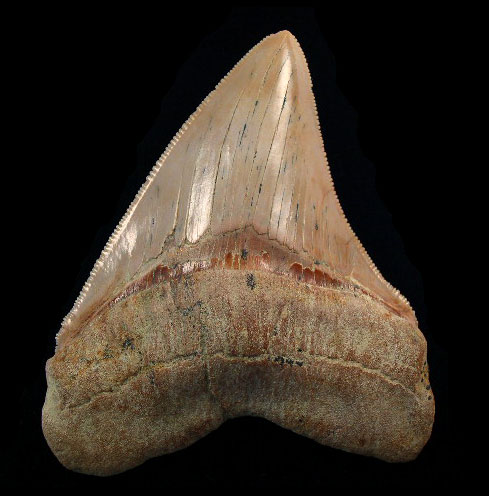
There is something timeless about holding a fossil in your hand, knowing it carries millions of years of history. Among the most fascinating treasures to be found are those linked to the largest shark that ever lived. Deep within the sandy hills of California lies a place where ancient oceans left behind traces of this incredible predator. It is within this setting that the story of the Sharktooth Hill Megalodon tooth emerges, sparking curiosity in collectors, scientists, and storytellers alike.
What makes this fossil so captivating is not only its size and sharpness but also the remarkable history embedded within it. Before we explore its layers of meaning, it’s essential to step back and understand the world from which it came.
A glimpse into the ancient ocean
Roughly 15 million years ago, central California was submerged beneath a warm, shallow sea. This environment was teeming with life: giant marine mammals, turtles, fish, and an apex predator with teeth large enough to rival a human hand. The Megalodon shark dominated this ocean for thousands of years, and its remains settled in the seafloor sediments. Over time, geological changes lifted those seabeds to form what we now call Sharktooth Hill.
Today, the region is considered one of the most significant fossil sites in the world. Its layers are so rich that collectors and paleontologists alike regard it as a time capsule, preserving a slice of marine history from the Miocene epoch.
The legend of the Megalodon
The Megalodon is often described as a true giant of the sea, stretching up to 60 feet in length. Its diet likely consisted of whales, seals, and other large marine animals. With jaws that could crush bone, it was the ruler of its ecosystem.
But what sets it apart in human imagination is the fossilized tooth. Each triangular blade tells a story of raw survival, natural dominance, and the passage of time. Collecting one is like holding a fragment of nature’s most formidable predator.
Discovering Sharktooth Hill
The fossil bed at Sharktooth Hill was discovered in the mid-19th century, and since then, it has drawn fossil enthusiasts from around the globe. The area stretches across dry rolling hills, but what lies beneath the surface is a treasure trove of marine fossils.
Unlike other sites where bones and teeth are scattered, Sharktooth Hill offers an unusual concentration of these remains. This density suggests that oceanic currents and feeding grounds converged, accumulating remains in one location and creating what is now a fossil-rich deposit.
What makes the teeth unique
While Megalodon teeth are found in several places worldwide, those from Sharktooth Hill carry a distinctive identity. Their fossilization process often leaves them with earthy tones ranging from soft beige to warm browns. The enamel can appear glossy, while the serrated edges remain remarkably sharp, despite being buried underground for millions of years.
Collectors prize these fossils not only for their preservation but also for their geological context. Owning one isn’t simply acquiring a specimen—it’s owning a piece of a globally recognized fossil site.
Why collectors are drawn to them
There is an undeniable appeal to the tactile connection between past and present. To hold a Megalodon tooth is to feel the weight of history, but when that tooth comes from Sharktooth Hill, it adds another layer of significance.
Collectors often speak of the thrill of discovery, even if the fossil was unearthed long ago. Displaying one becomes a conversation starter, a centerpiece of curiosity, and a reminder of Earth’s evolutionary wonders.
The middle ground between science and art
Beyond private collections, Sharktooth Hill fossils also hold scientific value. Each tooth contributes to studies about shark evolution, feeding habits, and extinction patterns. At the same time, the natural symmetry and beauty of the teeth make them objects of artistic fascination.
Many find themselves torn between preserving them in glass cases for study and incorporating them into displays that emphasize their aesthetic qualities. In this sense, a single fossil bridges the worlds of science and art.
Caring for a fossil treasure
Owning a Sharktooth Hill specimen means taking steps to ensure it lasts for future generations. Though fossils are durable, they can be vulnerable to environmental factors such as humidity and temperature changes.
Collectors often keep their fossils in stable, dry environments. Some even use display cases with protective glass to minimize exposure to dust and accidental handling. Cleaning is usually done with a soft brush rather than water or chemicals, ensuring that the fossil retains its natural state.
A conversation with history
What makes fossils meaningful isn’t only their age—it’s their ability to connect us to a narrative larger than ourselves. The Sharktooth Hill deposit serves as a reminder that the land we walk on today was once a thriving marine ecosystem. Each tooth serves as a voice from that era, echoing the movements of ancient seas and the lives of creatures that no longer exist.
When viewed this way, the fossil is not a static object but an active link to Earth’s ongoing story.
The role of imagination
Scientific facts reveal how the Megalodon lived, hunted, and ultimately disappeared. Yet imagination fills in the rest. Standing before a fossilized tooth, one might picture the massive shark slicing through the water, its fins breaking the waves, and its jaws clamping down with unimaginable force.
The tooth invites you to envision a world where humans did not yet exist, where oceans ruled the planet, and predators of colossal size shaped ecosystems.
The rarity of discovery
While Sharktooth Hill continues to yield fossils, the most remarkable finds are becoming increasingly rare. Much of the area has been extensively explored, and regulations limit excavations to protect its heritage. As a result, acquiring one of these fossils becomes even more meaningful.
It represents not only natural rarity but also the delicate balance between preserving history and sharing it with collectors.
Why it matters today
In a fast-moving world, fossils provide a grounding perspective. They remind us that Earth’s story is far older and more complex than our own. Owning or even viewing a Sharktooth Hill Megalodon tooth is more than an act of collecting—it’s an act of respecting time itself.
These fossils inspire both humility and a profound sense of awe. They remind us that giants once swam where deserts now lie, and that change is the only constant in nature’s cycle.
Conclusion
Among the many fossils scattered across the globe, few are as captivating as those from Sharktooth Hill. The Sharktooth Hill Megalodon tooth carries within it a story that stretches across millions of years, from the depths of ancient oceans to the curiosity of collectors today. To encounter one is to hold history in your hand, to feel the silent testimony of a predator that shaped marine life and vanished long before humanity’s rise.
If you are drawn to the idea of owning a tangible piece of Earth’s prehistoric narrative, exploring this fossil connection may be your next step. Fossils like these are more than artifacts—they are storytellers, waiting to be part of your journey.
Take the time to discover one for yourself, and let the story it tells continue in your hands.






