

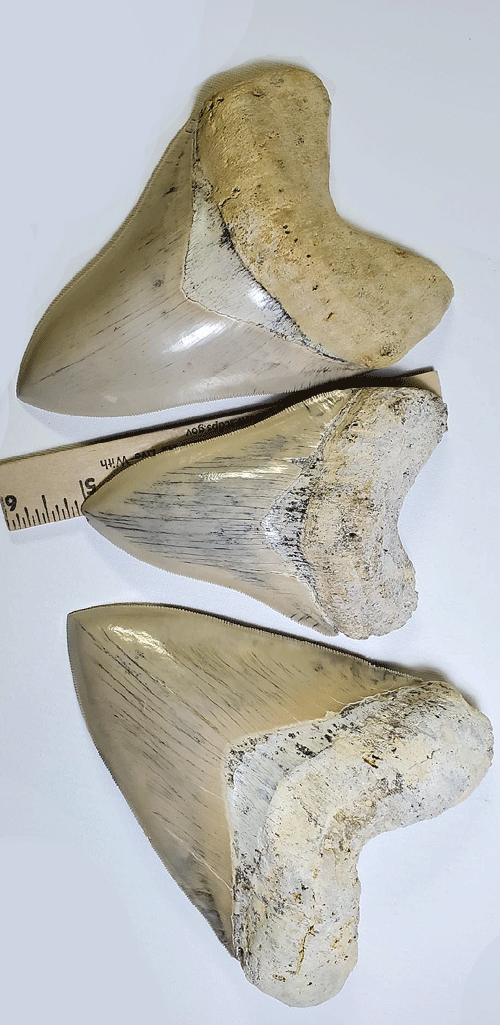
The ocean has always held stories too vast to fully comprehend, filled with creatures that vanished long before humans walked the earth. Among those giants was the megalodon, a predator whose presence is known today only through remnants it left behind. One of the most intriguing relics is the megalodon tooth fossil, a discovery that stirs both curiosity and awe when held in hand. Its serrated edges and immense size hint at the sheer scale of the ancient shark, connecting us to a time when oceans were ruled by giants.
Before exploring how to recognize and appreciate these incredible fossils, it’s worth asking: how can you be sure what you find is truly authentic? That question forms the heart of this journey into the science and wonder of identifying, studying, and cherishing these rare pieces of prehistory.
The Ocean’s Giant Hunter
The megalodon is often portrayed as the ultimate apex predator of ancient seas. Measuring up to 60 feet long, it dwarfed even the great white shark of today. Its teeth, often larger than a human hand, were designed to crush bone and prey on massive marine mammals. What remains of this creature are teeth—millions of them scattered through sediments worldwide. Unlike bones, which decay quickly, teeth fossilized over time, creating lasting reminders of nature’s largest shark.
For fossil enthusiasts, these teeth are more than collectibles—they are tangible connections to an ancient ecosystem that once thrived in the warm oceans of the world. Each tooth tells part of the story of survival, adaptation, and eventual extinction.
What Makes These Fossils So Special
The allure of a megalodon tooth goes beyond its size. Each fossil carries unique markings shaped by time and environment. Some are found in riverbeds, their edges softened by water, while others are discovered in deep ocean sediments, preserved with remarkable detail.
Collectors often describe an almost magnetic pull when holding a tooth for the first time. Its weight, texture, and serrations reveal both fragility and strength. Beyond its beauty, the fossil serves as a window into Earth’s deep history, one that spans more than three million years.
Spotting the Difference Between Real and Replica
With the growing demand, replicas are becoming increasingly common, and distinguishing them from authentic fossils is crucial. Real teeth typically show signs of wear—nicks on the serrations, chips along the enamel, and mineral discoloration that reflects the soil or sediment in which they were preserved.
In contrast, replicas often appear too smooth or uniform. Their weight can feel unnatural, and fine details, such as root texture, are missing. Lighting can also help—real fossils display subtle color gradients that are difficult to replicate artificially. For those new to collecting, careful examination and guidance from experts can prevent disappointment.
Size and Shape Speak Volumes
While size often captures attention, it’s not the only indicator of authenticity. Shape and proportion reveal much about the fossil’s origin. The crown angle, the curvature, and the root development all provide clues about the tooth’s placement in the shark’s jaw. Upper teeth tend to be broader with more triangular crowns, while lower teeth are narrower and more elongated.
Collectors learn to appreciate these differences, often building sets to showcase the variation within a single jaw. Each tooth is a puzzle piece that, when studied together, paints a fuller picture of this ancient predator.
Understanding Mineral Staining and Color
One of the most fascinating features of these fossils is their range of colors. Minerals present in the soil seep into the tooth during fossilization, creating unique patterns. A tooth buried in clay may appear gray, while one in sand-rich soil may display shades of brown, orange, or even black.
These natural colorations are strong indicators of authenticity. Artificial replicas rarely capture the organic blending of hues found in actual fossils. Beyond aesthetics, the colors tell the story of where the tooth was preserved, making each fossil a geographical and historical marker.
Caring for a Fossil Collection
Owning fossils brings responsibility. Proper care ensures they remain intact for generations to come. Cleaning should be done gently, avoiding harsh chemicals that can damage the surface. Displaying them away from direct sunlight preserves their natural coloration.
Some collectors choose to store rare specimens in climate-controlled cases, especially larger teeth with delicate roots. Whether displayed in a cabinet or held during study, each fossil deserves mindful preservation.
A Middle Ground Between Science and Wonder
Scientists study fossils to understand ecosystems of the past, while collectors often value them for their rarity and beauty. Yet both perspectives meet in appreciation of what these teeth represent. They serve as keys to reconstructing marine food chains, migration patterns, and extinction events.
When one examines a megalodon tooth fossil closely, it becomes clear that it is more than an object—it is evidence of a predator that shaped ancient oceans. Its serrated edges once sliced through prey, its mineral stains chart centuries underground, and its survival across millennia is nothing short of extraordinary.
Why Authenticity Matters
Owning an authentic fossil is about more than prestige—it’s about connection. Replicas may capture appearance, but only the real thing carries the weight of history. For those who collect or display these artifacts, authenticity ensures the story remains true, untarnished by imitation.
Authenticity also holds scientific value. Each fossil has the potential to contribute to research, revealing information about size variation, distribution, and even climate conditions of ancient oceans. By valuing authenticity, collectors also support the preservation of knowledge and cultural heritage.
Bringing the Ocean’s History Home
Collectors often describe their first fossil as life-changing. Holding a piece of history that predates humanity by millions of years creates an immediate bond with the natural world. That connection transforms into a deeper appreciation for marine life and the importance of protecting the ocean today.
It is through fossils that we recognize the fragility of ecosystems. The extinction of the megalodon reminds us that even the mightiest creatures are vulnerable to change. Owning a fossil, then, becomes not just about possession but about reflection on nature, history, and our role in preserving both.
Conclusion: A Story Written in Stone
Every megalodon tooth fossil is more than a relic; it is a chapter of Earth’s story. From the depths of ancient seas to the hands of modern collectors, it bridges millions of years in a single form. Its authenticity matters not only for value but for the truth it carries—a truth about the oceans, about change, and about survival.
If you are considering starting a collection or expanding one, let curiosity lead you to authentic pieces that connect you to history. Explore responsibly, learn continuously, and cherish the wonder that these fossils represent.
Are you ready to bring the mysteries of the deep into your own collection? Begin your journey with authentic fossils that carry the story of Earth’s greatest predator. Explore trusted sources, ask questions, and let each fossil inspire your connection to history.






