

Sharks have always captured human attention, inspiring stories, research, and a sense of awe. For centuries, these creatures have symbolized strength and adaptability within the marine world. Yet among all species, one name echoes the loudest in prehistoric history. Scientists and fossil collectors have pieced together fragments of a creature that once ruled the oceans. The Carcharocles megalodon represents more than a long-extinct shark—it is a poignant reminder of a time when the seas were ruled by massive predators, shaping ecosystems in ways that we still study today.
Transitioning from its reputation as an apex predator, let’s look at what we know about its extraordinary size, survival, and legacy.
A Predator of Remarkable Scale
One of the most astonishing facts about this ancient shark is its sheer size. Today’s largest sharks, like the great white, reach impressive lengths, but they are small compared to estimates of this giant. Some researchers believe it could grow to be over fifty feet long, with jaws that stretch wide enough to swallow an adult human whole. Its estimated weight ran into dozens of tons, making it one of the largest predators to have ever lived on Earth.
This immense size placed it firmly at the top of the food chain. Unlike other predators that relied on stealth, its strategy combined size, strength, and speed to dominate its prey.
Teeth That Preserve Its Story
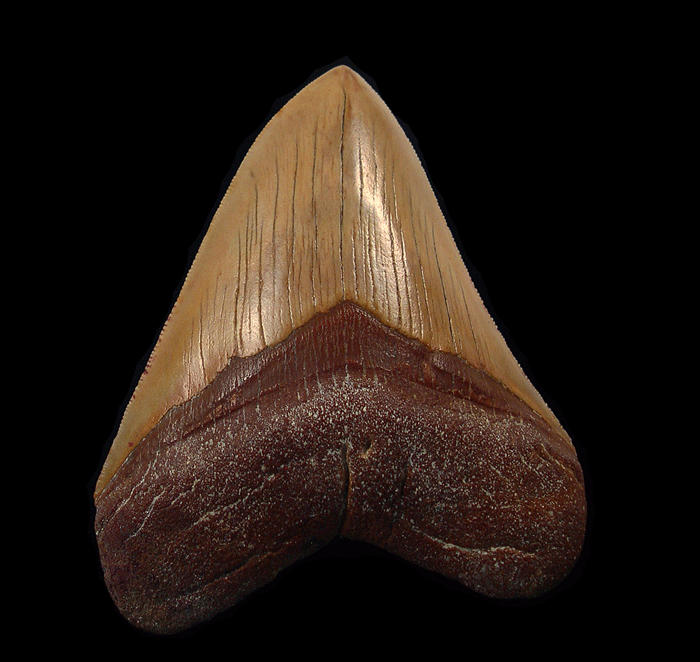
Because cartilage does not fossilize well, our most unmistakable evidence of this shark comes from its teeth. These teeth, triangular and serrated, are among the most recognizable fossils in the world. Each tooth could reach six or seven inches, large enough to cover the palm of a human hand. Collectors value them not only for their size but also for the fine serrations that speak of an animal perfectly adapted to slicing through flesh and bone.
Every fossilized tooth tells a story. Some are pristine, sharp, and symmetrical, while others bear chips and wear marks that hint at battles fought in ancient seas. These details enable scientists to reconstruct the feeding habits and behaviors of a predator that disappeared millions of years ago, offering a direct window into its life.
Feeding Habits of a Giant Hunter
The design of these teeth points to a diet that included some of the largest animals in the ocean. Fossil evidence reveals bite marks on prehistoric whale bones, suggesting this predator targeted massive prey. Unlike modern sharks that often focus on fish or smaller mammals, this hunter likely specialized in hunting whales, seals, and other large marine creatures.
Its jaw strength would have been extraordinary, capable of producing a bite force among the strongest ever known. This power enabled it to crush bone effortlessly, leaving unmistakable evidence of its dominance. Imagine the sight of such a creature sweeping through the waters, its shadow darkening the surface as schools of marine mammals scattered in fear.
The Mystery of Its Disappearance
Despite its dominance, this predator vanished roughly three million years ago. The reasons remain debated, but climate change played a significant role. Cooling oceans reduced warm coastal waters that the species relied on for breeding. At the same time, populations of large prey animals began to decline. Some scientists suggest that competition with smaller but highly efficient predators, such as early great whites, also contributed to its extinction.
Whatever the causes, the disappearance of this apex predator reshaped marine ecosystems. Without such a giant at the top, other species expanded into ecological roles that had once been tightly controlled. Its absence forever altered the balance of the seas.
A Glimpse Into Ancient Oceans
Holding one of its fossilized teeth offers more than scientific knowledge—it provides a tangible connection to the past. These fossils are more than mere remnants; they are time capsules, reminders of oceans that were once far more perilous than they are today. Every specimen has traveled through millions of years of geological history, surviving pressure, shifting earth, and erosion.
When displayed in collections or studied under microscopes, they connect us not only to a single species but also to the grand story of evolution. They remind us that Earth’s history is layered with remarkable creatures, many of which disappeared long before humans appeared.
Collecting Fossils With Care
Fossil enthusiasts are often drawn to these teeth for both scientific and aesthetic reasons. Each piece is unique, shaped by the forces of nature and the passage of time. Some collectors display them as natural art, while others pursue them to deepen their understanding of prehistory. Due to their rarity, authentic specimens possess significant value, both personally and historically.
When properly cared for, these fossils become heirlooms passed down from one generation to the next. Their enduring presence makes them not only objects of fascination but also symbols of our desire to connect with the distant past.
Lessons From Evolution and Change
Studying this ancient shark offers lessons beyond its size. It demonstrates how even the most dominant creatures are vulnerable to environmental changes. Ecosystems shift, prey populations decline, and species must adapt or disappear. The story of this predator serves as a reminder that resilience is closely tied to balance within the natural world.
By reflecting on its rise and fall, we see patterns that still affect species today. Climate shifts, competition, and food scarcity continue to influence the survival of modern animals. This connection between past and present makes studying prehistoric predators deeply relevant to understanding our current oceans.
Carcharocles megalodon and Human Fascination
Few extinct animals inspire as much cultural attention as this giant shark. Documentaries, novels, and films often bring it back to life, exaggerating its traits but keeping its legend alive. The fascination lies not only in its size but also in what it represents—mystery, dominance, and the unknown depths of the ocean.
While science has ruled out its survival in modern seas, the idea that something so significant could still exist in unexplored waters continues to spark curiosity. In many ways, the myth is as enduring as the fossils themselves.
Conclusion
The prehistoric oceans once belonged to giants, and through their fossils, we continue to learn about those long-vanished worlds. Carcharocles megalodon remains more than a species name—it symbolizes mystery, dominance, and the inevitability of change. Its story blends science with imagination, offering a bridge between what was and what we can still discover about our planet.
For collectors, enthusiasts, and learners, these fossils are more than artifacts—they are connections to a time when oceans were ruled by giants. By bringing one into your hands, you hold not only a piece of stone but also a chapter of Earth’s living history.
Explore the legacy of prehistoric oceans today. Discover authentic fossils and let ancient history become part of your own story.






