When you hold a Megalodon tooth in your hand, you’re not just grasping a relic, you’re connecting with an apex predator that ruled Earth’s oceans millions of years ago. These fossilized teeth are more than collectible treasures; they are tangible fragments of prehistory, carrying stories of geological processes, biological evolution, and oceanic ecosystems long vanished. Yet in today’s fossil market, not every tooth tells the truth.
The rise of replicas and counterfeit specimens has blurred the line between authenticity and imitation, making it essential for collectors, enthusiasts, and even casual admirers to learn how to distinguish between the two. Authentic Megalodon teeth command significantly higher prices, not only because of their rarity, but also due to the scientific and historical significance they carry.
Understanding why real megalodon tooth fossils are more valuable requires more than surface-level observation; it demands an appreciation of the subtle markers of authenticity, the science of fossilization, and the credibility of expert verification.
Surface Texture: Imperfections That Tell a Story
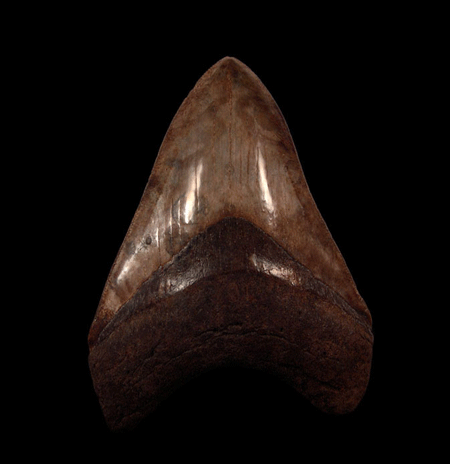
One of the earliest indicators of authenticity is the surface texture of a Megalodon tooth. Unlike replicas, which often appear overly smooth or artificially polished, genuine fossils reveal imperfections that speak to their age. Tiny pits, scratches, and irregularities develop as a natural part of the fossilization process, shaped by millions of years of geological pressure and sediment burial.
These features are not flaws, they are historical fingerprints. Each mark reflects the journey of the tooth through time, whether it was buried in riverbeds, coastal deposits, or deep marine sediments. Replicas, by contrast, often attempt to mimic this texture but fail to replicate the depth and randomness of nature’s handiwork. A collector who learns to look closely at these subtleties gains not only a skill in identification but also a deeper connection to the narrative embedded in the fossil itself.
Density and Weight: The Importance of Mineralization
Another powerful indicator lies in the tooth’s heft. Authentic Megalodon teeth are typically denser and heavier than fakes due to the natural mineralization process. Over millions of years, organic material within the tooth is replaced with minerals such as silica, calcite, or iron compounds. This transformation not only preserves the tooth’s shape but also dramatically increases its density.
Counterfeit teeth, often made from resin or lightweight composites, lack this weighty presence. When handling a suspected fossil, compare its size to its weight. A tooth that feels disproportionately light may be a red flag. Authentic specimens have a certain gravity that fakes cannot match. The weight of authenticity is something seasoned collectors recognize almost instinctively.
Root and Blade Features: Biological Evidence Preserved
A real megalodon tooth also reveals biological traits that are difficult to replicate convincingly. The root and blade of a genuine tooth provide valuable diagnostic clues:
Well-defined roots often display nutrient foramina, tiny holes that once carried blood vessels into the tooth.
Root lobes exhibit natural asymmetry, shaped by the shark’s biology rather than a sculptor’s hand.
Blades typically bear serrations or worn edges, reflecting the tooth’s original role in tearing through prey.
Replicas may imitate these traits superficially, but they often lack the depth, precision, and natural irregularities that genuine fossils possess. To the trained eye, the biological authenticity of root and blade features becomes one of the strongest indicators of value.
Signs of Fossilization: Geological Proof
True Megalodon teeth are not just remnants of biology; they are products of geology. Their surfaces often display mineral deposits, sedimentary layers, and distinct color variations, all results of the fossilization process. These changes occur as the tooth interacts with its environment over time, absorbing minerals from the surrounding soil or water.
Color alone is not a definitive marker, as environmental conditions can produce a wide range of hues from black to tan to bluish-gray. However, genuine fossils display depth and variation that resin replicas cannot achieve. Even subtle layering within the enamel or root reflects millions of years of geological transformation, adding authenticity and aesthetic uniqueness to each specimen.
Why Genuine Fossils Command Higher Prices
The price of a real megalodon tooth is not just about size or appearance, it’s about authenticity. Collectors are willing to pay significantly more for fossils that carry verifiable signs of genuineness. Several factors explain this:
Scientific Value: Authentic fossils hold importance for paleontologists studying ancient ecosystems, predator-prey dynamics, and evolutionary history. Counterfeits have no such scientific contribution.
Rarity and Preservation: Large, well-preserved Megalodon teeth are increasingly rare. Authenticity adds another layer of scarcity, elevating both demand and price.
Historical Connection: Owning a genuine Megalodon tooth means holding a piece of natural history. The allure of authenticity transforms an object into a bridge to Earth’s prehistoric past.
For these reasons, authentic fossils often command prices several times higher than replicas. Collectors understand that authenticity is not just about possession, it is about value, heritage, and trust.
The Role of Experts: When in Doubt, Seek Guidance
Even with careful observation, distinguishing genuine fossils from replicas can be challenging, especially for newcomers. This is where the expertise of paleontologists, fossil dealers, and specialized collectors becomes invaluable.
Experienced professionals can:
Examine the microstructure of enamel and root features under magnification.
Test the density and composition of the fossil through scientific methods.
Provide provenance records, tracing the fossil’s discovery and history of ownership.
Reputable fossil dealers often guarantee authenticity through certificates or detailed documentation, providing collectors with peace of mind when making significant investments. Consulting experts not only helps avoid costly mistakes but also fosters a culture of trust within the fossil-collecting community.
Conclusion: Authenticity Is Priceless
The allure of a Megalodon tooth is undeniable. Its sheer size and serrated edges evoke the power of the ocean’s greatest predator, while its fossilized form links us directly to deep time. Yet, the true worth of such a fossil lies not in its resemblance to a shark’s tooth but in its authenticity.
Genuine fossils bear the subtle hallmarks of age, weathered textures, mineralized weight, biological imprints, and geological transformation, that replicas can never fully capture. These markers not only assure collectors of a fossil’s genuineness but also explain why authentic Megalodon teeth command such high value in the marketplace.
Whether you’re a seasoned collector or just beginning your journey into the world of paleontology, owning a real Megalodon tooth is an experience unlike any other. Don’t settle for replicas, choose authenticity, history, and value that will last a lifetime.
Browse our collection of authentic Megalodon teeth and fossils and bring a true piece of prehistoric ocean life into your hands.