

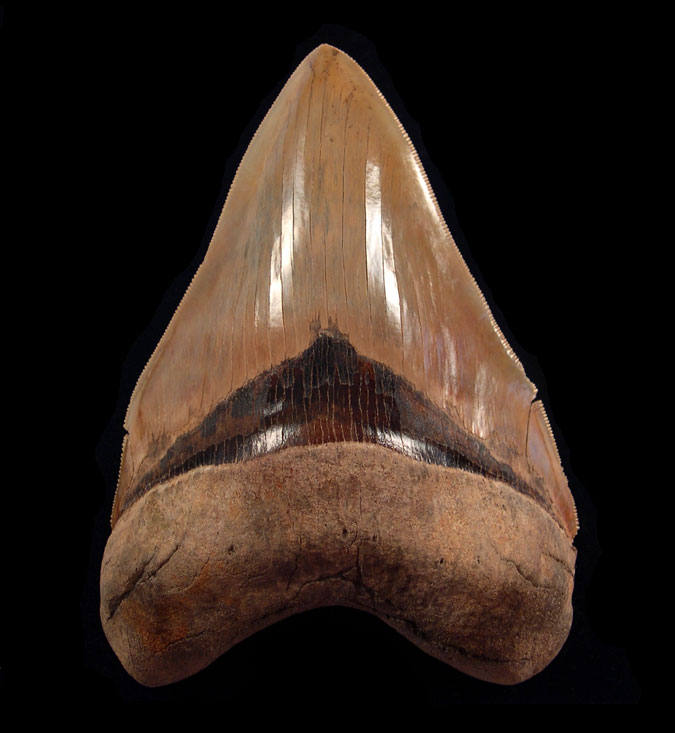
The first time you hold one, the sensation is almost unsettling. It’s heavier than you expect—dense, mineralized, a relic forged over millions of years beneath layers of ocean sediment. The serrations catch the light in a way that makes you think, this could still cut. And in a way, it does—it slices through time, giving you a direct, physical connection to one of the most fearsome predators that ever lived. That’s the spell a big megalodon tooth casts.
However, fascination alone doesn’t answer the collector’s most common question: how much is a megalodon tooth? The answer is never just a matter of inches and weight. The real value is tied to an intricate equation of provenance, condition, rarity, and market demand—a formula every seasoned collector knows but few can fully master.
Size: The Starting Point, Not the Final Word
In the fossil world, size grabs attention, but it’s only the first chapter of the story. A 6-inch specimen is automatically a head-turner—after all, teeth that size came from sharks exceeding 50 feet in length. Yet a giant tooth with dulled serrations and worn enamel can be eclipsed in value by a smaller one that’s perfectly preserved.
The size conversation also changes depending on the market. In casual collector circles, anything over 5 inches seems impressive. In expert circles, the focus narrows: “Is it over 6 inches, museum-grade, with zero restoration?” That’s where the top-tier prices live.
We’ve seen specimens where an extra eighth of an inch made the difference between a notable piece and a truly elite one. But that extra length only matters if the rest of the tooth meets equally high standards.
Provenance: The Tooth’s Personal History
Provenance is more than just “where it came from.” It’s the documented history of the tooth—its find location, the specific conditions of discovery, and the geological context that shaped its preservation.
A tooth from the Meherrin River copper-red site in North Carolina tells a very different story than one from the rivers of Georgia or the fossil beds of West Java, Indonesia. Meherrin specimens, with their rare copper hue, stand out instantly. West Java teeth, with their streaks of gold, slate, or red, are often as much a work of art as they are a paleontological treasure.
Collectors value provenance because it offers both authenticity and narrative. Without it, a tooth is just an object. With it, it becomes a piece of history you can trace back to a precise corner of the ancient ocean.
When we bring a specimen into our collection, verifying provenance is non-negotiable. That means documented find locations, trustworthy sourcing, and no question marks about authenticity.
Condition: The Pinnacle Factor
Condition is the great equalizer in the fossil market. A massive tooth may lose value if the root is cracked or the tip is blunted. On the flip side, a slightly smaller specimen can leapfrog others in price if it’s flawless.
A high-grade big megalodon tooth typically has:
● A complete, undamaged root
● A large, intact bourlette with strong, natural color
● Crisp serrations running edge to edge
● Lustrous enamel without heavy peeling or polish marks
● No restoration, filler, or repainting
Restoration is a dividing line in the collecting community. Some buyers accept it if disclosed. Others won’t touch it. Our philosophy? A fossil’s authenticity should be self-evident, and its value shouldn’t rely on human intervention.
Color: The Artistry of Fossilization
If the condition defines the structure, color adds personality. Fossilization isn’t a one-size-fits-all process—the minerals present in the surrounding sediments during burial influence the final palette. That’s why teeth from different regions display such strikingly different colors.
Some collectors are drawn to deep, inky blacks from South Carolina riverbeds. Others covet the rare blues of Georgia specimens or the earthy golds and tans from Indonesia. The Meherrin River copper-reds are so distinctive that seasoned collectors can spot them instantly.
Color alone won’t make a tooth valuable, but unique combinations—especially in larger specimens—can dramatically raise interest.
Rarity: The Unseen Value Driver
A tooth’s scarcity is shaped by both geography and history. Some fossil beds are long-exhausted or closed to collecting due to environmental protection. Others produce only a handful of high-grade specimens each year.
For instance, a 6-inch tooth from a site known for high mineral coloration but low output will almost always command a premium. Even in popular collecting areas, erosion and sediment shifts can make big, flawless teeth increasingly difficult to find.
We’ve watched markets shift over the years as certain sources dry up, pushing the value of existing specimens higher. This is why some collectors treat Megalodon teeth as both a passion and an investment.
The Market Equation: How Price Takes Shape
So, how much is a megalodon tooth? While there’s no universal chart, certain constants apply.
1. Size – The first benchmark for interest.
2. Condition – Sharp serrations, perfect bourlette, intact root.
3. Provenance – A documented, trusted history.
4. Color – Unique and naturally formed hues.
5. Market Trends – Supply and demand at the moment of sale.
Museum-grade teeth over 6 inches, with documented provenance and flawless condition, often reach into the high thousands. Mid-grade specimens in the 5- to 6-inch range can range widely depending on their other features.
The Collector’s Perspective
Ask any seasoned collector, and they’ll tell you—buying a Megalodon tooth isn’t like buying a mass-produced artifact. You’re not just picking a size; you’re choosing a specimen whose story you want to own.
Some collectors focus on building a color portfolio—blues, reds, golds, blacks—while others hunt exclusively for the largest examples they can find. Many invest in one exceptional piece rather than multiple lower-grade finds.
That’s why we focus on curating teeth that satisfy both the scientific and aesthetic sides of collecting. When you see our selection, you’re looking at fossils chosen for the very qualities that keep value steady—or climbing—over time.
Why Buying From a Trusted Source Matters
The Megalodon tooth market, like any specialized field, has its pitfalls. Specimens that are overly polished may lose the subtle characteristics that make a tooth unique. Restorations can pass for natural. Provenance may be made up or ambiguous.
Transparency and quality assurance are the cornerstones of our reputation. This entails comprehensive documentation for each tooth we provide, authenticity assurances, and no covert repairs. To put it another way, you know exactly what you’re receiving when you buy from us, and why the price is justified.
Caring for Your Investment
Once you own a premium specimen, you become its caretaker. The wrong environment can subtly alter a tooth’s surface over time.
Best practices include:
● Avoid direct sunlight to prevent fading in certain mineral colors.
● Keep humidity stable to reduce the risk of expansion cracks.
● Handle with care using clean hands or gloves.
● Use a proper display stand to avoid pressure points on the root.
We often include custom stands with our largest teeth because display isn’t just about presentation—it’s about preservation.
The Emotional Pull of a Big Megalodon Tooth
Numbers and condition reports aside, there’s an undeniable emotional charge to owning one of these fossils. You’re holding a weapon from the mouth of a predator that swam the oceans millions of years before humans existed.
For many, that connection is worth more than any price tag. It’s a reminder that Earth’s history is deeper and wilder than our everyday lives suggest—and that some treasures are worth seeking out simply for the joy they bring.
Final Thoughts
A big megalodon tooth is far more than an oversized fossil. It’s a geological masterpiece, a biological relic, and a collector’s asset rolled into one. When you ask how much a megalodon tooth is, the real answer depends on the harmony between size, condition, provenance, and that intangible “wow” factor only certain specimens carry.
We specialize in finding those specimens—fossils with impeccable preservation, documented origins, and the kind of presence that makes them irresistible. Whether you’re a first-time buyer or adding to an established collection, choosing the right tooth means choosing one that will still make your heart race years from now. And that, in the end, is the value you can’t measure in inches alone.






