

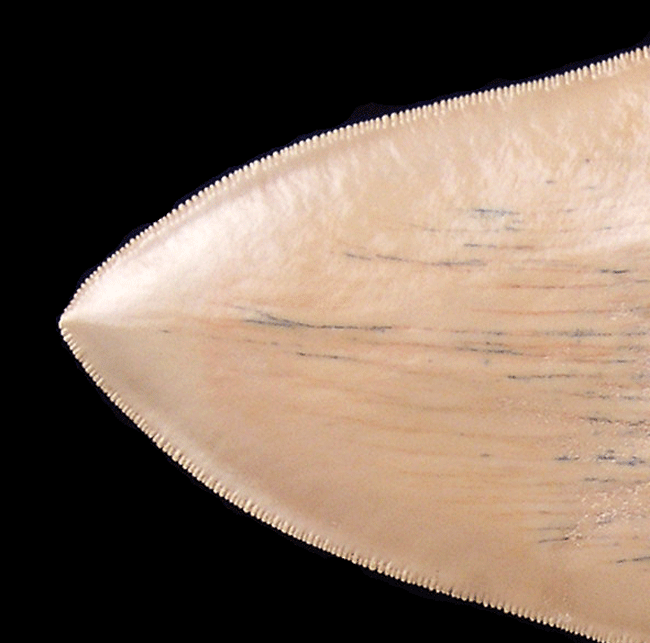
In fossil collecting, rarity alone doesn’t make headlines—scarcity does. Caribbean Megalodon teeth deliver both in staggering measure. Every Carcharocles megalodon – Caribbean tooth that emerges intact has survived an extraction process that destroys over ninety-nine percent of its kind. The quarries where they’re found guard them for millions of years, only to threaten them in the final moments before discovery.
What survives is breathtaking: creamy crowns, perfect bourlette detail, and serrations as sharp as the day they were lost. For serious collectors, these aren’t just prehistoric relics; they’re the pinnacle of the hunt—the blue diamonds of the fossil world. Holding one is more than ownership. It’s proof that patience, knowledge, and a little luck can pay off in the form of a specimen that will outshine nearly anything else in your display. And much like an elite gemstone, once the right one is gone, there’s no replacing it.
The League Above “Rare”
There are rare fossils, and then there are the ones that make seasoned collectors lean in. Caribbean Megalodon teeth belong to that second category. They come from Miocene-age limestone, where preservation is as improbable as it is spectacular. The catch? Extracting fossils from these deposits often means sawing the stone into blocks—a process that destroys over 99% of the teeth before they ever see daylight.
When a tooth emerges intact, especially in pristine condition, it’s not just a fossil. It’s a geological event. The size, the color, the preservation—when all three align—it’s the equivalent of a perfect gemstone surfacing after years of empty digging. This is why, when collectors see one, the conversation quickly shifts from “What is it worth?” to “How do I make it mine before someone else does?”
Why Caribbean Means Prestige
Collectors know that origin changes everything. A Megalodon tooth from the Caribbean has a look you can’t fake: creamy light-tan crowns, perfect bourlette detail, and sharp serrations that could still slice paper. That combination isn’t just luck—it’s the result of a unique sedimentary environment, one that fossil hunters dream of but rarely access.
Think of it like gemstone sourcing. A diamond from a generic mine might be beautiful, but a diamond from a legendary mine with a distinctive hue? That’s prestige. The same logic applies here. Caribbean specimens possess a provenance that distinguishes them in auctions, private sales, and museum acquisitions. Simply put, they’re not just fossils—they’re conversation-stopping artifacts.
Condition Is King
Scarcity alone doesn’t seal the deal—condition does. A top-tier Carcharocles megalodon – Caribbean tooth can check boxes that make even competitive collectors pause:
● Pristine enamel that looks freshly polished
● Razor-sharp serrations, tip included
● Bourlette intact and rich in contrast
● Root free of cracks, chips, or discoloration
Experts often grade specimens on enamel preservation, serration integrity, and root completeness. In the Caribbean category, meeting all three is like finding a flawless diamond with perfect cut, clarity, and color. A tooth with even one of these traits slightly compromised can still hold value, but a perfect combination elevates it to museum-quality status.
Market Dynamics and Provenance
The fossil market is not unlike the high-end gem market—prices are influenced by factors such as size, condition, rarity, and provenance. For Caribbean Megalodon teeth, provenance isn’t just a footnote; it’s a driver of demand. Knowing exactly where a specimen came from, the conditions in which it was preserved, and its documented discovery story all add to its desirability.
Collectors often pay a premium for pieces with verifiable backstories. That might include photographs from the dig site, quarry documentation, or details from the fossil preparator. A well-documented Caribbean tooth doesn’t just satisfy curiosity—it cements authenticity, boosts resale potential, and makes for a far better display narrative.
Scarcity That Borders on Myth
Caribbean quarries aren’t generous with Megalodon teeth. The limestone is destroyed most during extraction, and what survives often shows damage from the sawing process. That’s why a truly perfect specimen feels almost mythical—something you hear about in collector circles before you ever see one in person.
When an exceptional piece surfaces, it can move quickly—sometimes privately, between top collectors, before it even appears on public listings. For many, these are “act now or regret later” moments. There’s a reason why veteran fossil hunters always say, You don’t find a Caribbean Megalodon tooth. It finds you.
The Blue Diamond Parallel
Why the blue diamond comparison? Because both sit at the absolute top of their collecting categories. Blue diamonds are coveted not just for their beauty but for their scarcity and status. Caribbean Megalodon teeth share that mix of rarity, aesthetics, and unrepeatable provenance. You don’t “just get another one” later.
In the same way gem collectors build their collections around signature stones, fossil collectors often consider their Caribbean Megalodon tooth the centerpiece. It’s the piece that commands attention, sparks questions, and reminds everyone who sees it that this collection belongs to someone with both the passion and the eye for the extraordinary.
How We Help You Find Yours
We know these teeth don’t appear every day. That’s why we put in the work—sourcing, verifying, and selecting specimens that meet strict standards for authenticity and presentation. When you see a Caribbean Megalodon tooth in our collection, it’s there because it passed every test we’d demand for our displays.
Our process includes:
● Direct sourcing from reputable finders and quarry operators
● Comprehensive examination for authenticity and quality
● Detailed photography to capture every angle and feature
● Authenticity guarantees that you buy with confidence.
You’re not buying a random fossil. You’re investing in a rare, hand-picked piece of prehistoric history.
Owning Is Just the Start
Once you have one, care is essential. Avoid direct sunlight, keep it in a stable environment, and consider a display case that protects without hiding.
Many collectors choose custom mounts that tilt the tooth slightly upward, letting the crown catch light and the serrations cast subtle shadows. Done well, this turns the fossil into a display that commands attention in any room.
A perfect Caribbean Megalodon tooth doesn’t just sit quietly—it invites conversation, draws eyes, and tells a story that starts in the ocean millions of years ago and ends in your hands.
Final Word
A flawless Carcharocles megalodon – Caribbean tooth isn’t about adding another fossil to your shelf—it’s about owning one of the rarest and most beautiful artifacts nature has ever produced. These are pieces that elevate an entire collection and rarely appear more than once in a lifetime.
You could lose years if you hesitate when one becomes available. Get the specimen that will define your display for many years to come by perusing our carefully chosen inventory right now. This is your blue diamond moment, not just a fossil.






