

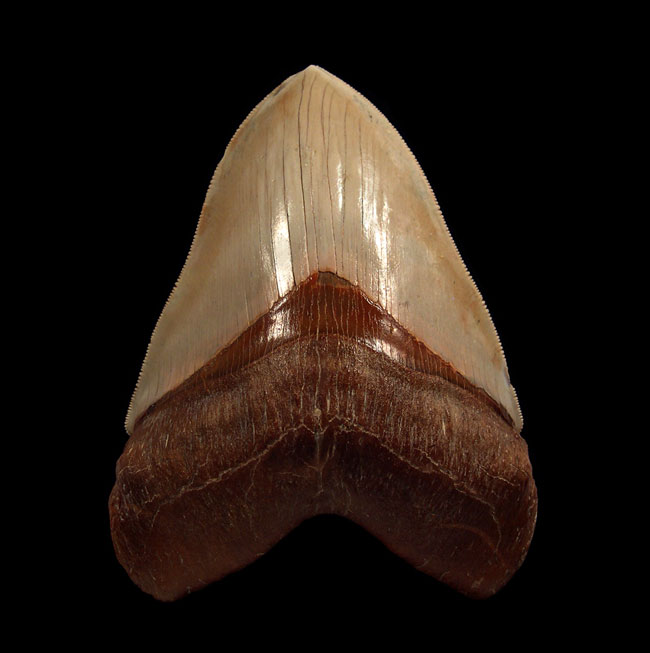
Long before humans walked the Earth, a silent beast roamed the oceans with dominance so absolute that its shadow shaped the very balance of marine life. It wasn’t a myth, nor was it a figment of imagination. It was a real, flesh-and-bone giant—the Megalodon. While bones of this extinct predator are rarely found, there’s one part of its body that fossilizes more easily: its teeth. And recently, a fossil surfaced that tells a chilling story about the size and might of this creature. It has been dubbed the biggest megalodon tooth ever found—an authentic marine relic that rewrites what we thought we knew about this prehistoric predator.
What lies behind this stunning discovery? More than a measurement—it’s a gateway to Earth’s marine history.
The Setting: A Desert That Was Once a Sea
The most astonishing part of this story is not only the size of the tooth, but where it was found. Buried deep beneath the dry crust of Chile’s Atacama Desert, this record-breaking tooth emerged in a place that today seems impossibly removed from the ocean. Yet, millions of years ago, this region was submerged entirely, filled with flourishing marine life and predator-prey interactions that rival the fiercest nature documentaries.
Back then, during the Miocene epoch, the Atacama wasn’t a desert—it was a coastline where giant marine mammals swam freely, and the Megalodon reigned at the top of the food chain. The discovery of the massive tooth in such a remote, arid landscape is a reminder of how much our planet has changed—and how much of that change is still recorded beneath our feet.
An Unmatched Find
The tooth that has captured the attention of fossil hunters and marine biologists alike measures over 7 inches in length. To put that into perspective: it’s nearly the size of a man’s hand from wrist to fingertips. But it’s not just the dimensions that are striking—it’s the quality of the fossil itself.
While many fossilized Megalodon teeth show signs of erosion, breaks, or environmental wear, this particular specimen is astonishingly well-preserved. Its serrations are still visible, the enamel is thick and intact, and its shape is symmetrical. All these details point toward an apex predator with one of the most formidable bites nature has ever produced.
Why Teeth Matter More Than Bones
One of the reasons Megalodon is known almost exclusively through its teeth is that sharks, even giants like this one, have skeletons made of cartilage. Cartilage doesn’t fossilize as well as bone. But teeth, especially those of carnivorous predators, are built to last. They are dense, mineral-rich, and durable—perfect for slicing through the thick hides and bones of prey.
Megalodons had thousands of teeth throughout their lifetime, arranged in multiple rows, constantly being replaced. So every now and then, one of these tools of the deep survives the ages and emerges in the hands of a lucky fossil hunter. But this tooth? It’s not like the others. Its size suggests that the Megalodon it belonged to could have been over 60 feet long, possibly one of the largest ever to exist.
Reading the Tooth’s Story
Teeth like this are more than museum artifacts. They're scientific instruments. The shape and size reveal insights into feeding habits, bite mechanics, and even hunting strategies.
This tooth’s broad base and sharp, serrated edges indicate that it was designed for grasping and slicing, rather than chewing. That shows an active predator that likely targeted large, fleshy marine mammals. The tooth’s curvature suggests a hunting style that involved clamping down and shaking—much like today’s great white sharks, but on a far more intimidating scale.
By studying wear patterns and microfossil remnants on such a tooth, paleontologists can even deduce what kinds of prey were hunted and the approximate depth at which the predator may have hunted.
A Glimpse into the Prehistoric Ocean
Imagine a world where the ocean was teeming with massive whales, ancient sea turtles, and fish the size of today’s SUVs. Into this ecosystem, the Megalodon swam as the ruler. The waters near present-day Chile provided an ideal hunting ground due to the nutrient-rich currents that supported vast quantities of marine life.
This colossal tooth isn’t just proof of the Megalodon’s physical might; it’s a clue to an ecosystem that was once thriving. The size of the predator mirrors the abundance of prey and the richness of the seas. The fact that such a large Megalodon thrived suggests that the region’s marine ecosystem supported giants of all kinds, each with its own role in the prehistoric food web.
Rarity and Value: A Collector’s Dream
For fossil collectors, owning a Megalodon tooth is a point of pride. However, owning one of this magnitude is something entirely different. It’s a tangible piece of prehistory, a moment frozen in time. These fossils are rare, and their value extends beyond monetary worth—it is also educational, emotional, and cultural.
The biggest specimens often end up in museum displays, but some are available for private collectors who have a deep appreciation for ancient history. When you hold one of these fossils, you’re not simply collecting—it feels like you're preserving a story.
Why the Fascination with Giants Remains
Humans have always been intrigued by the extremes—the tallest mountains, deepest trenches, longest rivers, and most enormous creatures. The Megalodon, by its very nature, draws attention. It’s a real-world monster, one that doesn’t need exaggeration. Its teeth, especially the largest ones, are reminders of an era when nature’s boundaries stretched much further.
That fascination continues today in film, literature, and science. But what keeps it alive isn’t fiction—it’s discovery. Fossils like the biggest megalodon tooth ever found remind us that Earth's history still has chapters we haven’t thoroughly read.
Conclusion: More Than a Fossil, It’s a Legacy
The biggest megalodon tooth ever found isn’t simply large in size—it’s immense in impact. It adds weight to theories, challenges assumptions, and reopens discussions about the scale of prehistoric life. It also rekindles awe—a rare feeling in an age of constant digital stimulation.
Holding or even seeing such a fossil is a quiet but unforgettable experience. It’s humbling to realize that long before modern civilization, creatures of unimaginable scale moved through oceans that are still being explored today.
Ready to Begin Your Fossil Journey?
If you're someone who finds joy in the ancient, the rare, and the truly extraordinary, now is the time to dive deeper. Explore a handpicked selection of authentic fossils and let your collection echo with the stories of prehistoric seas.
Take your first step toward owning a relic that speaks to time, survival, and grandeur—pieces that remind us of the vast and mysterious history of our Earth.
Discover your own fossil treasure with Buried Treasure Fossils—where every piece holds a chapter from Earth’s ancient oceanic saga.






