

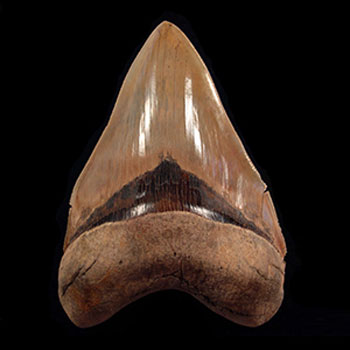
From the moment fossil enthusiasts first lay eyes on a Megalodon tooth, a wave of fascination often takes over. There’s something colossal, ancient, and awe-inducing about the serrated edge and formidable shape of these relics from the deep. We often find ourselves staring at one of these massive fossils, instinctively wondering—how big was the shark behind this tooth? That curiosity drives one of the most exciting aspects of paleontology: using the size of megalodon teeth to estimate the true magnitude of the ocean’s most legendary predator.
Let’s explore how these fossilized teeth help scientists—and collectors—piece together the real story behind this prehistoric giant.
The Megalodon’s Jaw-Dropping Dentition
Megalodon wasn’t just large—it was immense. With estimated lengths reaching up to 60 feet, this species of prehistoric shark ruled the seas for millions of years. But unlike dinosaurs, whose bones often reveal their full skeletal structure, sharks have skeletons made primarily of cartilage. That means the teeth are often the only parts that fossilize and survive through time.
Megalodon teeth are the key to its story. Ranging from 3 to over 7 inches in length, these teeth are dramatically larger than anything seen in modern sharks. A typical modern Great White shark tooth might measure just 2 inches, making even the average Megalodon tooth seem colossal in comparison. The sheer size of the teeth, particularly those over 6 inches, indicates not just a larger jaw, but a creature of staggering proportions.
How Scientists Estimate Megalodon’s Length
To understand the connection between tooth and body, researchers studied the dentition patterns of today’s closest living relatives to the Megalodon—primarily the Great White. Using ratios between tooth size and body length, paleontologists developed scaling equations to predict the size of extinct species. While these equations aren’t flawless due to anatomical differences, they offer a surprisingly accurate model.
For instance, a tooth measuring 6 inches in height could suggest a Megalodon over 50 feet long. The formula takes into account the tooth’s placement in the jaw, whether it is located at the front (anterior) or the side (posterior), as those from different regions vary in shape and size. That’s why identifying both the location and condition of the tooth plays a crucial role in the accuracy of the estimate.
This methodology, although based on comparative anatomy, helps bridge millions of years of evolution, offering us a glimpse into the scale of a creature that left no full skeleton behind.
Not All Megalodon Teeth Tell the Same Story
What makes studying megalodon tooth size so captivating is the variety of shapes and sizes that exist. The front teeth are broad and triangular, ideal for grasping and tearing. Side teeth curve more and reflect how the shark maneuvered its prey. These nuances add layers of complexity when trying to reverse-engineer the size of the predator.
A single tooth may offer a hint, but a full set—or even several from different jaw regions—can bring the story into sharper focus. In rare finds, paleontologists have discovered partial tooth sets that show the symmetry and spacing of the jaw, adding yet another level of detail to estimating the full body length. And when such a set includes teeth that exceed 6 inches, it suggests a shark approaching the largest size ever recorded for this species.
For collectors, these differences in tooth size and location make each fossil a unique piece of history. The thrill of owning a tooth isn’t just in its shape or color—it’s in the silent testimony it offers about the sheer scale of the ocean's once-dominant predator.
What the Biggest Teeth Reveal About the Apex Predator
The largest megalodon teeth ever discovered surpass 7 inches, and they are incredibly rare. These aren't just anomalies—they are evidence that some individuals were massive even by Megalodon standards. When scientists apply the accepted body-to-tooth ratio, these fossils suggest creatures that were nearly or even exceeded 60 feet in length.
Such immense size implies more than just physical dominance. It tells us about the Megalodon’s position in the food chain. With jaws that could exert crushing forces and teeth capable of slicing through whale bone, these predators shaped the marine ecosystem. Fossilized whale bones bearing bite marks confirm this reality. A 6-inch tooth doesn’t just speak to size—it speaks to power, behavior, and survival strategy.
At the center of all this is megalodon tooth size—a measurement that carries more meaning than mere inches. It defines an era, a species, and a hierarchy beneath the waves.
From Ocean Giants to Collector’s Treasures
Today, Megalodon teeth aren’t just the subject of scientific analysis—they’re highly sought-after by collectors and enthusiasts alike. These fossils offer a tangible connection to the prehistoric past. Color variations—from jet black to silvery grey—reflect the minerals in the surrounding sediment, adding a layer of individuality to each find.
The allure goes beyond aesthetics. For many, owning a large tooth is a way to connect with the mystery of what once ruled the seas. It’s a statement of curiosity, fascination, and respect for a time when an apex predator of mythic proportions dominated the oceans. Whether displayed in a cabinet or studied in detail, these teeth offer insight that reaches far beyond their surface.
The Stories Locked in the Serrations
Every ridge and serration on a Megalodon tooth tells a story. These fine details were designed to rip through thick flesh and bone with precision. Wear patterns suggest how frequently certain teeth were used, while the root structure helps identify the position within the jaw.
Even broken or partial teeth can yield fascinating clues. Chips along the edge may indicate battles or feeding habits. Differences in enamel preservation can signal whether the tooth was fossilized in a riverbed, coastal plain, or deep ocean sediment.
This is why collectors and researchers alike prize not just the size, but the condition and context of each tooth. When examined closely, these features bring the fossil to life. They offer a window into prehistoric seas where size mattered—and where megalodon tooth size served as both a weapon and a record keeper.
Why Size Will Always Matter in Megalodon Lore
The Megalodon’s reputation rests heavily on its size—and rightly so. Few creatures in Earth’s history inspire the same mixture of awe and fascination. Yet without fossilized bones, it’s the teeth that must do the storytelling. And they do so powerfully.
Thanks to decades of study and the careful work of collectors, we’ve learned how each tooth can act as a data point, a clue, or a bridge to a world long gone. Tooth size doesn’t just represent a measurement—it represents a presence. It tells us how big the shark was, what it ate, how it hunted, and how it may have shaped the ecosystem around it. The story of the Megalodon is, quite literally, written in its teeth.
Conclusion
We know the Megalodon only through the fossils it left behind, and none are more iconic or informative than its massive teeth. By analyzing the size of megalodon teeth, scientists have pieced together the scale and strength of this apex predator with remarkable precision. These teeth are not just remnants—they are revelations. Whether held in a collector’s hand or displayed in a research lab, each tooth carries a voice from the deep past. And as we continue to uncover more, we find ourselves one step closer to fully grasping the magnitude of the creature that once ruled the oceans.
Explore genuine Megalodon teeth and own a piece of prehistoric power—each fossil tells a story millions of years in the making.






