

If you have ever browsed the fossil market or looked through online listings, you have likely seen a wide range of specimens, some stunning, some questionable, and some that seem too good to be true. That is why knowing how to identify a real megalodon tooth becomes crucial. As fossil collectors, we offer guidance to help you avoid costly mistakes and make confident decisions when you are ready to buy megalodon tooth specimens. This guide breaks down everything you need to know, from visual cues to seller red flags, so you can be sure you are getting the real deal.
Know the Basic Anatomy of a Megalodon Tooth
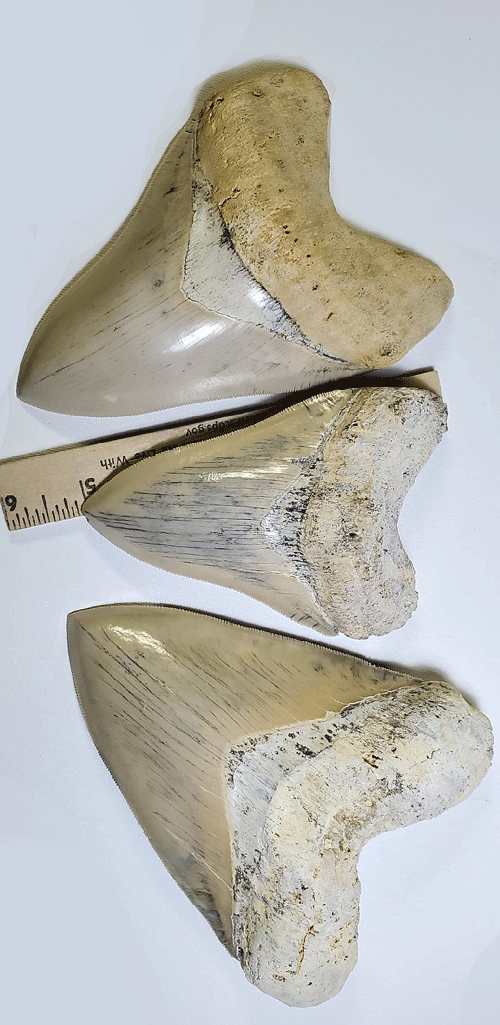
A genuine megalodon tooth has distinct characteristics that set it apart from other fossilized teeth or modern reproductions. It typically ranges from 3 to more than 6 inches in length and has a thick, triangular shape. The enamel should be smooth, with a clear boundary between the root and the crown.
The root usually has a textured, porous appearance, while the blade may still show fine serrations along the edges if it is well preserved. Authentic specimens often show natural signs of age, such as mineral staining or subtle pitting, rather than a polished and overly uniform surface. These small irregularities help confirm the tooth’s authenticity.
Examine the Color and Texture
A common mistake buyers make is assuming darker teeth are always more authentic. The truth is that the color of a megalodon tooth depends on the minerals found in the sediment where it fossilized. River teeth may appear brown or gray, while ocean finds often show shades of blue, black, or tan.
Pay attention to how the tooth feels. Real fossilized teeth have significant weight and density. They feel solid in your hand and do not chip easily. If a tooth feels unusually light, brittle, or has a plastic-like feel, it may be a cast or fake.
Check for Restoration Work
Authentic megalodon teeth often show signs of restoration. Small repairs, such as crack fills or rebuilt tips, are typical in the fossil market and don’t necessarily impact value. What truly matters is honest disclosure and a clear understanding of which areas have been restored.
Ethical sellers disclose restoration work clearly. You can often recognize restored areas by changes in texture or slight differences in color. If the tip looks unusually smooth or slightly mismatched, it may have been rebuilt. Understanding these signs helps you make informed choices when you plan to buy megalodon tooth fossils that hold long-term value.
Study the Serrations and Blade Edges
Serrations are one of the strongest indicators of authenticity. Well-preserved megalodon teeth show fine, saw-like edges along both sides of the blade. These may be worn down from fossilization, but they should still look natural.
Check for authentic wear patterns. A tooth without serrations is not necessarily fake, but artificially reproduced teeth often have overly neat or unusually dull edges that do not reflect natural fossil wear. If the serrations look sharp in an unnatural way or show perfect symmetry, the tooth may not be genuine.
Understand Price in Relation to Size and Condition
Price is another helpful clue when determining authenticity. While some genuine teeth are affordable, an extremely large tooth in near-flawless condition sold at a suspiciously low price is a warning sign. Size, preservation, and provenance all influence the value of a fossil.
Three to four-inch teeth are common in the market. Larger teeth, especially those over five inches with strong serrations and good color, are much rarer and priced higher. If a tooth looks flawless but the price is unusually low, it may be heavily restored or fake.
Ask for Provenance and Seller Transparency
A trustworthy seller should be able to explain the fossil’s origin. Provenance supports authenticity and gives meaningful context to the specimen. Whether it came from a riverbed or an offshore site, the source tells you a lot about the tooth.
Request clear photos and ask questions about the fossil. Close-up images of the serrations, root structure, and any restored areas help you evaluate the piece. Sellers who hesitate to answer questions or cannot describe the fossil’s origin should be approached with caution.
Use UV Light as a Verification Tool
If you are inspecting a fossil in person, a UV light can help you spot repairs. Modern materials like glues and fillers often glow under UV light, while fossilized enamel typically does not. This method is especially useful when evaluating higher-value pieces.
Be Cautious of Overly Polished or Shiny Specimens
Authentic megalodon teeth rarely have a mirror-like shine. Excessive polishing can remove natural features such as serrations and often hides imperfections or repairs. Some sellers polish damaged teeth to make them look more appealing, but this can reduce scientific and collector value.
A natural fossil typically has a matte or slightly textured finish. A high-gloss surface should raise questions unless the seller clearly states it has been polished for display purposes.
Watch Out for Tooth Casts and Resin Replicas
Replicas have a place in education, but they are sometimes sold deceptively. Casts made from resin or plaster lack the density of real fossils. They often show repeated patterns from the mold and feel too smooth or lightweight.
If you are unsure, gently tap the tooth against a firm surface. A real fossil has a solid, stone-like sound. Resin casts usually sound hollow or dull. Pay attention to weight, texture, and the overall feel of the specimen.
Conclusion: Buy Smart and Choose Authenticity
Before you buy megalodon tooth fossils for your collection, take the time to understand what authenticity looks like. Evaluate the enamel texture, serrations, restoration work, and seller transparency. These clues help you separate genuine pieces from replicas and heavily altered specimens.
We offer collectors reliable guidance to help them make informed decisions. At Buried Treasure Fossils, authenticity, fossil integrity, and transparency shape every fossil offered, giving you confidence as you build your collection with pieces that truly represent prehistoric history.
Visit the collection today to explore real megalodon teeth and choose a fossil that adds lasting value to your display.






