

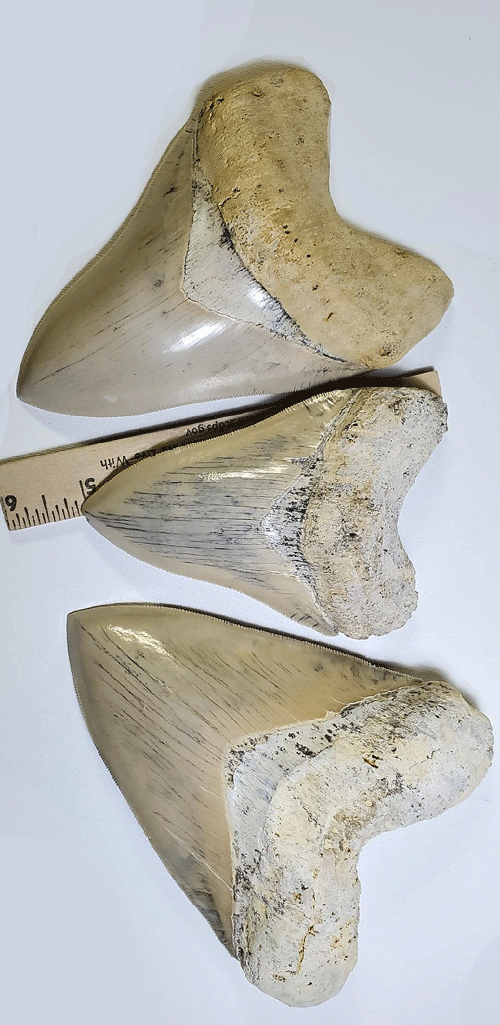
Identifying a real megalodon tooth fossil takes more than just a glance. As collectors and fossil enthusiasts, we offer insights to help you distinguish between genuine specimens and lookalike replicas. Whether you’re starting a collection or making a high-value purchase, knowing what to look for is crucial. A megalodon tooth fossil is not only a captivating piece of prehistoric history; it’s also a sought-after item that deserves scrutiny. Here's a detailed checklist to help you assess authenticity confidently.
Examine the Size and Shape First
Genuine megalodon teeth typically range from 3 to over 6 inches in length. While 6-inch teeth are rare, they’re not unheard of. The overall triangular shape, serrated edges, and broad root structure are distinctive features. A real tooth won’t look overly polished or uniformly shaped. Instead, you’ll see subtle imperfections that reflect millions of years of natural wear.
Be wary of specimens that look unusually “clean” or perfectly symmetrical. Real megalodon teeth have individual character. Chips, asymmetry, or small cracks are often signs of a natural origin rather than flaws.
Check for Natural Wear and Mineralization
Authentic megalodon teeth are typically fossilized and display mineralization, giving them a range of earthy tones such as black, gray, brown, and sometimes even blue. These colors depend on the sediment in which they were buried for millions of years.
Look for natural signs of aging like:
● Root erosion: Slight root loss is common and adds authenticity
● Surface texture: A genuine fossil feels dense and heavy, with slight roughness or pitting in some areas
● No glaze or artificial polish: Real teeth should not have a plastic-like sheen unless they've been lightly cleaned
If the tooth appears shiny or overly smooth across the entire surface, it may be artificially enhanced or entirely fake.
Pay Attention to Serrations
One of the most distinguishing features of a real megalodon tooth fossil is the presence of serrations along the edges. These fine, saw-like notches were used by the shark to slice through prey.
On genuine fossils:
● Serrations may be worn, but are usually visible
● They are evenly spaced and natural-looking
● Blunted or missing serrations are not necessarily a red flag, as fossilization and wear often affect them
Replicas often feature uniform or overly sharp serrations that appear mass-produced or too defined.
Analyze the Root and Enamel Junction
A major authenticity checkpoint is the transition between the enamel (the blade) and the root. This junction should appear seamless but natural. In genuine teeth:
● The root is generally porous and lighter in color or texture
● The enamel shows subtle color gradients and depth
● The boundary between the two is well-defined but not artificially marked
Fake fossils may show signs of molding or resin at this junction, lacking the textural detail of a true fossil.
Evaluate Weight and Density
Real megalodon teeth are heavy for their size. Fossilization replaces organic material with minerals, giving the tooth a stone-like weight. If you’re holding one and it feels light or hollow, it’s likely a replica. A true fossil will feel solid and compact, with no hint of hollowness or plasticity in hand. Collectors often use side-by-side comparisons with verified fossils to develop a feel for genuine weight and density. While this can take experience, weight alone can often signal whether a specimen deserves further inspection.
Check for Restoration Work
Some authentic teeth may have undergone minor restoration, especially if they were damaged during extraction or eroded during fossilization. Restoration isn't necessarily bad, but it should be disclosed by the seller.
Common restorations include:
● Rebuilt tips using resin to reshape a broken tip
● Filled cracks for surface repairs to improve display quality
Reputable sellers will clearly indicate what, if anything, has been restored. Be cautious of full restorations passed off as natural specimens.
Use a Magnifier to Spot Mold Lines
Replicas made from resin molds may reveal faint seam lines, often found along the edges or base of the tooth. Under magnification, these lines are usually more evident and do not appear in genuine fossils. Even high-quality fakes can leave subtle casting marks that become visible when closely inspected. Also look for air bubbles, uniform pore patterns, or an overall plastic-like texture. Real fossils do not have symmetrical molding artifacts or a synthetic feel.
Understand the Source and Seller Credibility
The origin of the fossil is just as important as the physical details. Authentic megalodon tooth fossil specimens often come from known fossil-rich locations such as South Carolina, North Carolina, or parts of Florida. Asking about the source can help verify legitimacy.
Equally important is the seller’s reputation. Trustworthy dealers:
● Provide detailed photos, including close-ups of the serrations and root
● Offer return policies and certificates of authenticity
● Are transparent about any restorations
Beware of “Too Good to Be True” Prices
High-quality, large megalodon teeth are rare and valuable. If a seller offers a seemingly pristine 6-inch tooth at a steep discount, take caution. It may be a replica or a heavily restored item. While bargains exist, it’s better to pay a fair market price than invest in a questionable specimen.
Trust Your Instincts and Do Your Research
Finally, give yourself time to compare different listings, learn the terminology, and observe the features described in this guide. The more you study authentic fossils, the better your eye will become at spotting red flags.
It’s also helpful to look through detailed buying guides that explain size classifications, common restoration practices, and market trends. Education is your most valuable tool in making a smart purchase.
Conclusion
Spotting a genuine megalodon tooth fossil comes down to careful observation and informed decision-making. From root structure and enamel texture to the feel of the material in your hand, each detail matters. We hope this checklist helps guide you toward confident, informed fossil purchases. For collectors looking for authentic specimens from verified sources, Buried Treasure Fossils offers high-quality options with transparency, experience, and a deep respect for paleontological integrity.
Contact us today to learn more about identifying genuine megalodon tooth fossils and get expert guidance before making your next purchase. Authenticity and quality are just a message away.






